Appendix F
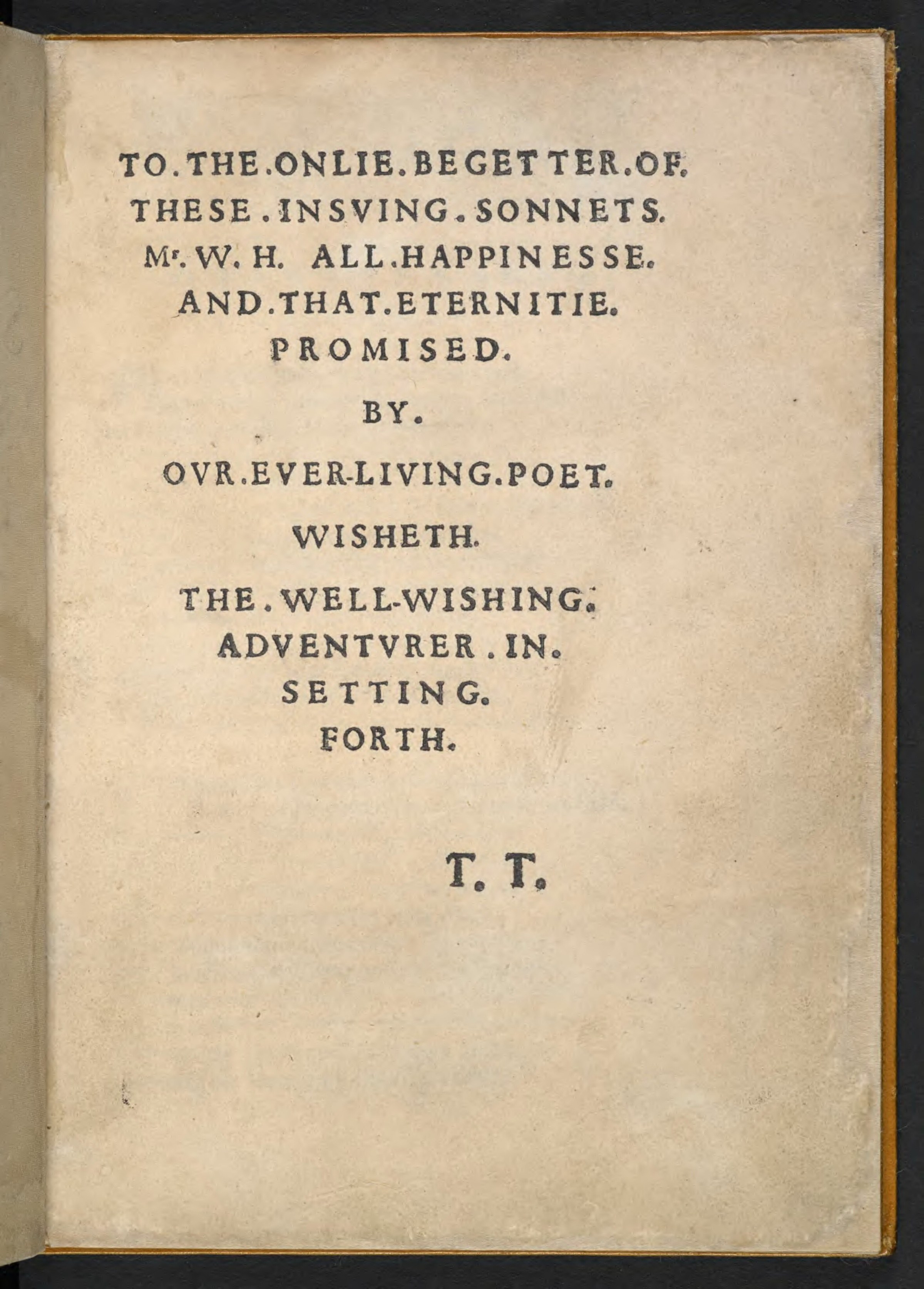
The dedication to Shake-speares Sonnets (1609) presents its words in capitals, separated by stops and arranged in centred lines.1 Thomas Fulton describes them as “words that look cut in stone, with dots between the words in Roman lapidary style.” He connects this presentation with the Sonnets’ promises of literary immortality: the printed page takes the form of a monument.2
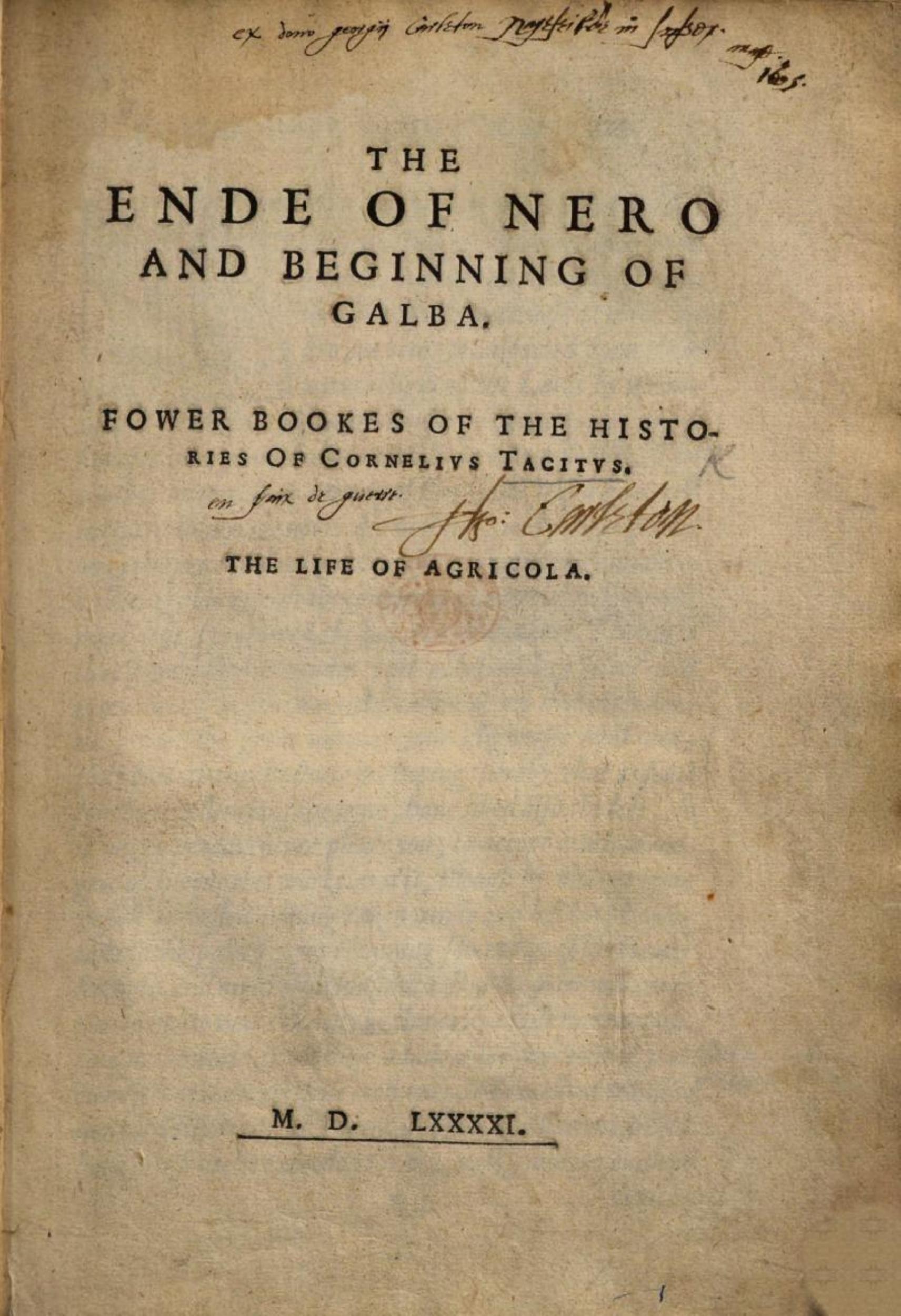
Henry Savile’s 1591 Tacitus offers a striking comparison. Its title page uses widely spaced capitals, short centred lines and a large expanse of unornamented paper.3
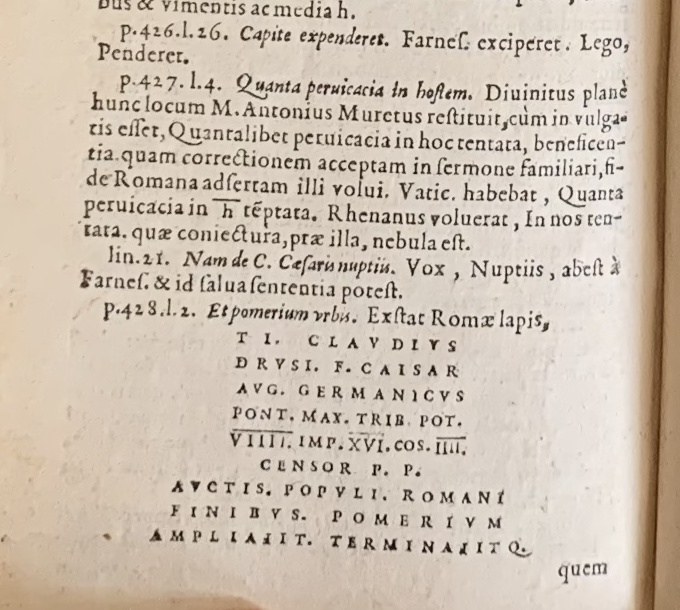
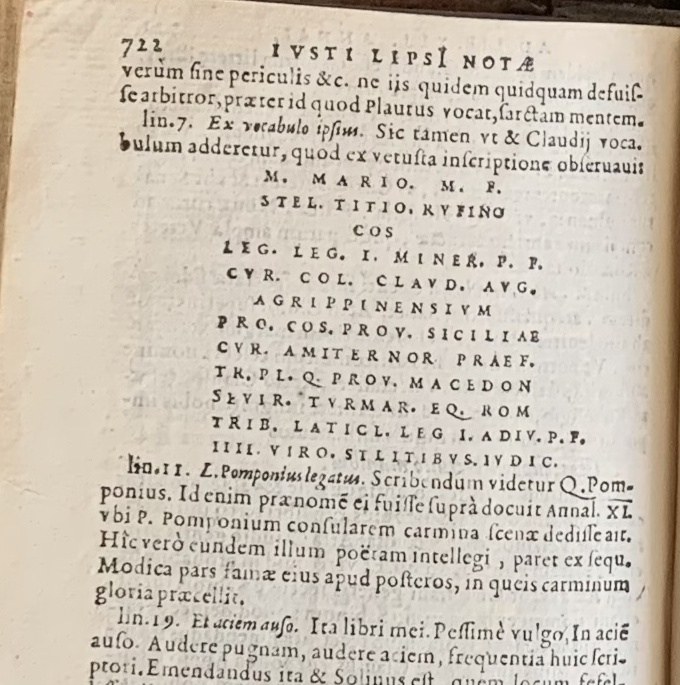
In the concluding notes of the Audley End copy of Justus Lipsius’s 1574 Tacitus, printed Roman inscriptions stand apart from the surrounding prose in spaced capitals, with abbreviated names and titles and stops between words. The example on p. 720 records Claudius’s extension of Rome’s boundary; a second example appears on p. 722. These are photographs of the printed passages in the actual Audley End volume associated with Neville and Savile.4
Jane Kingsley-Smith places the language of poetic monuments within the wider classical tradition of preserving memory through writing.5
The pages compared
Notes and sources
William Shakespeare, Shake-speares Sonnets. Neuer before Imprinted (London: G. Eld for T.T., 1609), dedication, sig. A2r. British Library copy, digitized page 3: page image and transcription. The facsimile reproduces the original typography; “Mr.” includes a superscript lower-case letter.↩︎
Thomas Fulton, “Gilded Monuments: Shakespeare’s Sonnets, Donne’s Letters, and the Mediated Text,” in N. Katherine Hayles and Jessica Pressman, eds., Comparative Textual Media: Transforming the Humanities in the Postprint Era (Minneapolis: University of Minnesota Press, 2013), pp. 221–253, especially pp. 225–229; quotation, p. 227. Author’s institutional copy. Fulton’s wider argument distinguishes literary immortality from confidence in any particular material medium. He does not propose the Savile–Audley End comparison.↩︎
Tacitus, The Ende of Nero and Beginning of Galba. Fower Bookes of the Histories of Cornelius Tacitus. The Life of Agricola, translated by Henry Savile (Oxford: Joseph Barnes, 1591), title page, STC 23642. British Library copy digitized by Google Books, title page.↩︎
Tacitus, Historiarum et annalium libri qui exstant, edited by Justus Lipsius (Antwerp: Christopher Plantin, 1574), Audley End copy, Iusti Lipsi notae, pp. 720 and 722. Photographs from the Audley End research collection; the excerpts reproduce printed inscriptions, not marginal annotations. Ken Feinstein illustrated the p. 720 comparison in posts of 5 July 2023, followed by the Savile title-page comparison. For the volume and its annotations, see Feinstein, “Part 6: Henry Savile and Henry Neville’s Annotations of Tacitus”, 17 December 2019.↩︎
Jane Kingsley-Smith, The Afterlife of Shakespeare’s Sonnets (Cambridge: Cambridge University Press, 2019), authorized excerpt published by the Folger Shakespeare Library, 11 December 2019, discussion of the First Folio’s preliminary poems and the classical monument tradition. The cited material is the published excerpt, not the whole book.↩︎