Appendix B
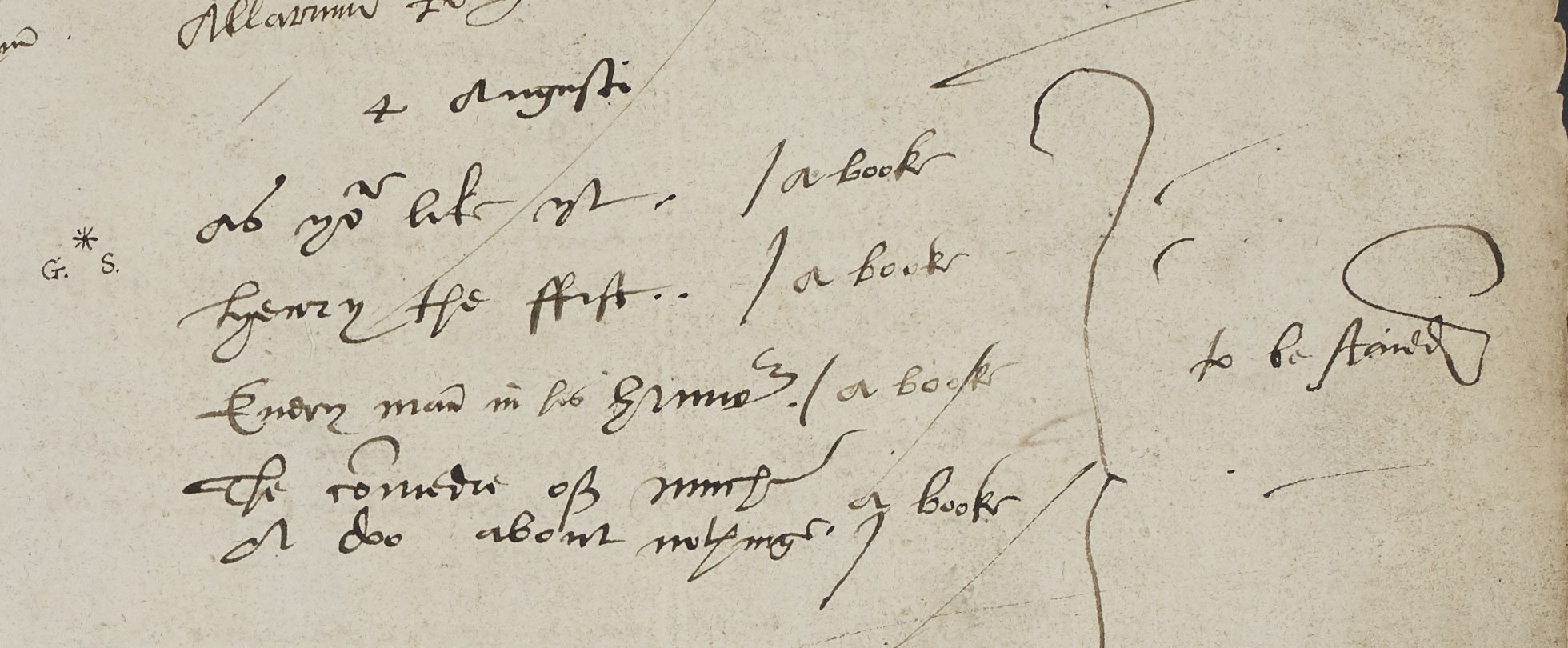
On 4 August 1600, three Shakespeare plays and one by Ben Jonson were entered together on a flyleaf of the Stationers’ Register with the instruction “to be staied.” Henry Neville had landed at Dover two evenings earlier and was beginning his journey to London that Monday. But news of his return was already in London. The letter announcing his arrival records its own progress along the post road: it left Dover at ten at night on 2 August and reached London at ten at night on 3 August. The announcement arrived the night before the stay.1,2
The letter that travelled ahead
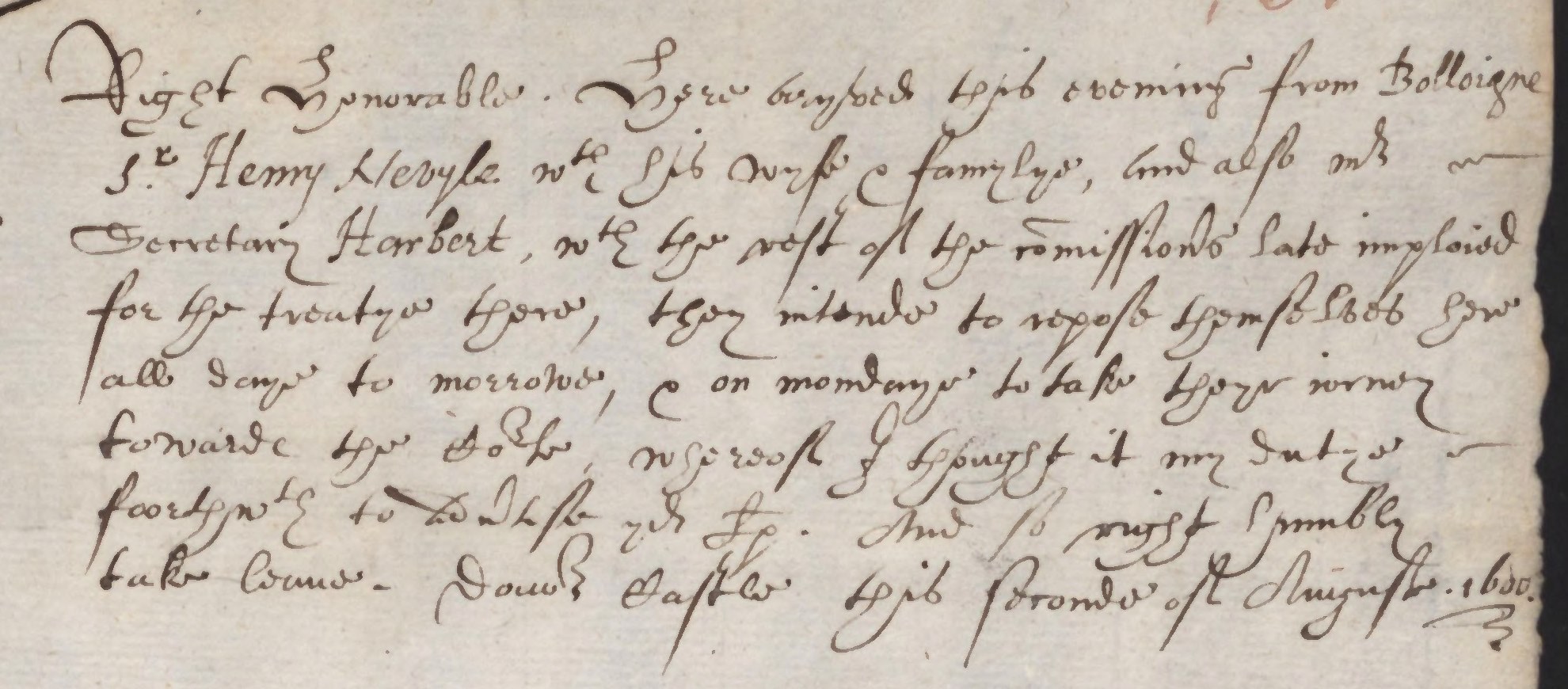
Sir Thomas Fane wrote from Dover Castle to Lord Cobham, Lord Warden of the Cinque Ports and Lord Lieutenant of Kent, on 2 August:
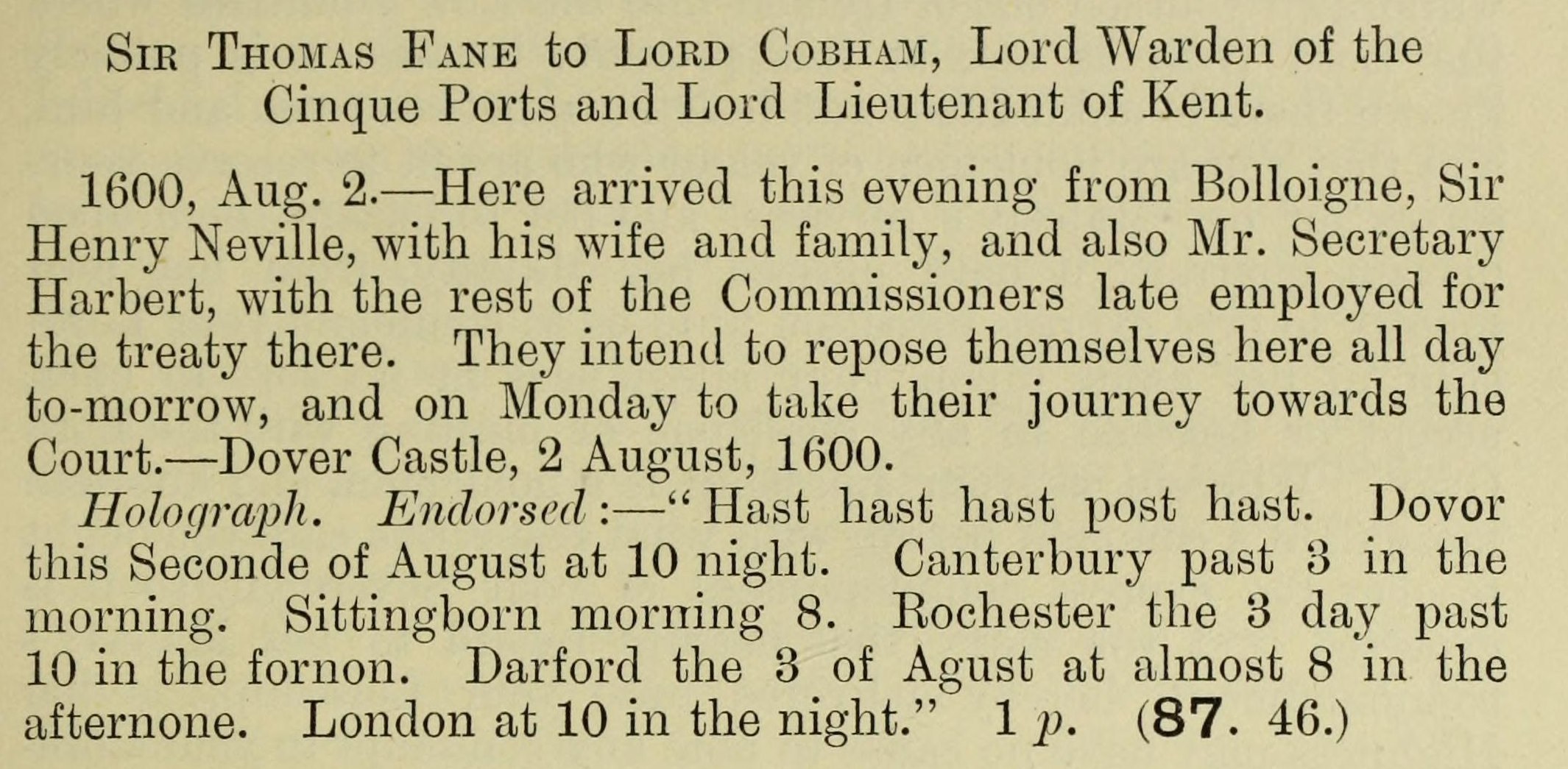
Here arrived this evening from Bolloigne, Sir Henry Neville, with his wife and family, and also Mr. Secretary Harbert, with the rest of the Commissioners late employed for the treaty there. They intend to repose themselves here all day to-morrow, and on Monday to take their journey towards the Court.1
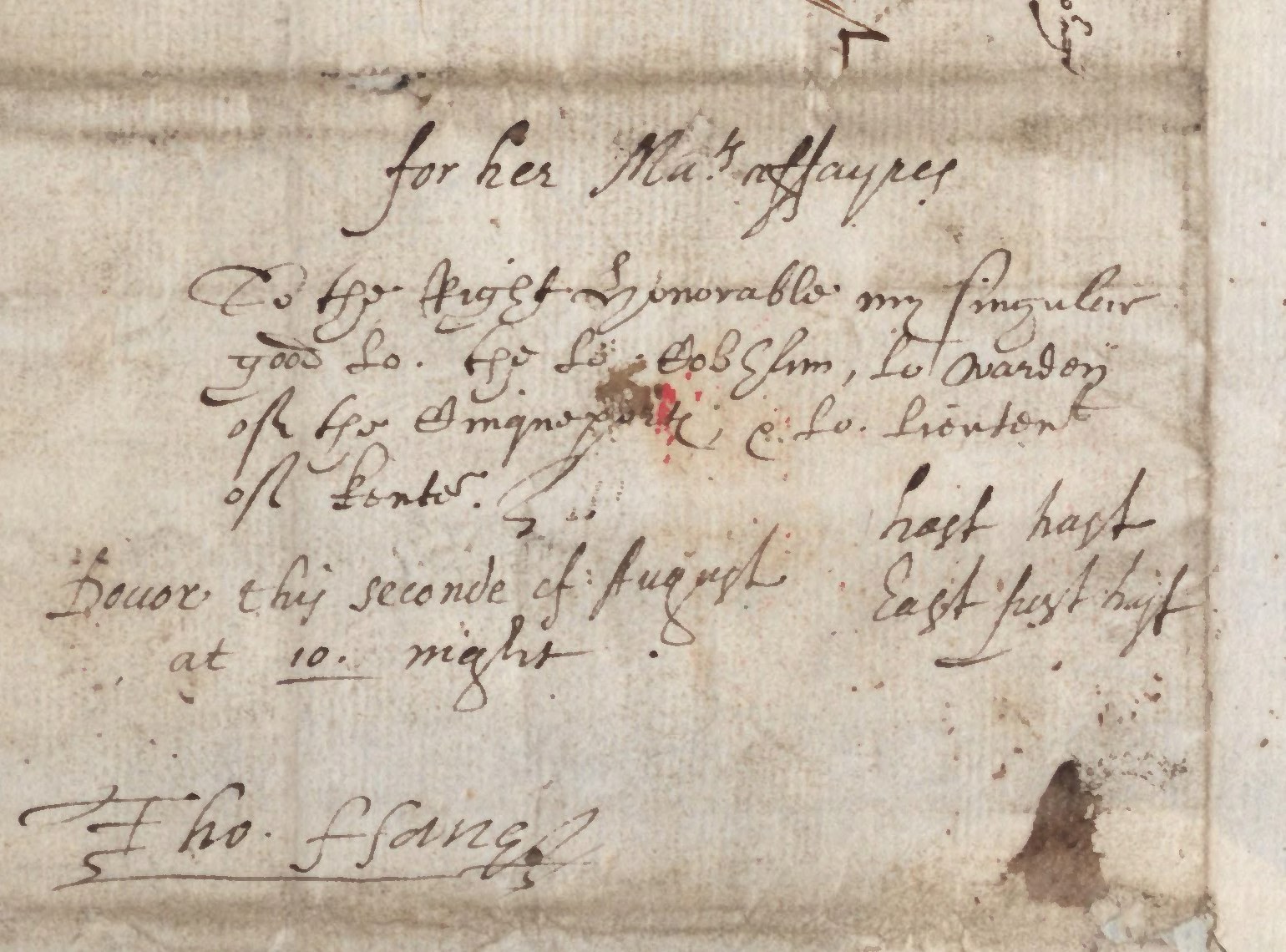
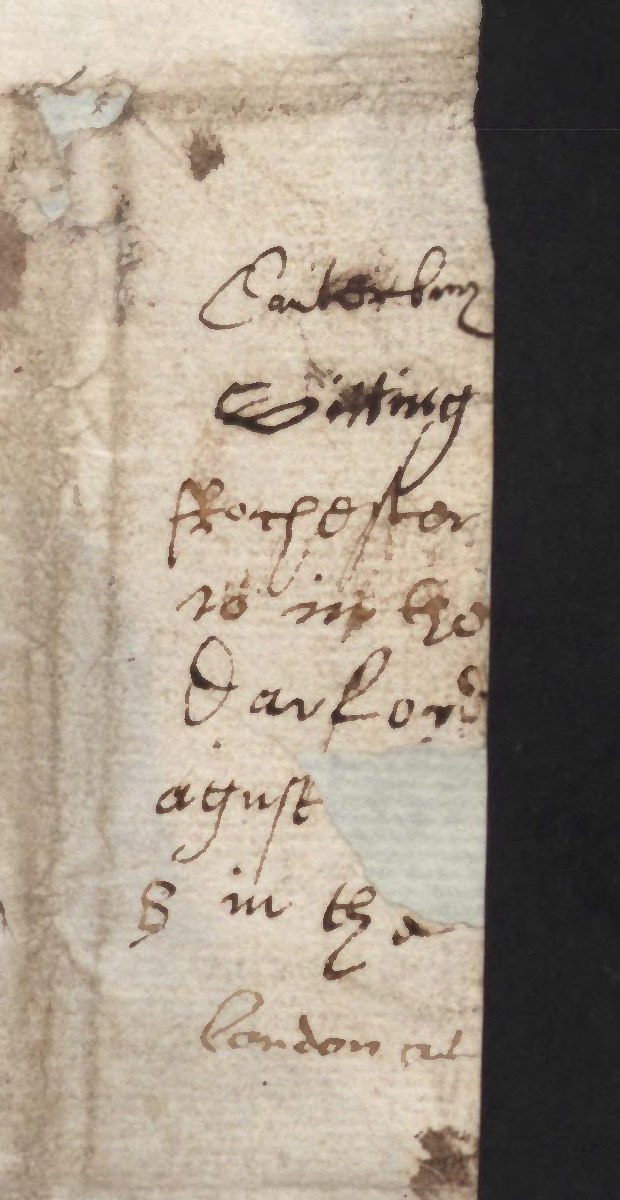
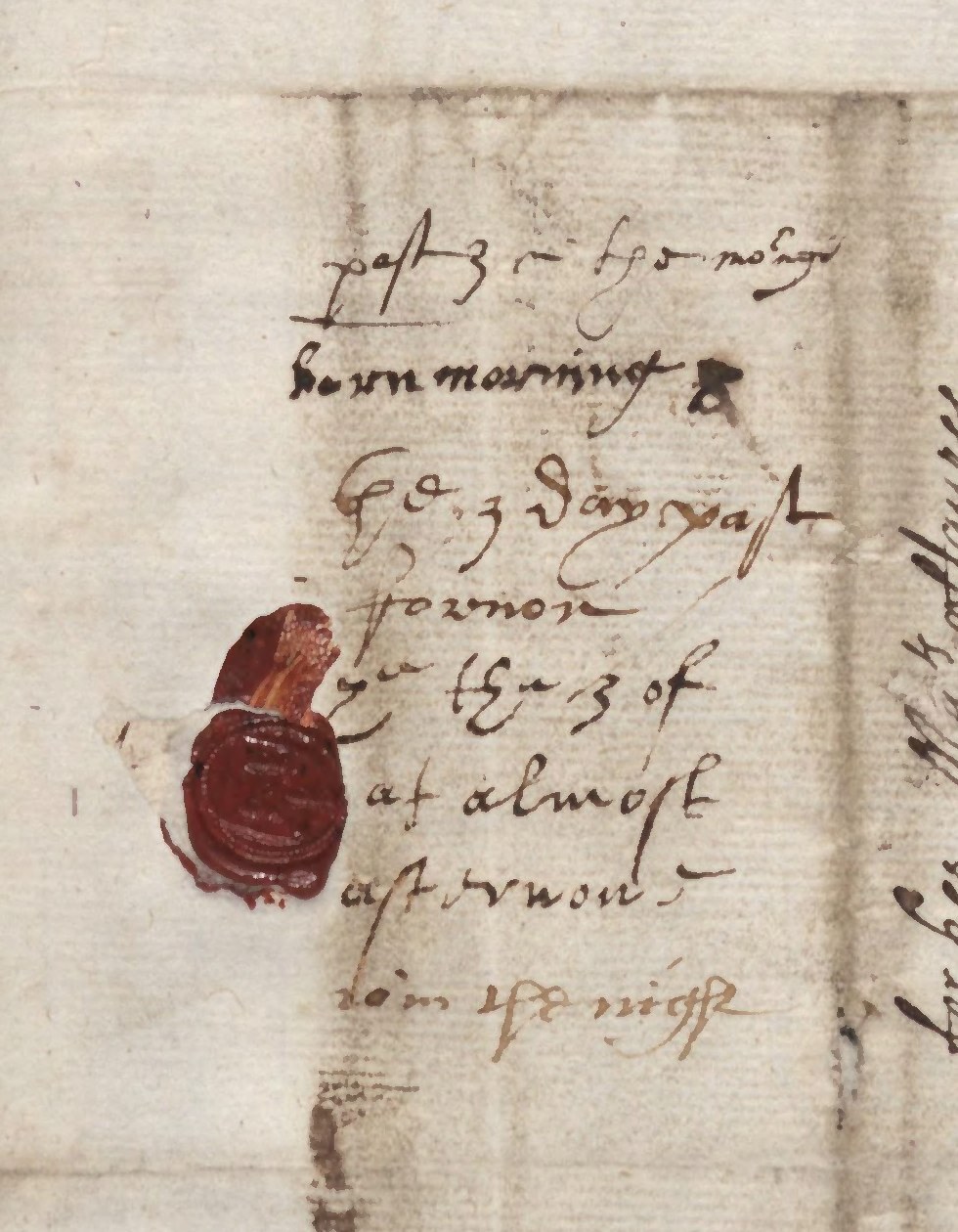
The printed calendar identifies the letter as holograph (in Fane’s own hand) and transcribes its postal endorsements:
Hast hast hast post hast. Dovor this Seconde of August at 10 night. Canterbury past 3 in the morning. Sittingborn morning 8. Rochester the 3 day past 10 in the fornon. Darford the 3 of Agust at almost 8 in the afternone. London at 10 in the night.1
These endorsements supply a timed itinerary for the report of Neville’s arrival. They follow the letter through the principal towns on the Dover–London road, including its passage overnight and on Sunday.
| Stage | Recorded time | Date |
|---|---|---|
| Dover | 10 at night | Saturday, 2 August |
| Canterbury | Past 3 in the morning | Sunday, 3 August |
| Sittingbourne | 8 in the morning | Sunday, 3 August |
| Rochester | Past 10 in the forenoon | Sunday, 3 August |
| Dartford | Almost 8 “in the afternone” | Sunday, 3 August |
| London | 10 at night | Sunday, 3 August |
The endpoints give a journey of twenty-four hours. The London endorsement establishes the letter’s arrival in the city; it does not name its subsequent readers.
Neville’s own journey
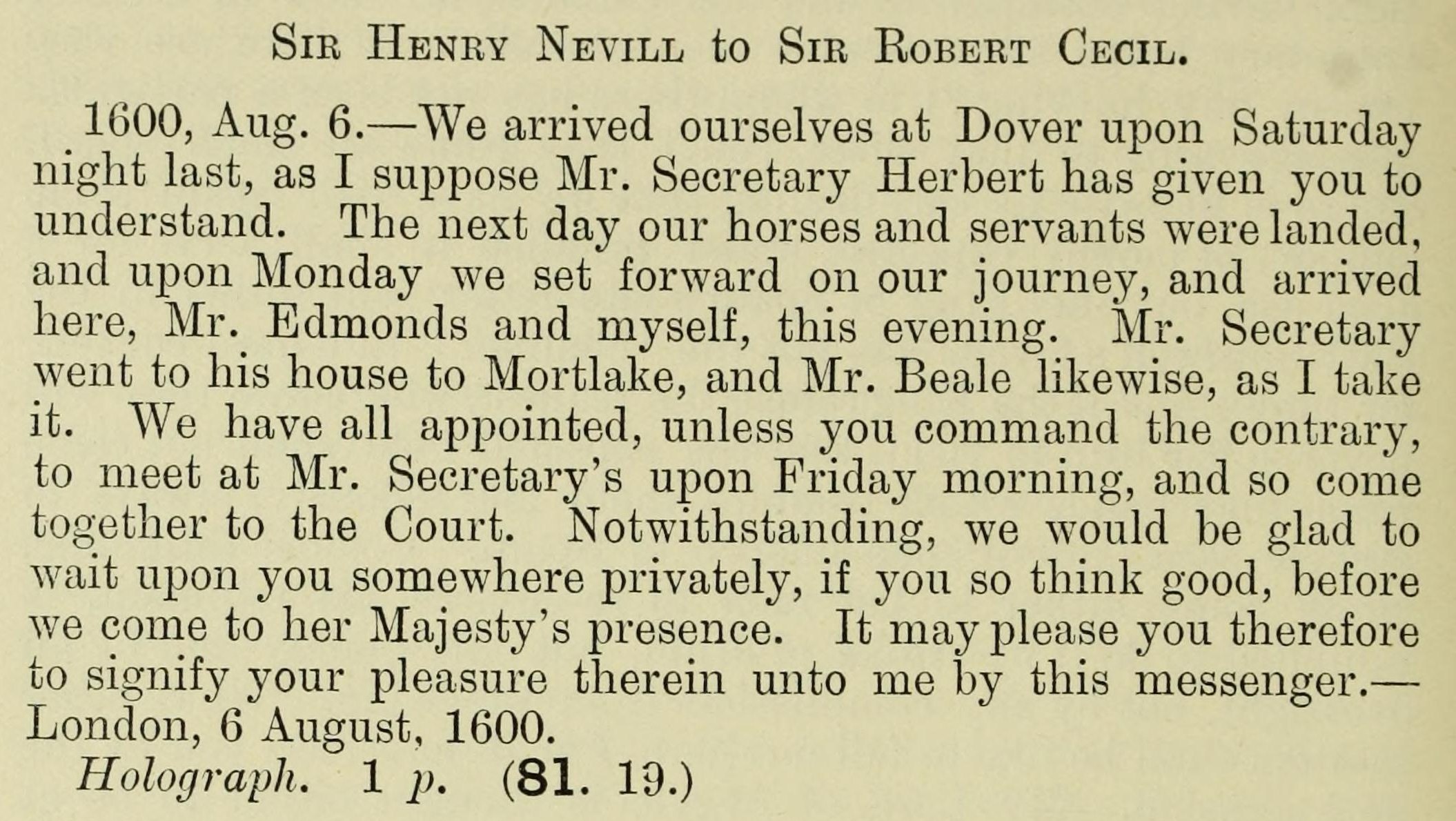
Neville’s letter to Robert Cecil, written in London on 6 August, confirms the sequence independently of Fane’s report. It also explains what occupied the party on Sunday:
We arrived ourselves at Dover upon Saturday night last, as I suppose Mr. Secretary Herbert has given you to understand. The next day our horses and servants were landed, and upon Monday we set forward on our journey, and arrived here, Mr. Edmonds and myself, this evening.3
Neville and Thomas Edmondes thus travelled from Monday to Wednesday, arriving in London on the evening of 6 August. Herbert went to his house at Mortlake; Neville believed Robert Beale had done likewise. The commissioners planned to assemble at Herbert’s on Friday morning before going together to court, and Neville asked whether Cecil wished to meet them privately first. He requested an answer by the messenger carrying his letter.3
There are two distinct movements here. The returning embassy had a household, servants and horses to bring ashore, followed by a journey extending across three calendar days. Fane’s urgent announcement moved from Dover to London in one day and night. Its arrival preceded Neville’s by three days. Neville also supposed that Herbert had separately informed Cecil of their arrival.
How the post made that possible
The Dover road was a central artery of government communication with the Continent. Mark Brayshay’s archival study identifies London–Dover as England’s first royal standing post route. Postmasters supplied fresh horses at successive stages, while post-boys carried government packets to the next stage. Messages could therefore continue through a relay without waiting for an entire travelling household.4
Brayshay also describes instructions requiring postmasters to record a packet’s arrival and forward it within fifteen minutes. The stipulated riding speeds were at least six miles an hour in summer and four in winter. These were service requirements, not measurements of every journey. Fane’s endorsements provide the more directly relevant evidence: what happened on this particular road, with this particular letter, on 2–3 August 1600.4
The following day’s entry
The Stationers’ Register places four titles together under the date 4 August:
As you like yt / a booke
Henry the ffift / a booke
Every man in his humour / a booke
The commedie of muche A doo about nothinge / a booketo be staied2
The instruction applies to the group. Three titles are Shakespeare’s; the fourth is Jonson’s. The previous first registration of a Shakespeare play was The Merchant of Venice, on 22 July 1598, just over two years earlier.5 The 4 August note records a stay rather than an ordinary entry establishing a stationer’s right to print. That distinction gives the entry its particular interest: it is an intervention affecting a cluster of plays.6
The subsequent record shows renewed publishing activity. Rights in Henry V were transferred on 14 August. Jonson’s Every Man in His Humour, the fourth play in the stay, was also entered on 14 August, to Cuthbert Burby and Walter Burre. Much Ado About Nothing was entered on 23 August; it and Henry V appeared in print that year. As You Like It remained unprinted until the First Folio in 1623.2
The documentary sequence can therefore be stated precisely: Neville landed on Saturday evening; Fane’s urgent letter reached London on Sunday night; the four plays were stayed on Monday, the day Neville began his onward journey; Neville reached London on Wednesday. For the Neville authorship argument, the importance lies in this unusually close alignment of his return, the arrival of news about it, and the recorded action concerning three Shakespeare plays.
The documents
Notes and sources
Historical Manuscripts Commission, Calendar of the Manuscripts of the Most Hon. the Marquess of Salisbury, K.G., &c., Preserved at Hatfield House, Hertfordshire, X (London, 1904), p. 261, Fane to Cobham, 2 August 1600, reference 87.46. Text and endorsements checked against the printed page image. Dates retain the English calendar; weekday identifications agree with the letters’ own references to Saturday and Monday. Digitized volume.↩︎
Stationers’ Company, Liber C, flyleaf; Edward Arber, A Transcript of the Registers of the Company of Stationers of London, III, p. 37; Folger Shakespeare Library, “As You Like It, Henry V, and Much Ado About Nothing are ‘stayed’ in the Stationers’ Register”. The Folger reproduces the register image and explains the subsequent publication history. The group is transcribed here without reproducing the manuscript’s spatial layout. The fourth title in the stay, Jonson’s Every Man in His Humour, was entered to Cuthbert Burby and Walter Burre on 14 August 1600. Edward Arber, ed., A Transcript of the Registers of the Company of Stationers of London, III (1876), p. 169; see the register transcript. The subsequent registration activity thus included the non-Shakespeare play in the group.↩︎
HMC, Salisbury Manuscripts, X, p. 268, Neville to Cecil, 6 August 1600, reference 81.19. Checked against the printed page image. The proposed Friday meeting is a plan, not evidence that the meeting took place. Digitized page.↩︎
Mark Brayshay, “The Royal Post-Horse Routes of Hampshire in the Reign of Elizabeth I,” Proceedings of the Hampshire Field Club and Archaeological Society 48 (1992), pp. 121–134, especially pp. 121–123. His account of the regulations cites British Library, Stowe 1/100, and State Papers, SP 12/41/71. Publisher’s full article.↩︎
Stationers’ Company, Liber C, fol. 39v, 22 July 1598; Arber, Transcript, III, p. 122; Folger Shakespeare Library, “The Merchant of Venice is entered in the Stationers’ Register”, and its chronology of plays in the register. This comparison concerns the first appearance of a new Shakespeare play title, not every transaction involving an already registered work.↩︎
Tiffany Stern, “Plays in the Stationers’ Registers in the time of Shakespeare” (Adam Matthew Digital, 2017), p. 7, “Staying,” discussing the 4 August 1600 entry: “Scholars are still debating the meaning of ‘stay’.” She considers an agreement to delay publication while securing the stationer’s eventual printing rights, and reports Peter Blayney’s suggestion that a stay could assert ownership when no Master or Warden was present to register it (her note 6 cites Blayney, “The Publication of Playbooks,” 1997, p. 397). The close timing documented here remains striking; the meaning and cause of the stay remain debated.↩︎
