Cannons in the Canon 2: Blast Furnaces
Mixed Needs Review evidence packet
Topic: Cannons in the Canon 2: Blast Furnaces
Source-Fact Audit — 7 August 2026 (Round 3)
- The six Shakespeare
furnacepassages now listed in this packet are play-text facts controlled from Folger witnesses; The Troublesome Reign passage is controlled separately through EarlyPrint/TCP. - Mayfield's furnace and Neville's iron-ordnance transactions are supported by estate, Privy Council, patent, and
D/EN/O23evidence at different levels of directness. - A metaphor containing heat, smoke, breath, or sighing is not automatically evidence of blast-furnace technology. The earlier claim that “most” examples incorporate blast remains untested and is not a fact.
- EarlyPrint searches show that general furnace phrasing is not unique. Exact-search counts are query- and spelling-dependent and remain comparator data.
- The packet therefore records the quotations, the industrial facts, and the proposed comparison separately, without assigning evidentiary weight toward authorship.
Mayfield Context Notes
- The Mayfield industrial background is now better controlled by the dedicated Mayfield / Wealden iron research pass and source-image packet, not only by the Healthy Wealden walking guide.
- New controls include WIRG technical context, Lawton's 72-page early modern metal-working chapter, rendered Bell-Irving pages, the Privy Council
Mafeldpage, and staged BRO/Royal BerkshireD/EN/O23images for ordnance business. - Healthy Wealden remains useful as a public guide to furnace technology, but final book prose should prefer the Mayfield packet's source hierarchy: O23 direct evidence first, then Privy Council/property controls, then WIRG/Lawton/Bell-Irving as contextual or source-map witnesses.
Uploaded Scholarship Notes
- New Mayfield/Wealden digest: MAYFIELD WEALDEN IRON UPLOADED ARTICLES DIGEST 2026 06 22.
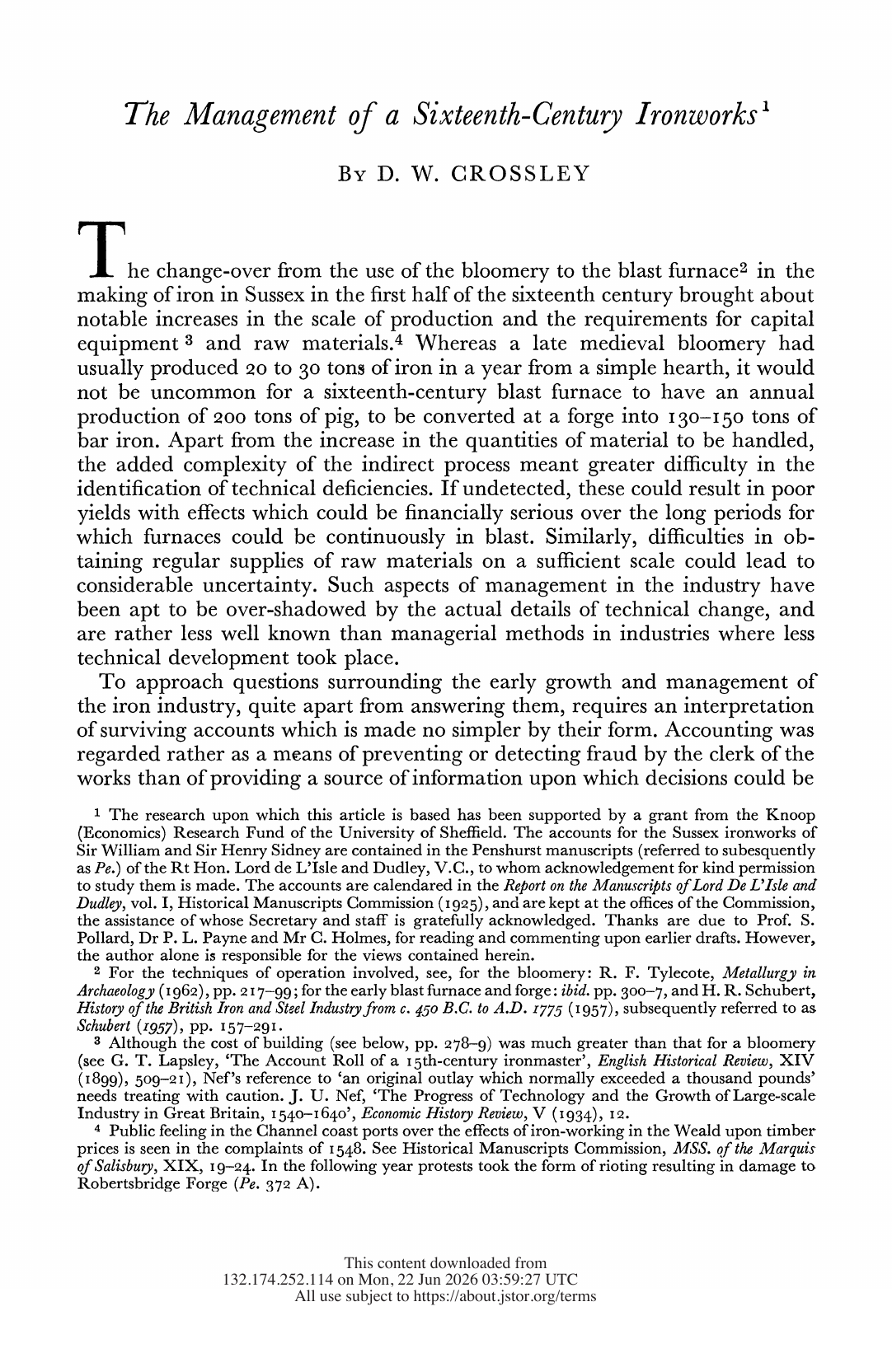
- Crossley (
1966) is now the best short source for why a blast furnace was a high-scale managerial and technical system, not merely a metaphorical "hot place": capital equipment, ore, charcoal, water power, skilled labor, yields, stock, and transport all mattered. - Awty (
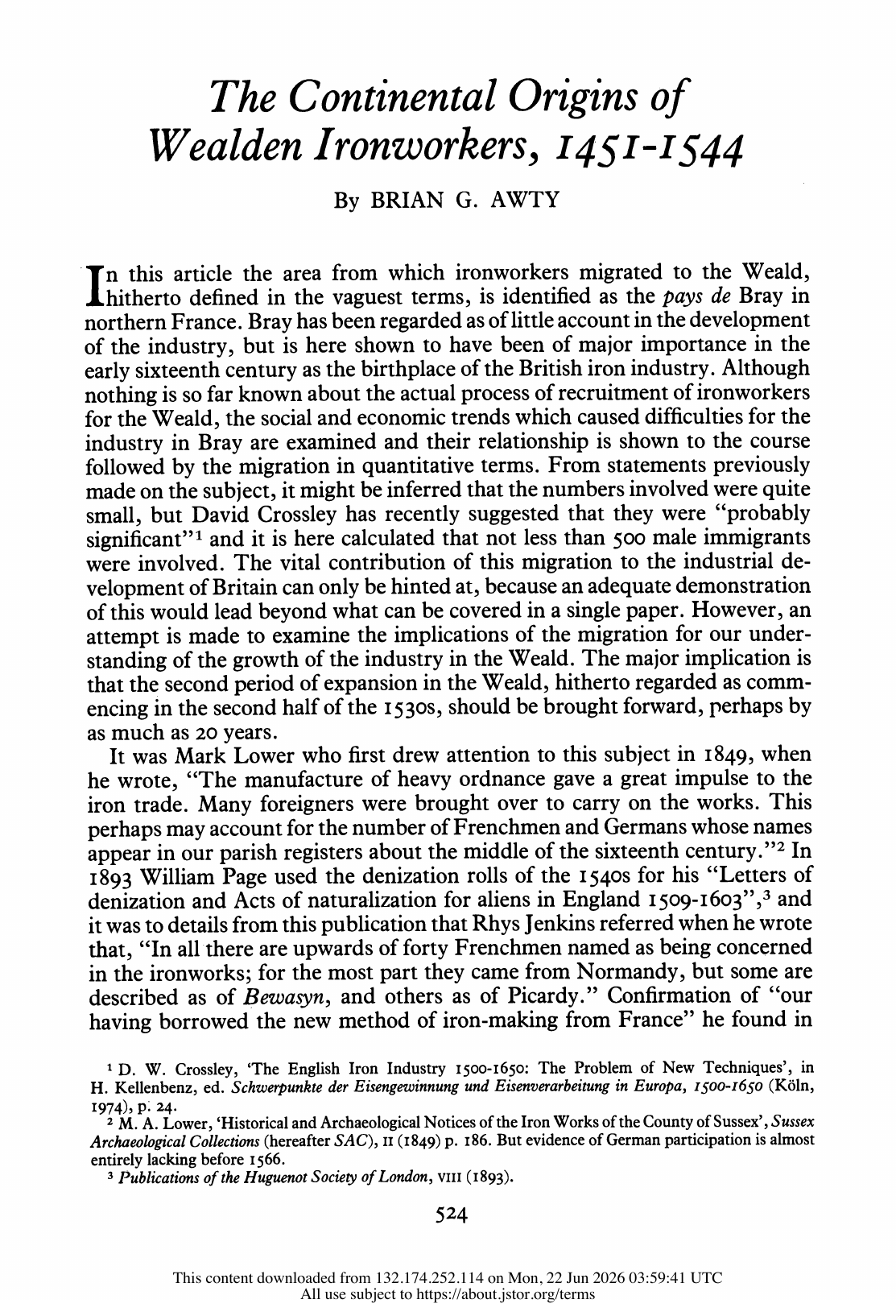
1981) strengthens the foreign-skilled-labor background by locating many early Wealden ironworkers in the pays de Bray migration, while Richards (1931) warns that "foreign" can mean non-local and that many ironmasters were English. - Hammersley (
1973) gives the best fuel context for blast-furnace imagery: charcoal production, woodland regrowth, transport radius, and local fuel bargaining. - King (
2005) puts the Weald's early-modern production peak around the1590s; Tomlinson (1976) makes the separate point that Wealden gunfounding remained nationally important long after some general iron production dispersed.
Source-Control Position
- This packet remains
mixed, but the old "No verified sourced facts" placeholder has been replaced. The play quotations are real; the Mayfield furnace/ordnance context has real supporting lanes; the authorship inference remains interpretive. - The four Shakespeare furnace examples quoted by the blog are verified in Folger chunks: Venus and Adonis, Lucrece, 3 Henry VI, and As You Like It.
- A Folger exact-string sweep for
furnacealso finds two additional Shakespeare-corpus contexts not discussed in the blog: Henry VIIIHeat not a furnace for your foe so hotand CymbelineHe furnaces / The thick sighs from him. - The Troublesome Reign furnace passage is controlled by the adjacent overview packet. It is verified directly in the 1611 EarlyPrint/TCP witness
A04520asfornace seuen-fold hote, and in normalized form inearly modern plays corpus databasePLAY_ID 342. - Healthy Wealden's "A vision of hell" page supports the public local-history picture of Mayfield Furnace: Gresham's late-1560s establishment of the works, passage to Henry Neville after Gresham's 1579 death, waterwheels, bellows, hammer ponds, gun pits, boring mill, and cast-iron-gun patent/monopoly claims. It is a useful guide, not a substitute for the underlying patent, WIRG, archaeology, or archival records.
- EarlyPrint FTS controls warn against uniqueness claims.
word_text:"as from a furnace"returns multiple witnesses;word_text:"like a furnace"is broad. Exactword_text:"sighing like furnace"returns the 1623 First Folio among returned hits, but that narrow exact result should not be inflated into an authorship claim without broader spelling/lemma controls. - The safest book wording is: Shakespeare and Troublesome Reign do contain several checked furnace metaphors; Mayfield was a real Neville-associated furnace/ordnance site; blast-furnace technology required bellows and water power. Whether the play metaphors indicate personal industrial knowledge remains an argument requiring comparative controls.
1. Verified Sourced Facts
Play Text
- Folger Venus and Adonis verifies the blog's furnace-vapor example:
As from a furnace, vapors doth he send. - Folger Lucrece verifies the blog's furnace-smoke example:
O Night, thou furnace of foul reeking smoke. - Folger 3 Henry VI
2.1verifies the blog's furnace-heart example:Scarce serves to quench my furnace-burning heart; the local context also has wind, coals, fire, breast, and quenching tears. - Folger As You Like It
2.7verifies the blog's Seven Ages example:Sighing like furnace, with a woeful ballad. - Folger
furnacesweep also finds Henry VIII1.1:Heat not a furnace for your foe so hot. - Folger
furnacesweep also finds Cymbeline1.6:He furnaces / The thick sighs from him. - The related Troublesome Reign / Arden overview verifies the non-Shakespeare-apocrypha furnace line in two ways: normalized local drama text has
That rageth as the furnace sevenfold hotinPLAY_ID 342, and EarlyPrint/TCPA04520has the old-spelling formfornace seuen-fold hote.
EarlyPrint Controls
- EarlyPrint FTS search
word_text:"as from a furnace"returns9rows, including pre- and post-Shakespeare witnesses. This phrase is not unique. - EarlyPrint FTS search
word_text:"sighing like furnace"returnsA11954, the 1623 First Folio, among returned exact hits. Searchword_text:"sighing like a furnace"returns no rows, while broadword_text:"like a furnace"returns24rows. - EarlyPrint FTS searches for the exact modernized phrases
word_text:"foul reeking smoke"andword_text:"furnace burning heart"return no rows, which mostly reflects spelling, punctuation, hyphenation, and text-normalization limits. These should not be treated as negative rarity proof without old-spelling and lemma controls. - EarlyPrint FTS search
word_text:"fornace seuenfold hote"and lemma searchlemma_text:"furnace sevenfold hot"returnA04520.
Mayfield and Furnace Technology
- Healthy Wealden's "A vision of hell" page states that Thomas Gresham established the Mayfield ironworks after taking possession of the Old Palace estate in the late
1560s, and that control passed to Henry Neville after Gresham's death in1579. - The same Healthy Wealden page states that by
1592Neville worked in a syndicate with the Sackville family and foreign partners, and that he gained a royal patent or monopoly for export of cast-iron guns from Elizabeth I. The underlying patent witness remains open. - The same page describes the furnace setting in terms directly relevant to the blog's technology claim: hammer ponds, waterwheels, bellows, furnace blasts, gun pits, continuous firing, and a boring mill.
- The related Mayfield packet supplies stronger source lanes for Neville's Mayfield/ordnance context, including Bell-Irving, Sussex Archaeological Collections, WIRG data, Neville letters, and BRO/Royal Berkshire
D/EN/O23ordnance transcriptions. - Uploaded-scholarship source position: Crossley, Hammersley, Awty, Richards, King, and Tomlinson now provide stronger technical and economic context for the blast-furnace side of the packet. This strengthens the industrial background, not the authorship inference.
- The related bellows-mender packet now controls the narrower bellows vocabulary lane: early account-book bellows repair examples are church-organ contexts; a later Gerard Boate ironworks witness verifies industrial
bellow-makersbut remains post-Shakespeare context.
Demoted or Unchecked Claims
- The claim that "most" Shakespeare furnace metaphors incorporate the blast aspect remains unproven. It requires a categorized metaphor table separating heat, smoke, breath, sighing, bellows/blast, and biblical fiery-furnace contexts.
- The claim that the furnace imagery demonstrates personal knowledge of Mayfield or Neville authorship remains interpretive.
- The blog mentions a half-scale working-model video, but this packet does not currently preserve or cite that video.
2. Ken Feinstein Twitter and Blog Information
- A Ken Feinstein blog post dated
23 Nov. 2018states:
“Sir Henry Neville inherited Mayfield Manor in Sussex which included an ironworks used for casting iron ordnance (cannons).”
- The same post states:
“He was very involved in this business from the mid 1580s to the mid 1590s.”
- The same post states:
“the main component of an iron foundry is the furnace.”
- The same post adds:
“at the time they were using blast furnaces with giant bellows which blew air into the furnace.”
- The same post quotes Venus and Adonis:
“As from a furnace, vapours doth he send:”
- The same post quotes Rape of Lucrece:
“O Night, thou furnace of foul-reeking smoke,”
- The same post quotes 3 Henry VI:
“Scarce serves to quench my furnace-burning heart:”
- The same post quotes As You Like It:
“Sighing like furnace”
- The same post states:
“Most of these metaphors incorporate the "blast" aspect of the furnace.”
- The same post states that The Troublesome Reign of King John includes:
“That rageth as the furnace sevenfold hot”
- Wealden District Council's Healthy Wealden walking guide provides a public local-history control for the Mayfield furnace context. It states that Thomas Gresham established the Mayfield ironworks after taking possession of the Old Palace estate in the late
1560s, that control passed to Henry Neville after Gresham's death in1579, and that by1592Neville worked in a syndicate with the Sackville family and German/Dutch partners to gain a royal patent/monopoly for export of cast-iron guns.
- The same guide describes the technical setting: hammer ponds, waterwheels, bellows, a furnace, vertical gun pits, boring mill, and continuous firing for months.
- Source check,
2026-05-29: the four Shakespeare quotations in the blog are verified in Folger chunks. The Troublesome Reign furnace line is verified inA04520and in the local Early Modern Plays database, but not yet in a separate 1591 second-part page witness. - Source check,
2026-05-29: Healthy Wealden supports the public Mayfield furnace technology context but should be backed by WIRG, archaeology, patent, and archival witnesses before final book prose leans on the technical or monopoly details. - Source check,
2026-05-29: exact EarlyPrint searches show that furnace phrasing is not automatically rare; broader comparison is still needed before making authorship claims.
3. Citations
- Feinstein, Ken. "Cannons in the Canon (Part 2) - Blast Furnaces." kenfeinstein.blogspot.com, 23 Nov. 2018, https://kenfeinstein.blogspot.com/2018/11/cannons-in-canon-part-2-blast-furnaces.html. Local preservation: blog cannons2 blast furnaces 2018 11 23.
- Wealden District Council. “A vision of hell.” Healthy Wealden, https://www.healthywealden.co.uk/walks/a-vision-of-hell/.
- Shakespeare, William. Venus and Adonis. Folger chunk: poem.
- Shakespeare, William. Lucrece. Folger chunk: poem.
- Shakespeare, William. 3 Henry VI. Folger chunk: act 02 scene 01.
- Shakespeare, William. As You Like It. Folger chunk: act 02 scene 07.
- Shakespeare, William. Henry VIII. Folger chunk: act 01 scene 01.
- Shakespeare, William. Cymbeline. Folger chunk: act 01 scene 06.
- EarlyPrint FTS database: EarlyPrint computational index. Checks used include
word_text:"as from a furnace",word_text:"sighing like furnace",word_text:"like a furnace",word_text:"fornace seuenfold hote", andlemma_text:"furnace sevenfold hot". - Local Early Modern Plays database: early modern plays corpus database, especially Troublesome Reign
PLAY_ID 342. - cannons arden of faversham troublesome reign and king john, related packet controlling the Troublesome Reign furnace witness.
- cannons in the canon bellows mender, related packet controlling the bellows vocabulary lane.
- mayfield manor and ironworks, related packet controlling the Mayfield/BRO ordnance lane.
- Mayfield / Wealden iron research pass,
2026-06-21: MAYFIELD WEALDEN IRON RESEARCH PASS 2026 06 21. - Mayfield / Wealden iron source-image packet,
2026-06-21: SOURCE NOTES. - play as you like it, related play packet.
4. Evidence Images
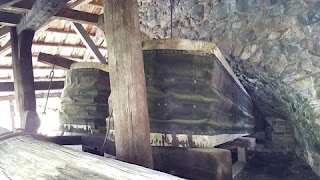
- Source-control note,
2026-05-29: this preserved image is a blog image of an ironworks/bellows setting. It supports the blog's visual context but does not by itself identify Mayfield, date the equipment, or verify the textual argument.
5. Notes on Access
- This is now a mixed source-control packet, not a blog-only lead packet.
- The play quotations have Folger controls, but final book quotation should still use the book's selected citation edition.
- The underlying furnace-history and ironworks witnesses should continue to be strengthened from WIRG, archaeology, patent, and archival records.
- Web/source audit result: the Mayfield blast-furnace/ordnance background is stronger than this packet previously showed. However, the Shakespeare metaphor list should be treated as lexical/imagistic evidence, not as proof of authorship.