North's Plutarch and Henry Neville's Advice to King James
Topic: North's Plutarch and Henry Neville's Advice to King James
2026-07-31 Update: The 1640 Laud-Annotated Copy
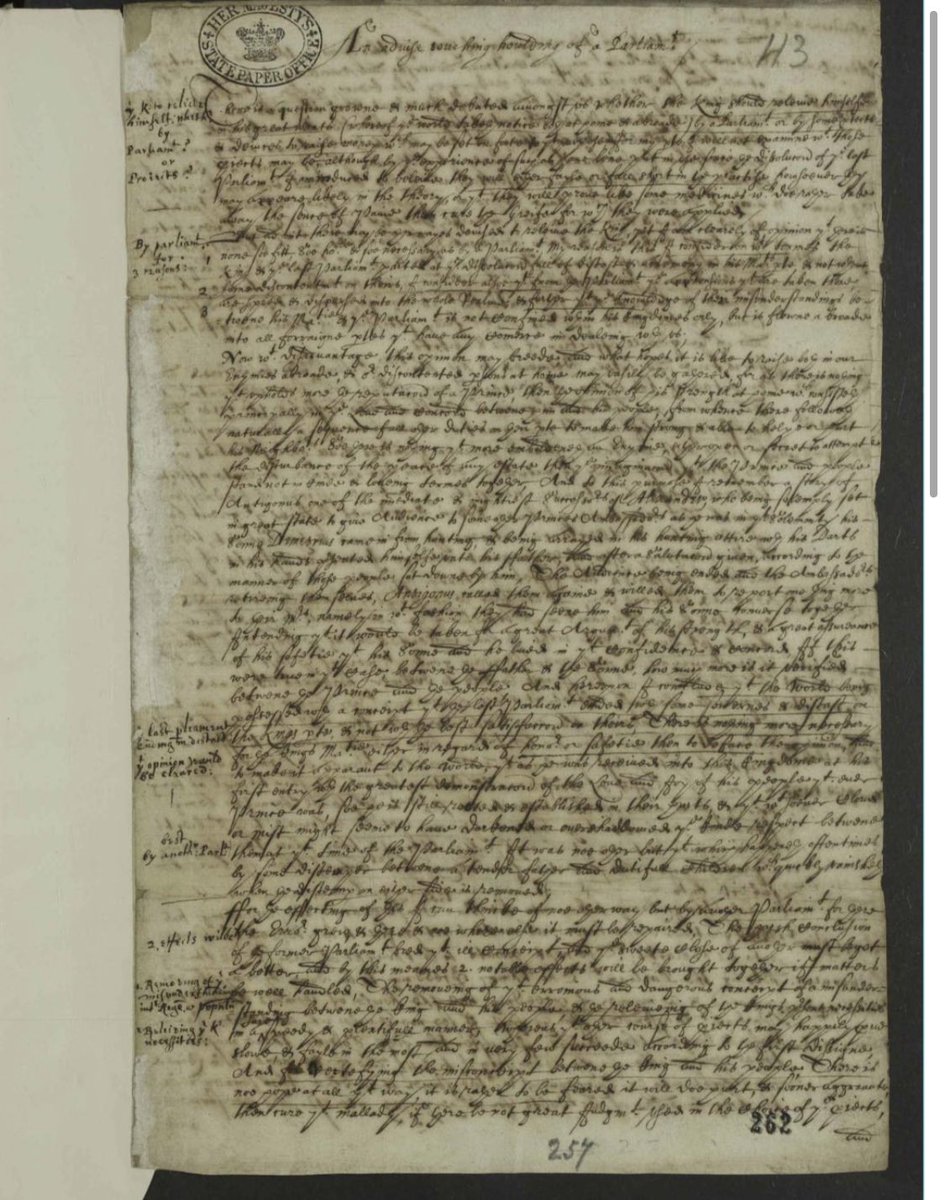
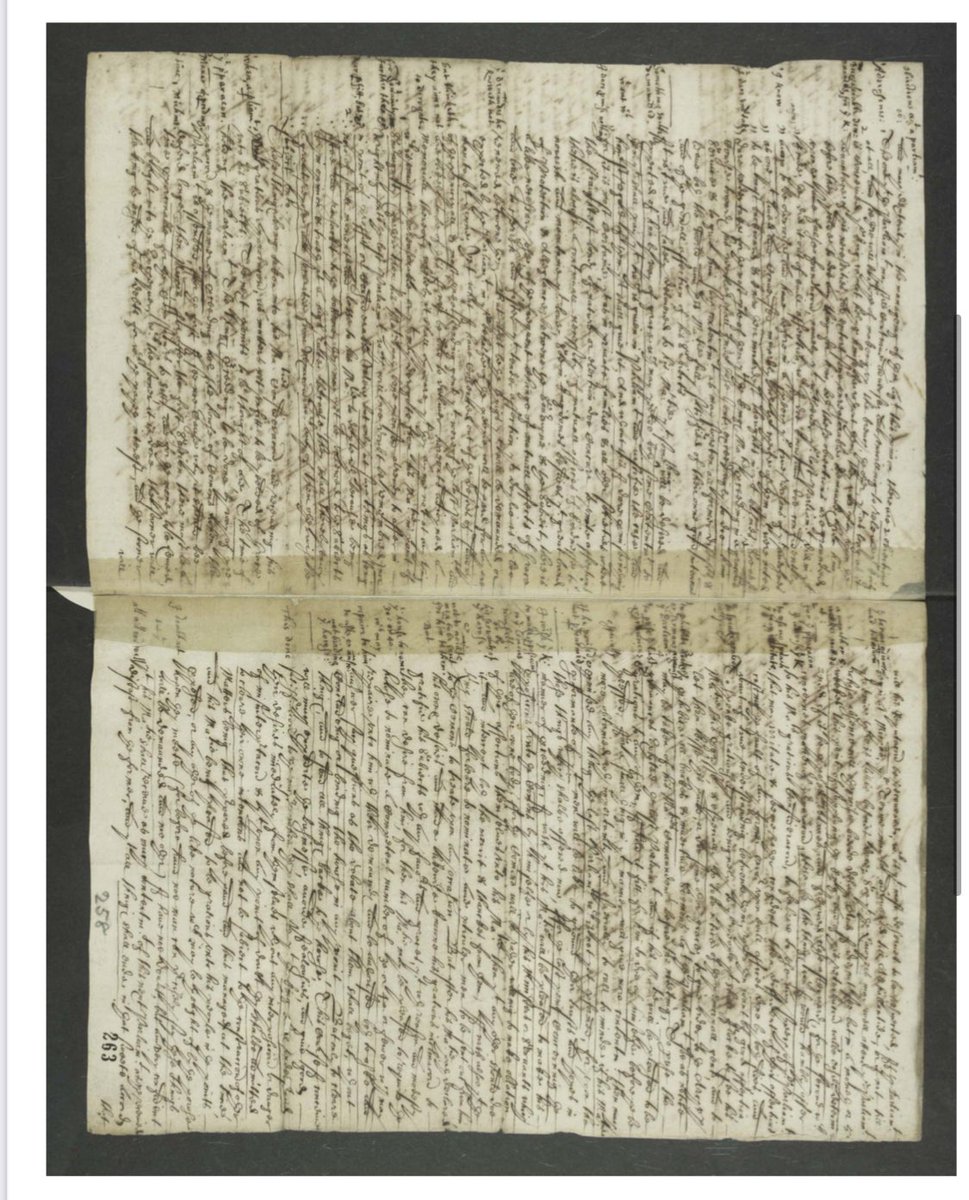
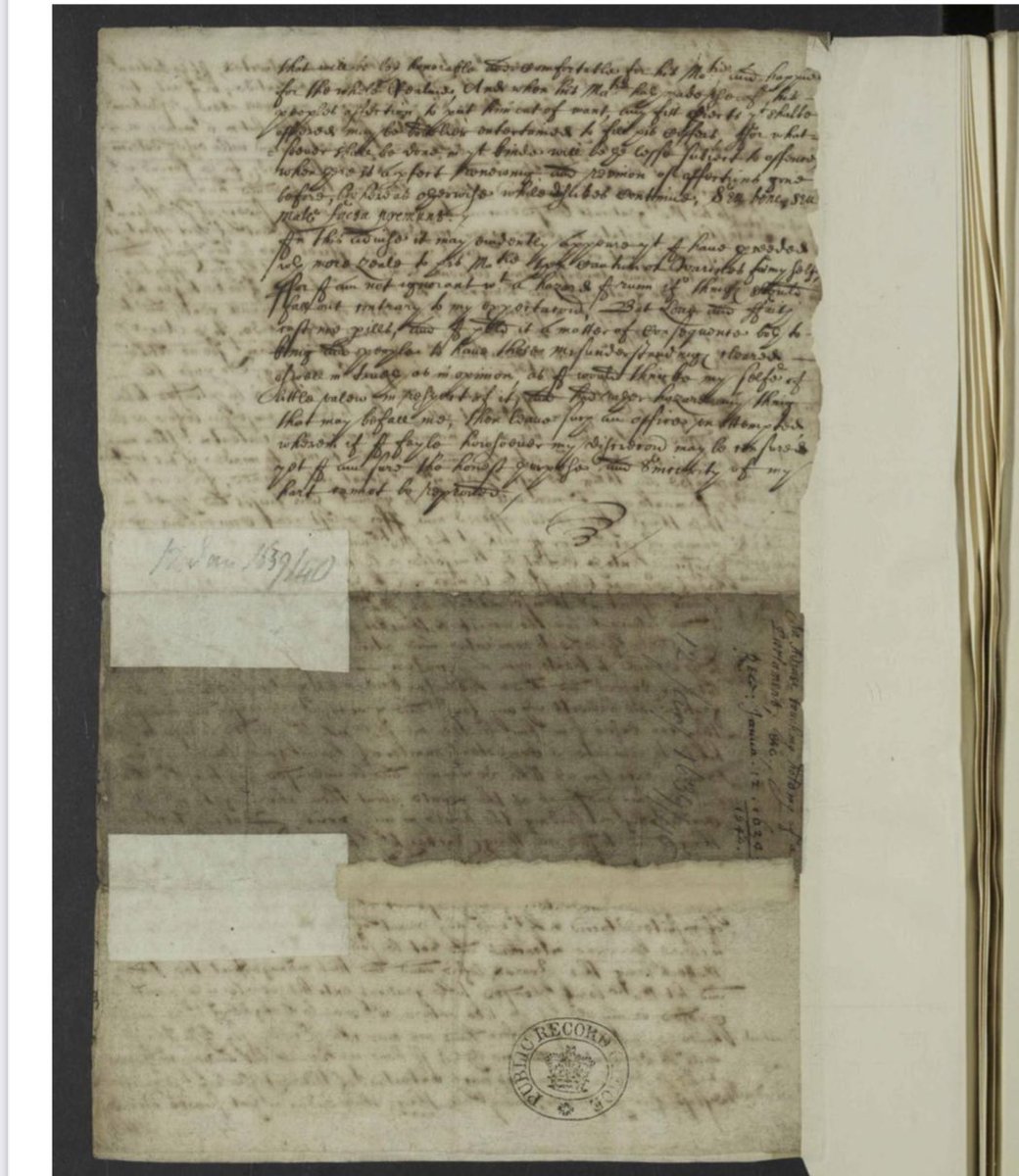
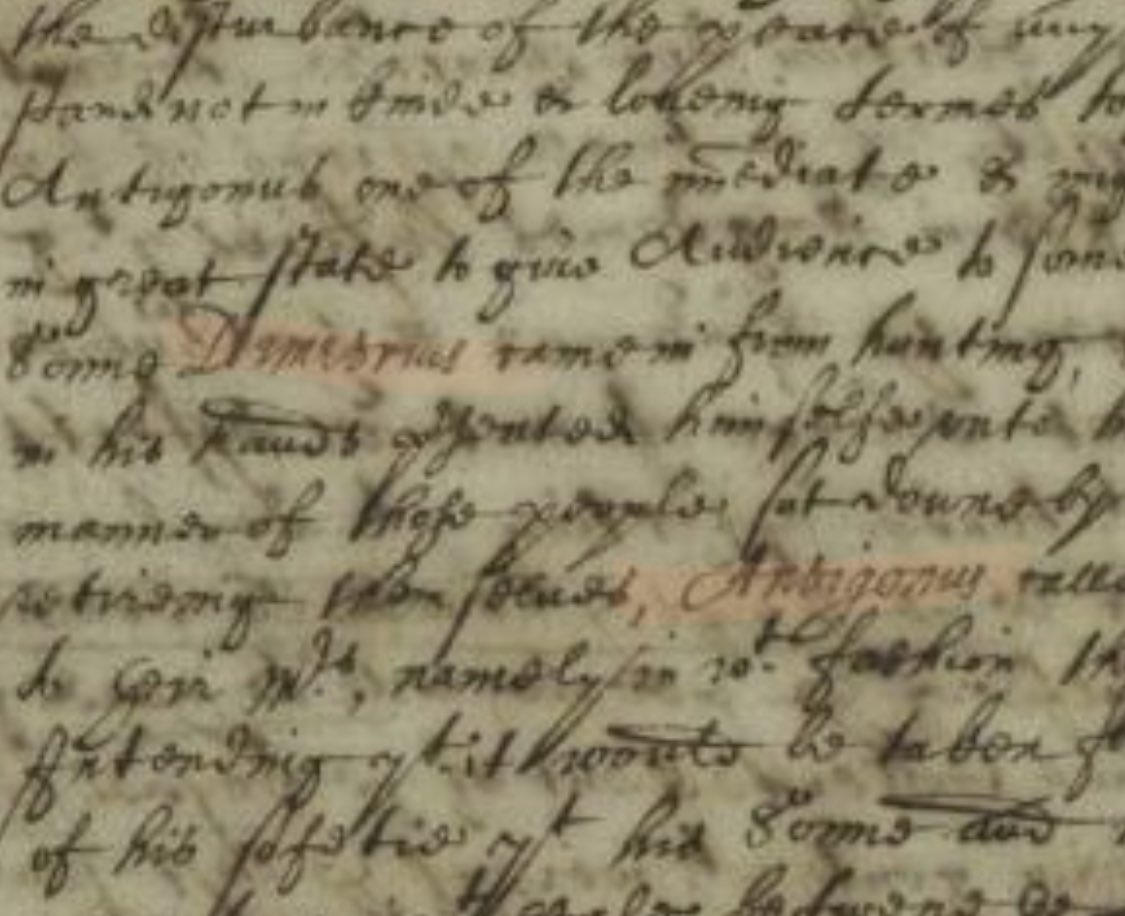
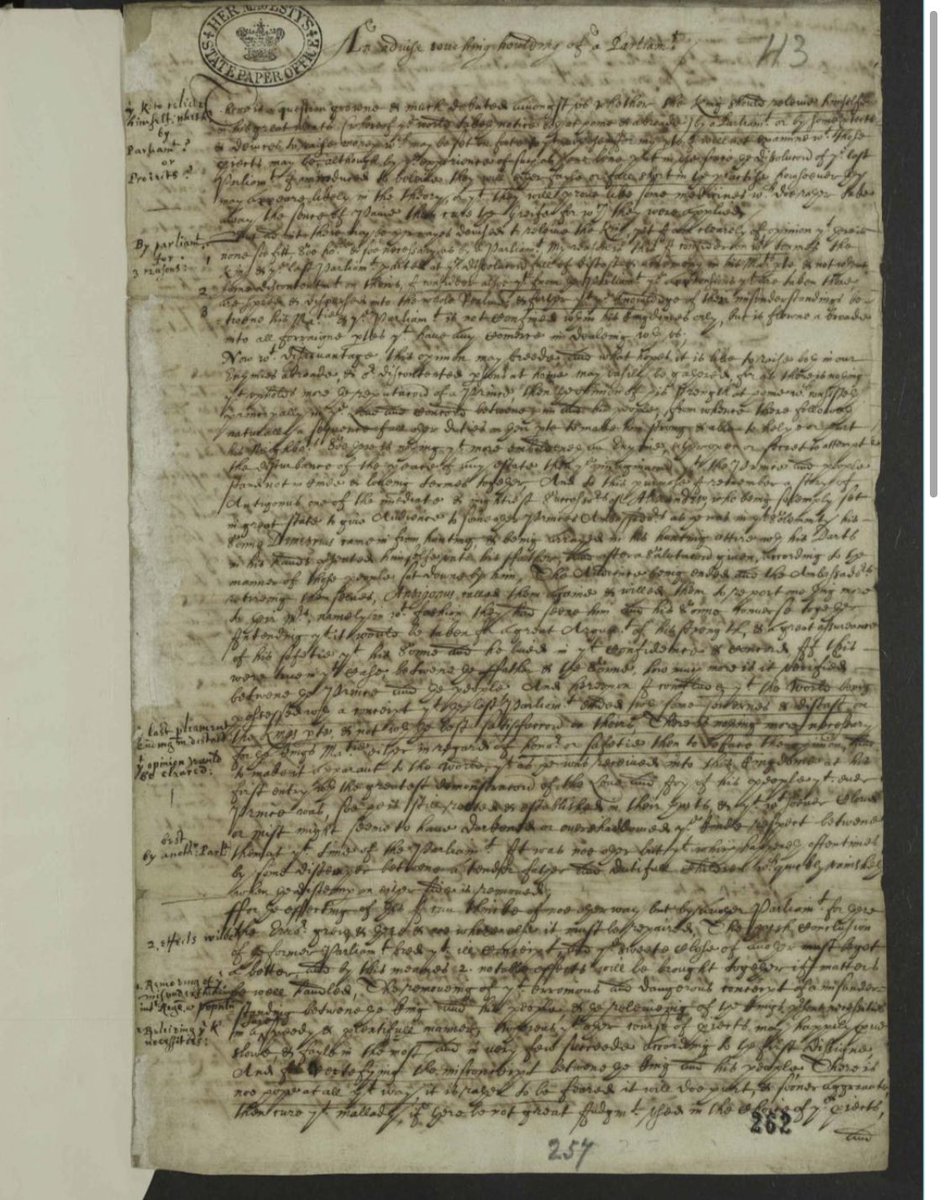
A complete later witness has now been acquired and inspected: The National Archives SP 16/441 f.262, Gale MC4325281192, catalogued 12 January 1640 as advice addressed to James I [by Sir Henry Neville?], with marginal notes attributed to Archbishop Laud.
This does not redraft the work's composition date as 1640. It establishes a significant afterlife: the Advice was preserved and subjected to close analytical annotation during the renewed Crown-Parliament crisis. The main text matches the established Gardiner/XML tradition and includes the full personal justification after the Latin tag. The margins reduce Neville's argument to reasons, objections, concessions, preparation, procedure, and predicted outcome.
The fresh collation supports the XML readings great wants and the world takes notice against Gardiner's great want and the world taketh knowledge. It also corrects one XML word: the 1640 copy and Gardiner both read that the parliamentary error “must be repaired,” not repaid. Both v12 XML variants were corrected on 31 July 2026.
The dedicated witness packet is neville advice 1640 laud annotated copy; the dated manuscript and marginalia collation is ADVICE SP16 441 F262 LAUD COPY COLLATION 2026 07 31. All fresh manuscript readings remain an unverified AI working transcription until checked by an expert.
2026-08-22 Update: The Closing Tacitus Tag — Text, Editions, and the Marked Page
The Advice ends with four words of Latin, seu bene seu male facta premunt, from Tacitus, Histories I.7. This pass established what that wording can and cannot be used to show.
The passage
The 1574 Lipsius edition, at Histories I.7, prints:
Ceterum vtraque cædes ſiniſtrè accepta, & inuiſo ſemel principe, ſeu bene ſeu male facta premunt.
Sense: once a prince has become disliked, his deeds press upon him whether well or badly done. The argument Neville closes with is that a ruler who has lost public goodwill cannot recover it by conduct, because conduct is no longer read on its merits.
The marked page — verified directly
Printed p. 18 of the surviving Audley End copy (English Heritage object 81038208) was reopened and read at magnification on 22 August 2026. A ruled underline runs beneath the sentence across three printed lines and stops exactly at premunt., at the sentence end rather than the line end. The recurring γ. ω. Greek-letter tag stands in the margin at the head of the last line — the same tag that marks Annals III.30 (p. 310), Annals IV.18 (p. 340) and Histories I.38 (p. 33), the other three Tacitus passages Neville uses. All four of his Tacitus sentences are marked by one hand using one system. This supersedes the earlier status of the p. 18 conjunction, which had been carried from the 11 July 2026 pass without direct re-verification.
CORRECTION — the tag does not identify an edition
An earlier formulation in this packet, and in the first version of the 2026-08-22 illustrated report, treated facta premunt as an edition-specific fingerprint pointing to the 1574 Lipsius text. That is withdrawn. The reading is common to the whole early printed tradition:
| Witness | Reading at Histories I.7 | How checked |
|---|---|---|
1551 (IA bub_gb_9IjCTEhA1Q4C, printed p. 521) | Cæterùm utraque cædes ſiniſtrè accepta. Et inuiſo ſemel principe, ſeu bene ſeu male facta premunt. | page facsimile |
1559 (IA bub_gb_X3wwQGAW13AC) | … ſeu bene ſeu male facta premunt. | transcription |
1574 Lipsius — Audley End copy, printed p. 18 | Ceterum vtraque cædes ſiniſtrè accepta, & inuiſo ſemel principe, ſeu bene ſeu male facta premunt. | the photograph itself |
1621, ex recensione I. Lipsii (IA ned-kbn-all-00002688-001) | Ceterum vtraque cædes ſiniſtre accepta: & inuiſo ſemel principe, ſeu bene ſeu male facta premunt. | transcription |
1826, Latin edition of the Histories (IA fivebookshistor00willgoog) | Ceterum utraque caedes sinistre accepta: et inviso semel Principe, seu bene, seu male facta premunt. | transcription |
| modern critical text | et inviso semel principi seu bene seu male facta parem invidiam adferebant | The Latin Library |
The 1551 witness predates Lipsius by twenty-three years and is word-for-word identical in the four words Neville uses. The divide is therefore early-modern printed tradition versus modern critical text, not this edition versus other editions. Any period Latin Tacitus would have supplied the tag.
Negatives returned by the same scan for the 1600, 1606, 1648, 1653, 1673, 1685 and 1743 editions are OCR failures on poorly recognised scans and are not recorded as evidence of absence.
What the tag still supports
- Neville was reading a period Latin Tacitus. His phrase does not exist in modern editions.
- The wording is uncommon in English print. One indexed EEBO-TCP witness before
1630: - The Audley End copy is compatible with his wording — along with every other pre-modern Latin
Essaies politicke, and morall. By D. T. Gent (1608), A14087. Not a commonplace scattered through English books, and Neville's use is close to the earliest recoverable.
Tacitus. Compatibility, not diagnosis. The marked page remains a documented conjunction; the edition-fingerprint inference does not follow from it.
Lipsius's conjecture and its afterlife
Lipsius did not question premunt. He questioned the case of what precedes it, in his note on the line in the 1574 edition:
lin. 19. Et inuiſo ſemel principe. Legerim, Inuiſum ſemel principem ſeu b. ſ. m. f. premunt.
He proposed the accusative in the notes and left his running text unchanged. The proposal nevertheless circulated: the 1608 English witness A14087 prints Invisum semel principem, saith Tacitus, seu benè, seu malè facta premunt — Lipsius's conjectural form, not his printed text. Neville quotes only the four words common to both forms, so his wording does not discriminate between them. This transmission trail appears untraced and is a live research target.
Attribution status of the Advice, restated
An earlier caution in the Tacitus packet was too broad and has been narrowed. Gardiner prints the work in full as An Advice [by Sir Henry Neville] Touching the Holding of a Parliament, History of England, vol. II (1863), Appendix V, pp. 389-394, from SP 14/74 no. 44; his brackets supply an absent title-attribution rather than express doubt, and the question mark in the Gale heading attaches to the 1640 copy SP 16/441 f.262, not to the work. *The correct caution is that no autograph manuscript survives, so the Advice is a witness to Neville's reading and not to his handwriting.* For the Tacitus argument, which concerns reading, that limitation does not bite.
Outputs
- Illustrated note:
Facta Premunt A Note On The Text 2026 08 22(3 pp.), with the1551 - The four-passage report
Neville Four Tacitus Passages 2026 08 22was corrected on the same
facsimile, the edition table, and Lipsius's note.
day to remove the edition-fingerprint claim.
Source-Control Summary
- The core comparison is no longer tweet-led: it is controlled by the Neville Letters Corpus
document_neville_advice, the EEBO/TCP North Plutarch witnessA09802, the extracted North passage, and Gardiner's printed full Advice text with page images. - The tweet images remain useful as discovery/history-of-research witnesses, especially for the manuscript copy image route, but they should not be the final citation layer.
- Keep the source hierarchy straight: Gardiner prints the full Advice and cites
SP 14/74, no. 44; Spedding gives parliamentary context but not the full Advice; the direct TNA image remains the open source-control target. - The earlier North-only description now needs revision. Neville demonstrably used the Antigonus/Demetrius anecdote, and much of his narrative follows the same sequence found in North. But the climactic clause does not: North, in all three English editions, reduces a two-noun phrase to one noun (
the agreement), where the Greek (ὁμόνοιαν καὶ πίστιν) and Amyot (concorde & confiance) both keep two nouns. Neville has two nouns —confidence and concord. It is not safe to call the passage an almost verbatim quotation from North alone. - Do not restate this as "Neville used Amyot". The period Latin also preserves the concord/faith sense (
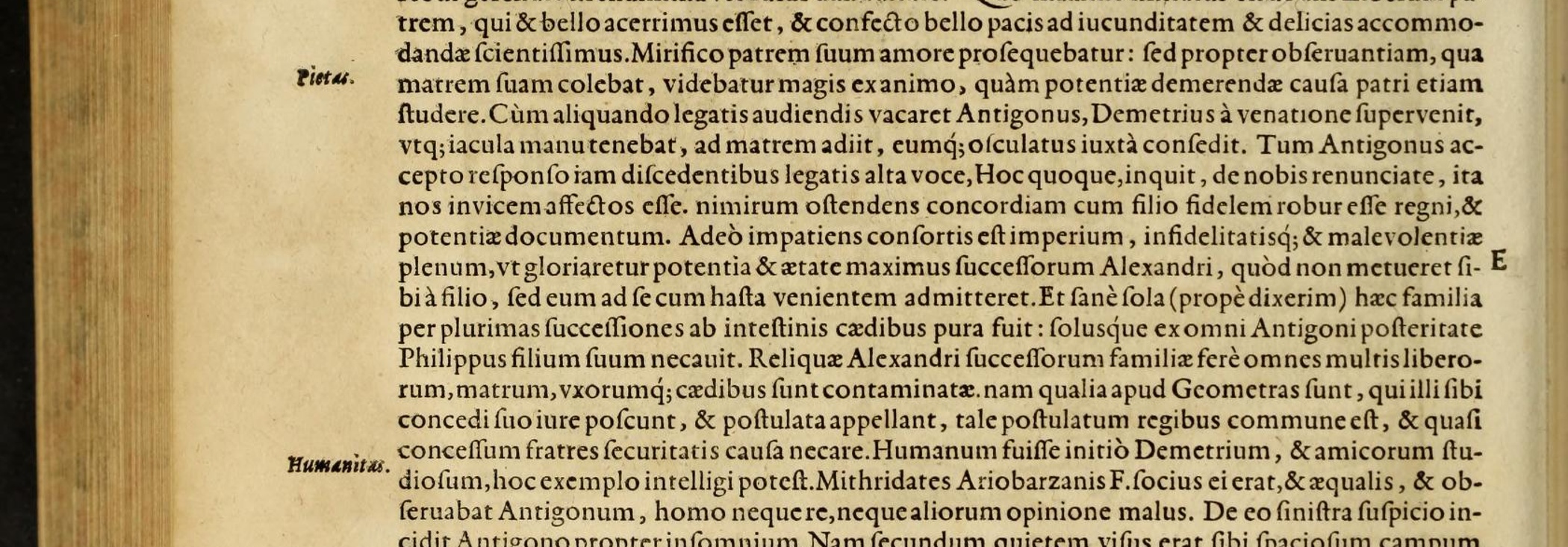
concordiam ... fidelem), and so does the Greek. The 2026-08-09 pass eliminates the North-only model; it does not identify the replacement. - The
1579,1595, and now1603North witnesses preserve substantially the same wording in this passage. The anecdote cannot, by itself, identify which English edition Neville used. - Deflationary control that must travel with this claim. The historical v17 computation (168 units, 136,249 word tokens) found
concordtwice, both instances in the Advice, andstrength6 times, twice in the Advice. These counts require a v22 rerun before being presented as current. Crucially, paragraph 4 — immediately before the anecdote — already states Neville's own thesis as "the opinion of his strength at home, which consists principally in the love and concord between him and his people", using the common English formulalove and concord(45 documents in the EarlyPrint/TCP index).assurance(44),argument(21),confidence(18) andsafety(13) were likewise historical v17 counts. Most of the sentence therefore needs no source at all. What the control does not explain is the noun pair itself, or the choice ofconfidence: the exact couplingsconfidence and concordandconcord and confidencereturned 0 and 1 documents respectively across the 23,144-document indexed corpus, and the single hit was a 1623 translation, ten years after the Advice. - Full working: PLUTARCH SOURCE CHAIN NORTH 1603 LATIN GREEK COLLATION PASS 2026 08 09, with page images in plutarch_source_chain_2026-08-09.
MPESE / Some Graces Cross-Link
- MPESE's
A Collection of Some Graces (1614)witness should be consulted with this packet because it gives a separate Neville reform-program text near the Advice/Undertakers cluster. - Keep the documents distinct: this packet controls the Advice/North's Plutarch anecdote;
work in parliamentnow controlsSome Graces;parliamentary undertakerscontrols the Undertakers demotion.
1. Verified Sourced Facts
- The Neville letters corpus contains a document with the attributes:
id="document_neville_advice"filename="Neville Advice"title="Neville Advice to the King"date_ns="1613-01-01"
- Paragraph
5of that XML document contains an anecdote naming: AntigonusDemetrius
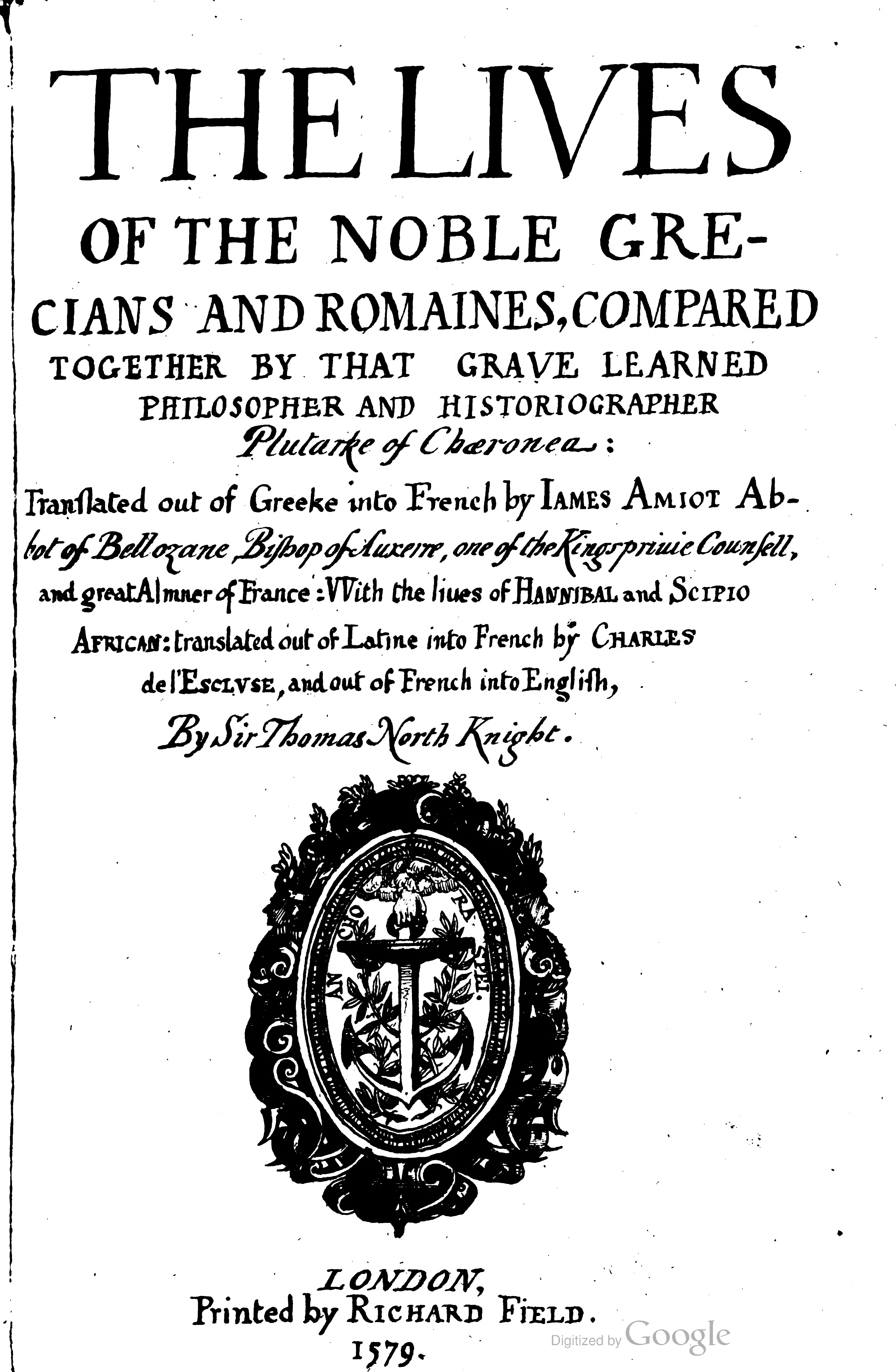
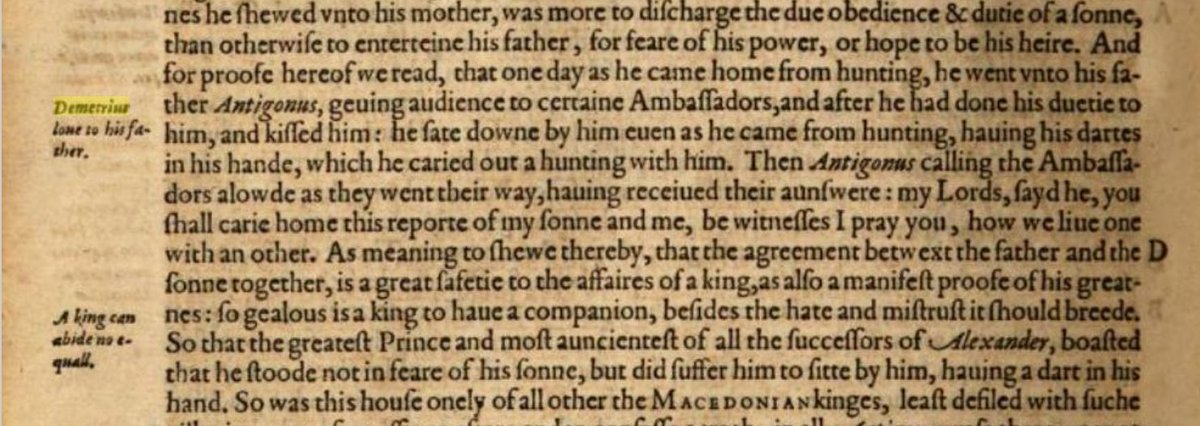
- Thomas North's
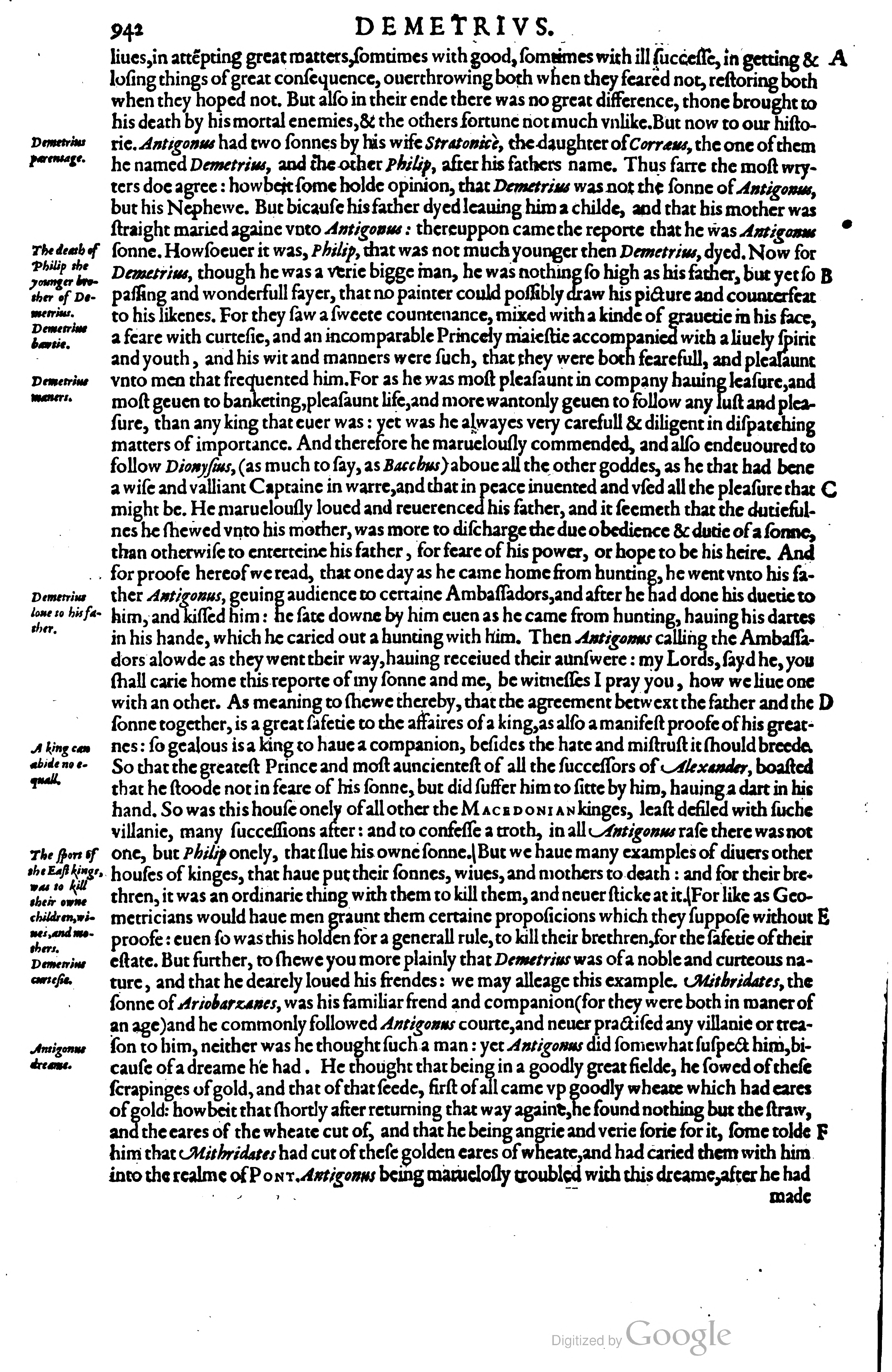
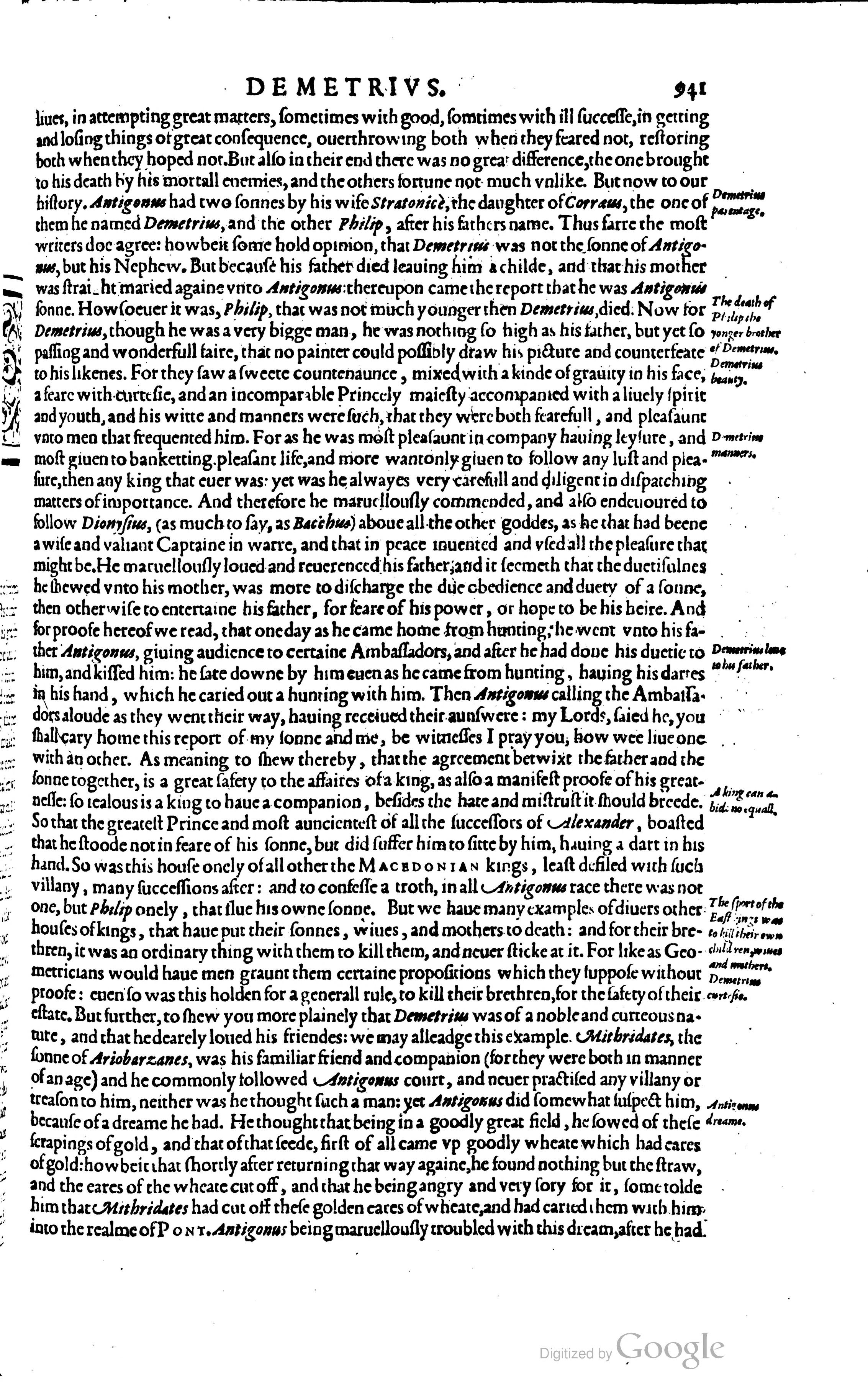
1579Plutarch in the EEBO corpus is: TCP A09802- The lives of the noble Grecians and Romanes compared together
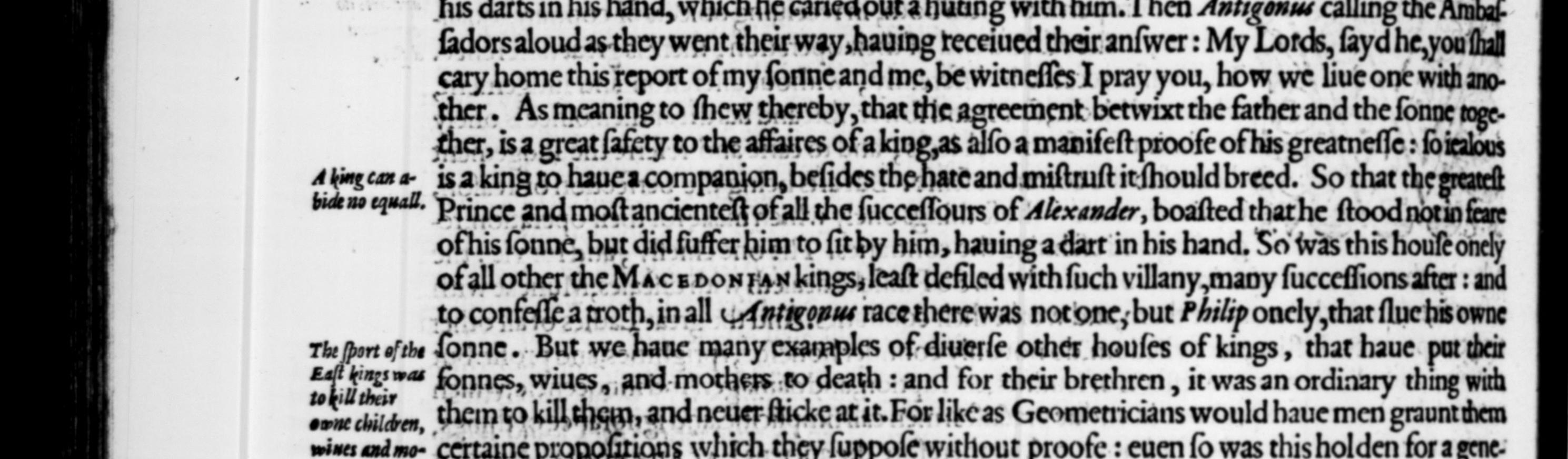
- In that North text, the life of Demetrius includes:
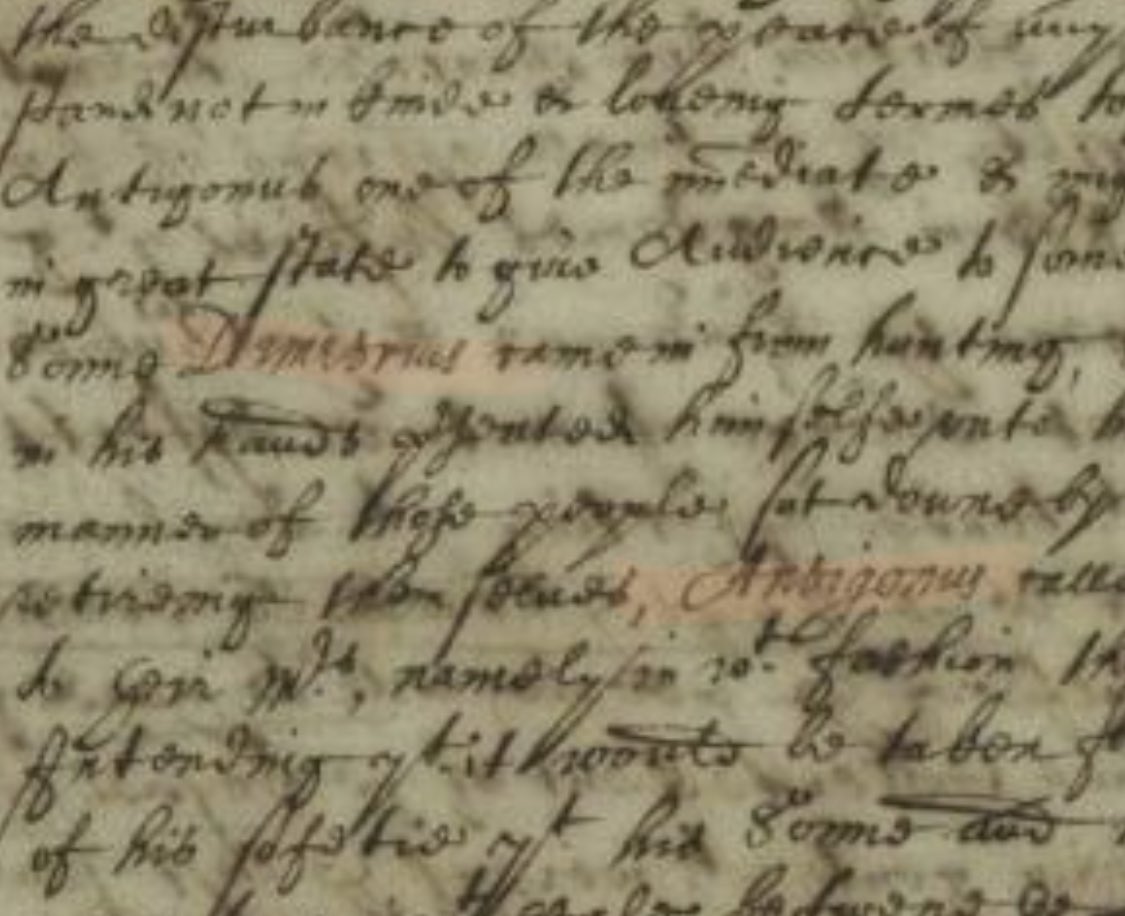
- Antigonus “geuing audience to certain ambassadors”
- Demetrius coming “from hunting”
- Demetrius sitting by his father with “his dartes in his hande”
- Antigonus making the ambassadors witness “how we liue one with an other”
- The local
Work in Parliamentpacket preserves the parliamentary source trail for Henry Neville'sAdvicematerial. The directly checked Spedding witness is: - James Spedding, ed., The Letters and the Life of Francis Bacon, vol. V, London: Longmans, Green, Reader, and Dyer, 1869.
- Internet Archive item
worksoffrancisba12bacoiala, where IA metadata labels the larger set as The Works of Francis Bacon and volume12, while the scanned volume itself is Letters and Life, vol. V.
- Spedding does not print the full text of Neville's
Advicein vol. V. He identifies and contextualizes it in the Bacon / James / Undertakers parliamentary source trail.
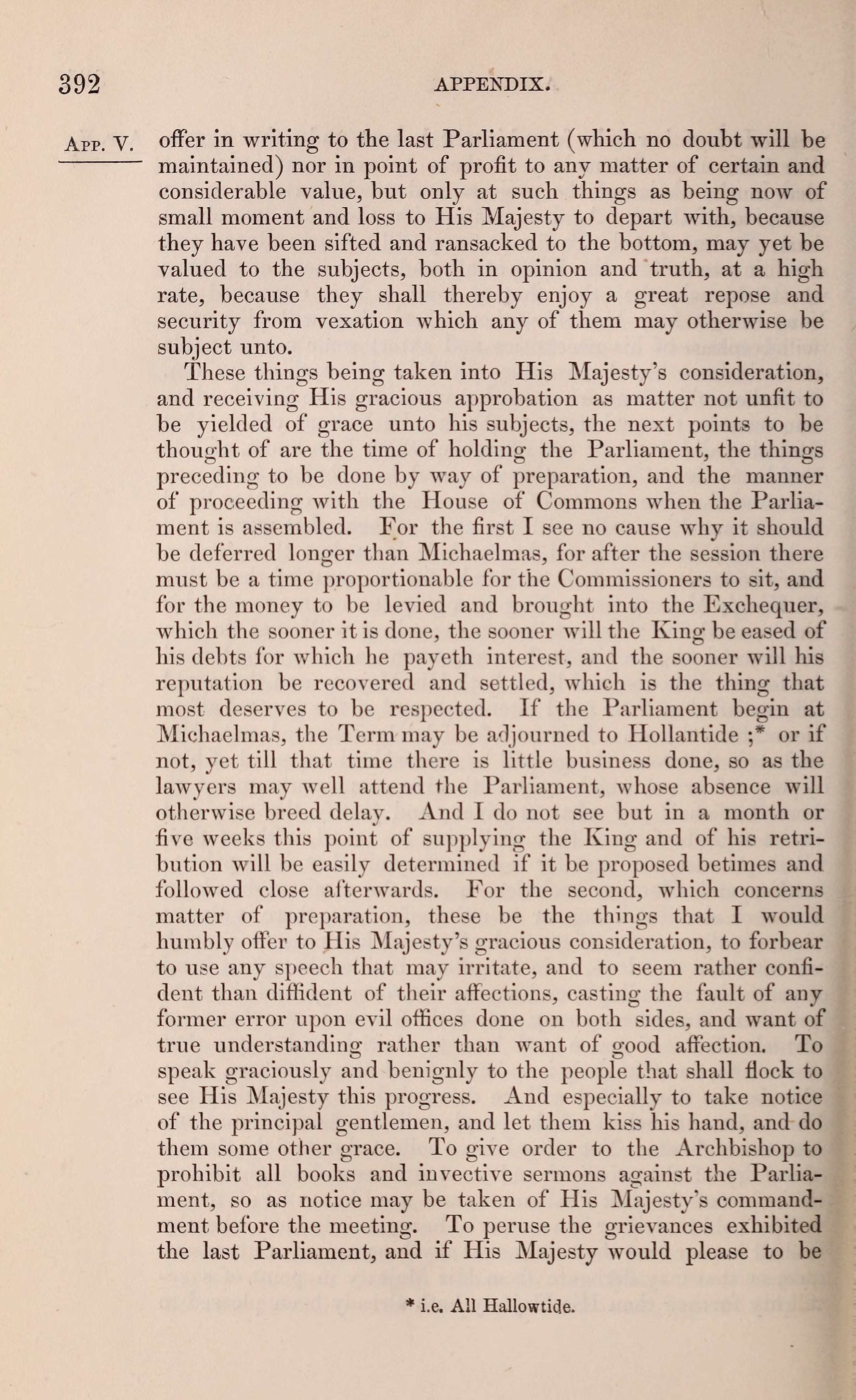
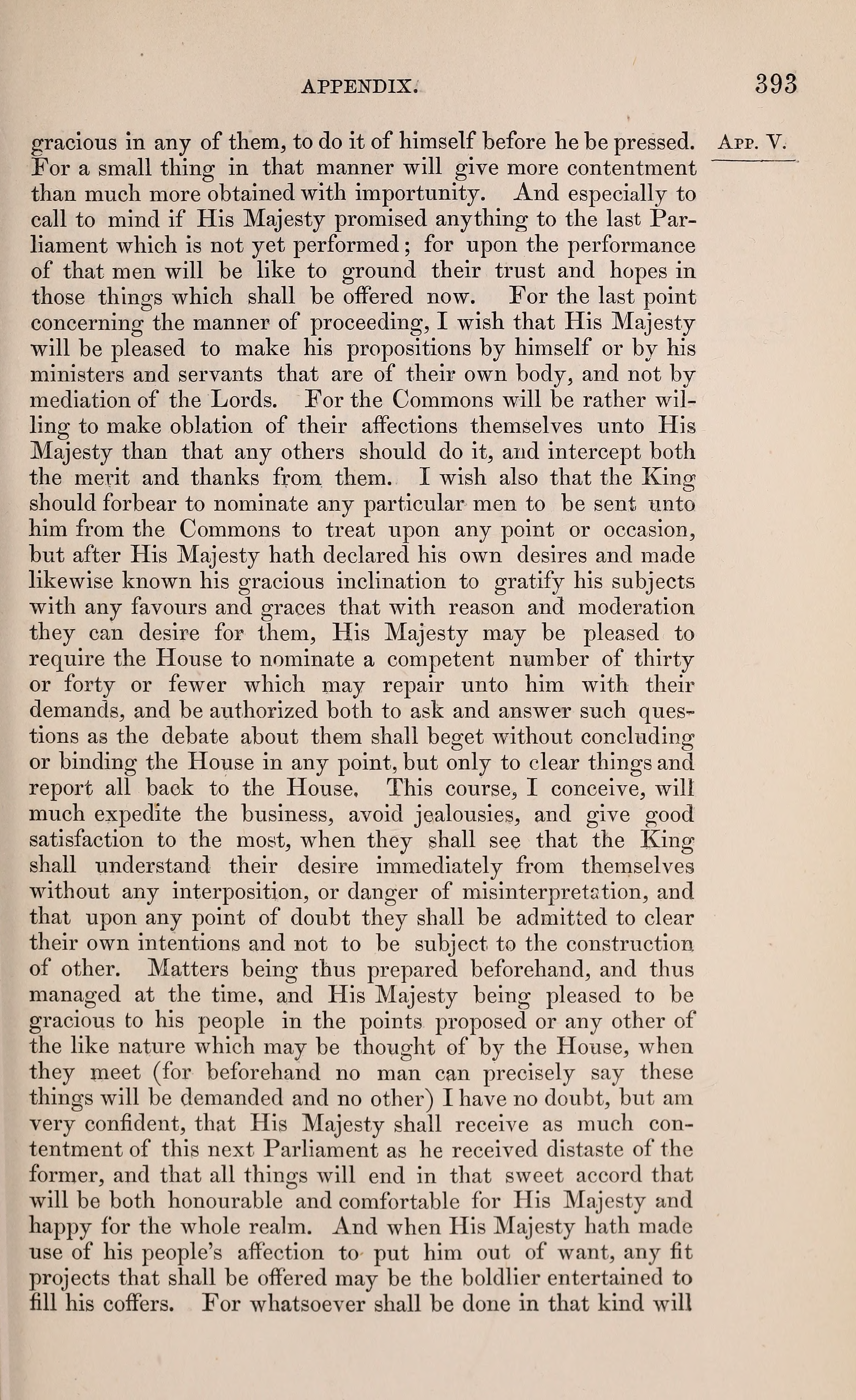
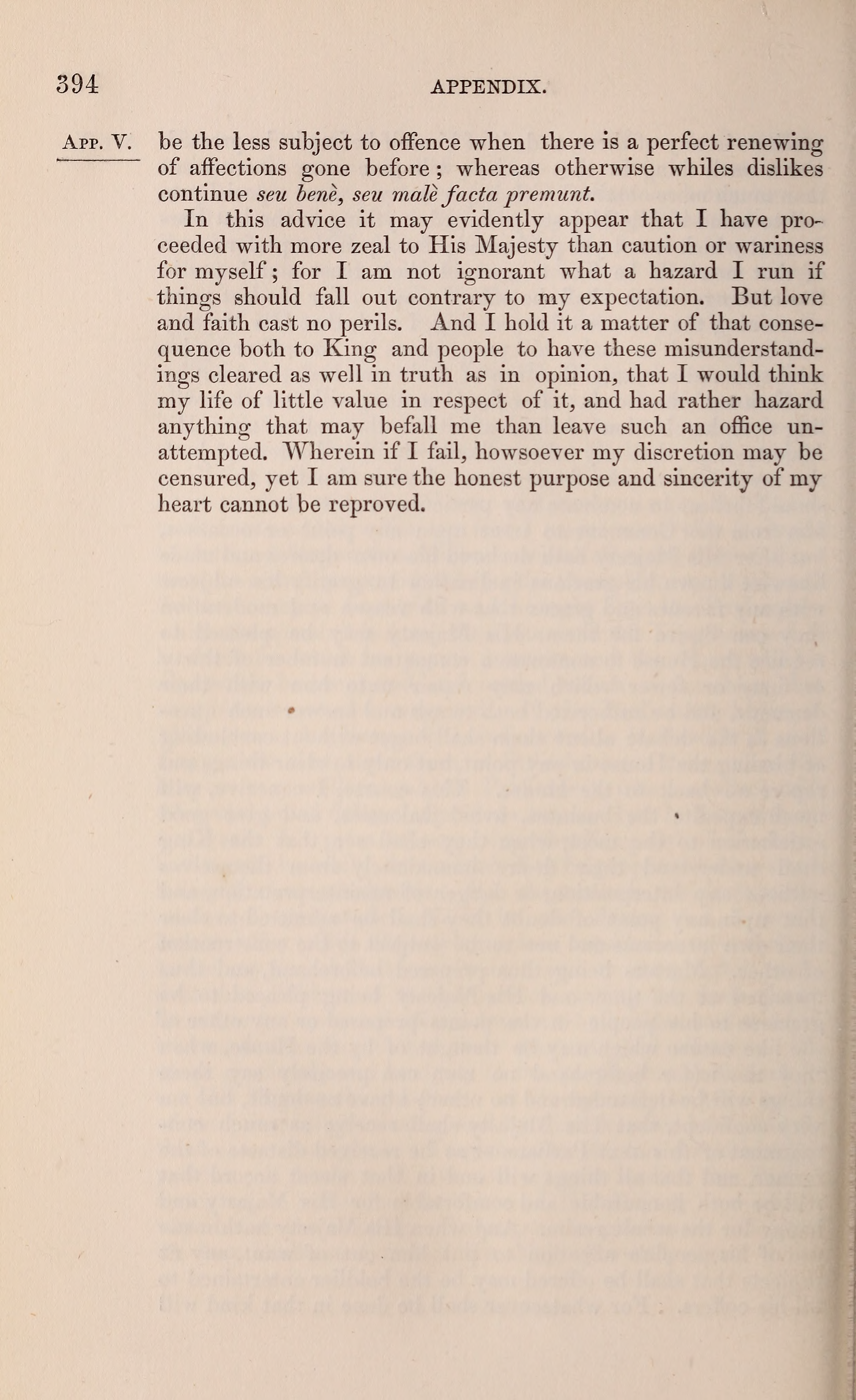
- The full printed Advice text has now been located in Gardiner's first-edition two-volume history:
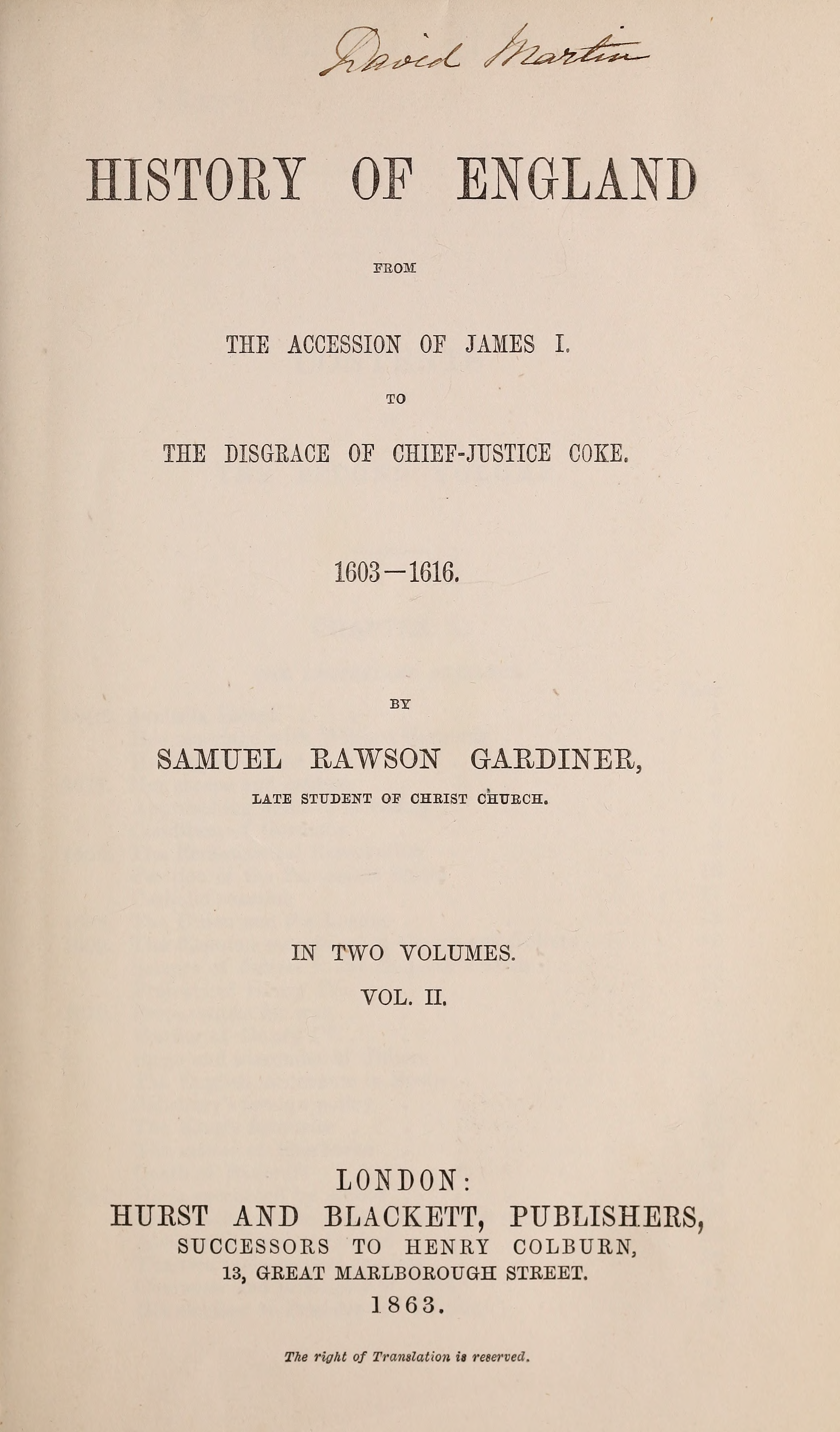
- Samuel Rawson Gardiner, History of England from the Accession of James I. to the Disgrace of Chief-Justice Coke: 1603-1616, vol. II, London: Hurst and Blackett, 1863.
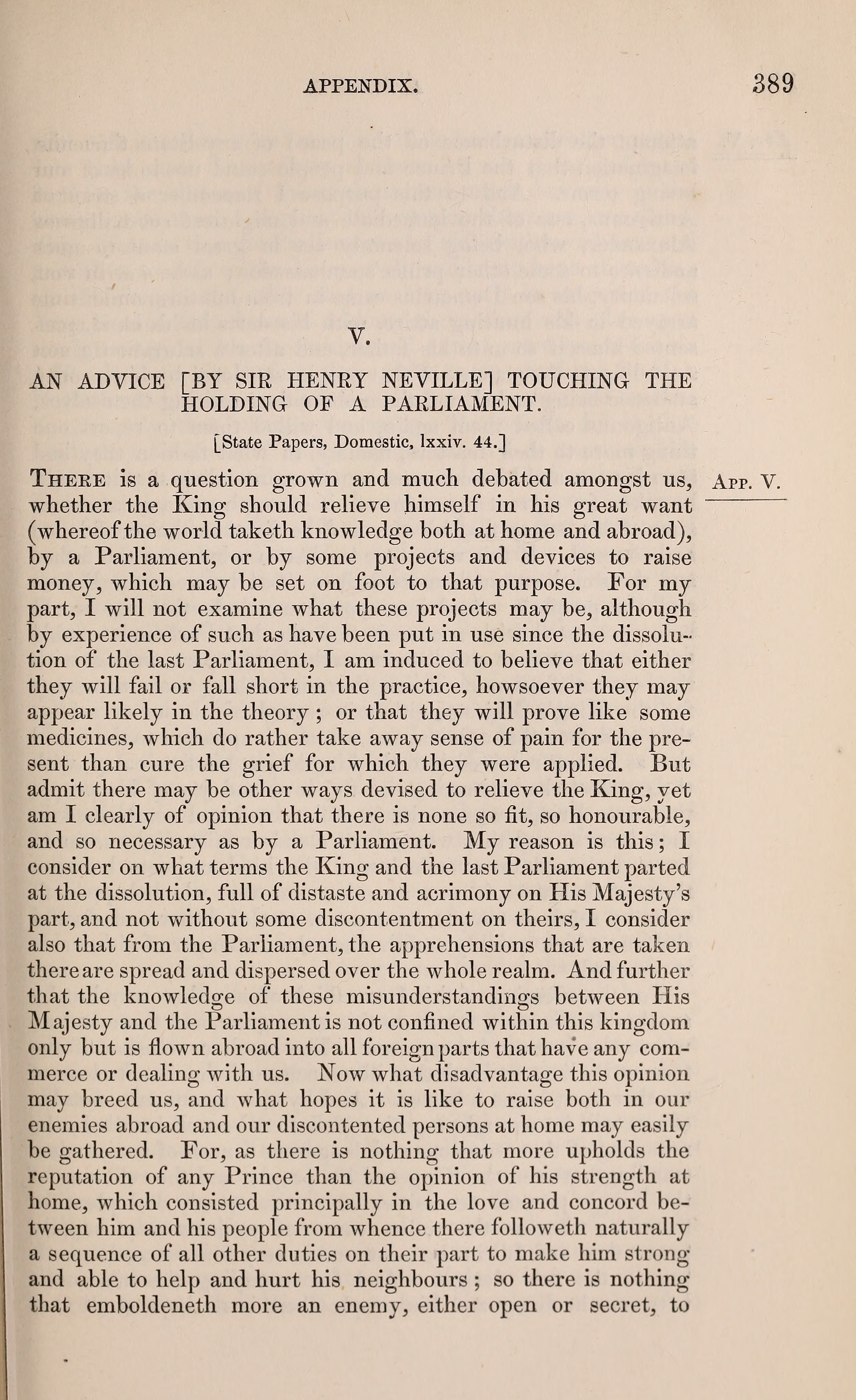
- Appendix V, pp. 389-394, prints
An Advice [by Sir Henry Neville] Touching the Holding of a Parliament. - The printed appendix gives the manuscript source as
[State Papers, Domestic, lxxiv. 44.], matching theSP 14/74, no. 44source lane.
2. Ken Feinstein Twitter and Blog Information
- A Ken Feinstein tweet dated
20 Nov. 2020states:
“Coincidentally, here is Henry Neville quoting Plutarch in 1612.”
- A Ken Feinstein tweet dated
1 Dec. 2020states:
“By funny coincidence, Henry Neville also read Thomas North’s translation of Plutarch’s Lives. And coincidentally he references here Demetrius and Antigonus.”
- A Ken Feinstein tweet dated
14 Jan. 2021states:
“Look how closely Henry Neville follows North's translation of Plutarch in 1612.”
- A Ken Feinstein tweet dated
28 Jan. 2021states:
“The next few months you'll hear a lot about Shakespeare quoting Thomas North. Here is Henry Neville (1612) directly quoting Thomas North's Plutarch.”
- A Ken Feinstein tweet dated
30 May 2021states:
“As I have said, it is a fact of history that Henry Neville read North's translation of Plutarch and quoted from it almost verbatim. Here is one of the manuscript copies of this "Advice" (not Neville's handwriting).”
3. Quoted Source Passages
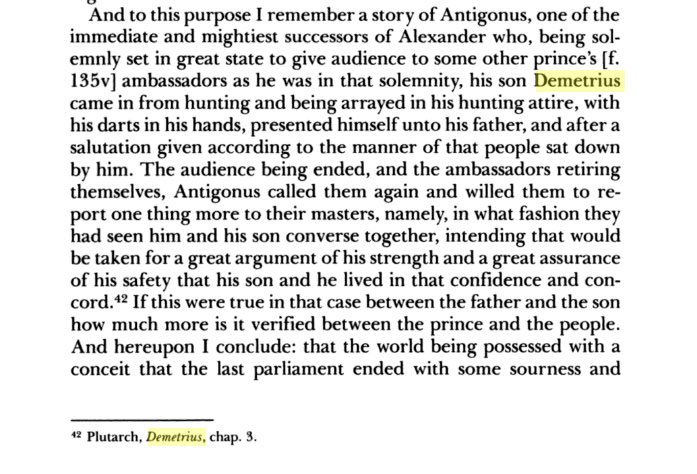
Neville Letters Corpus v8, document_neville_advice, paragraph 5
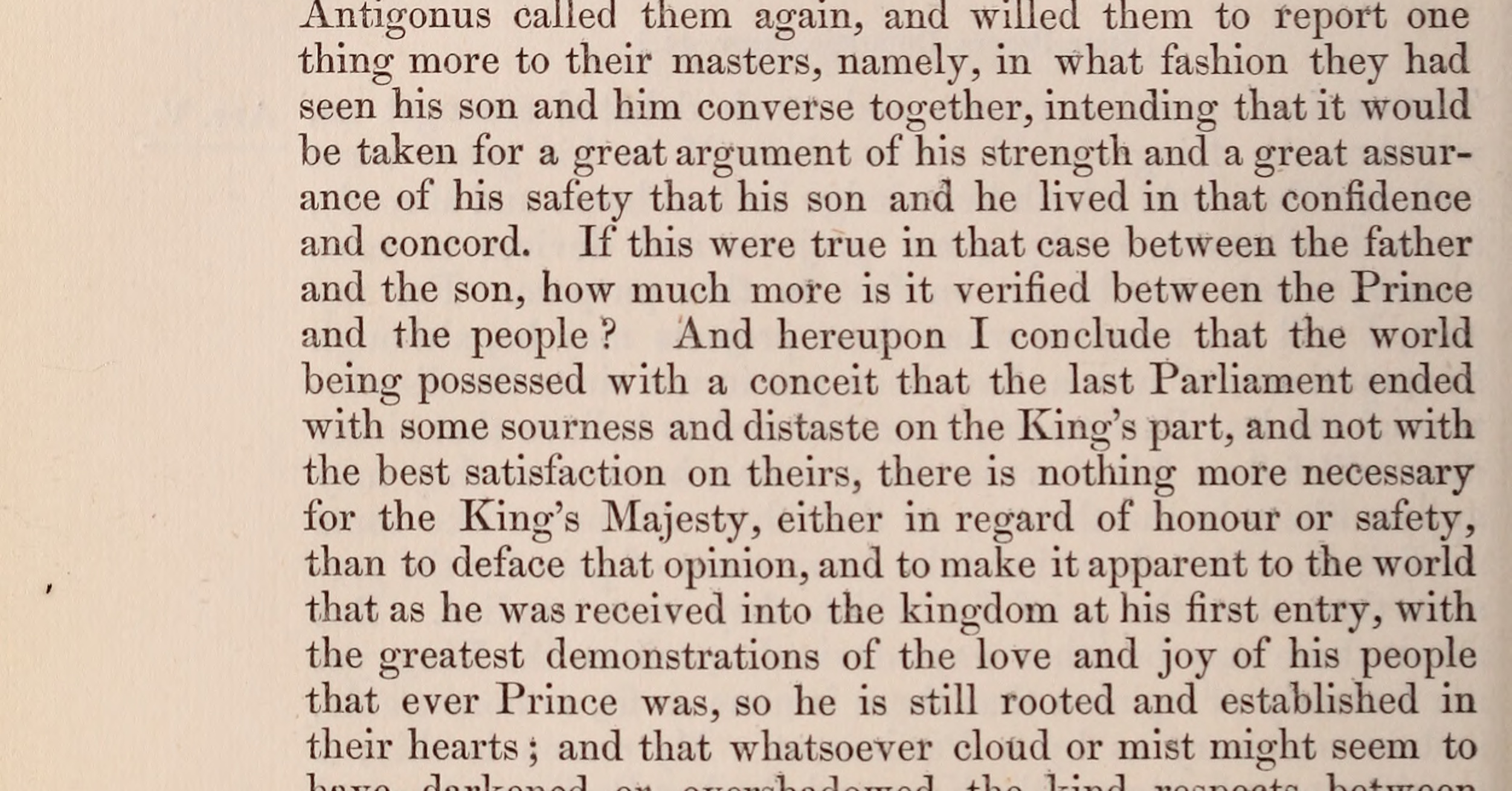
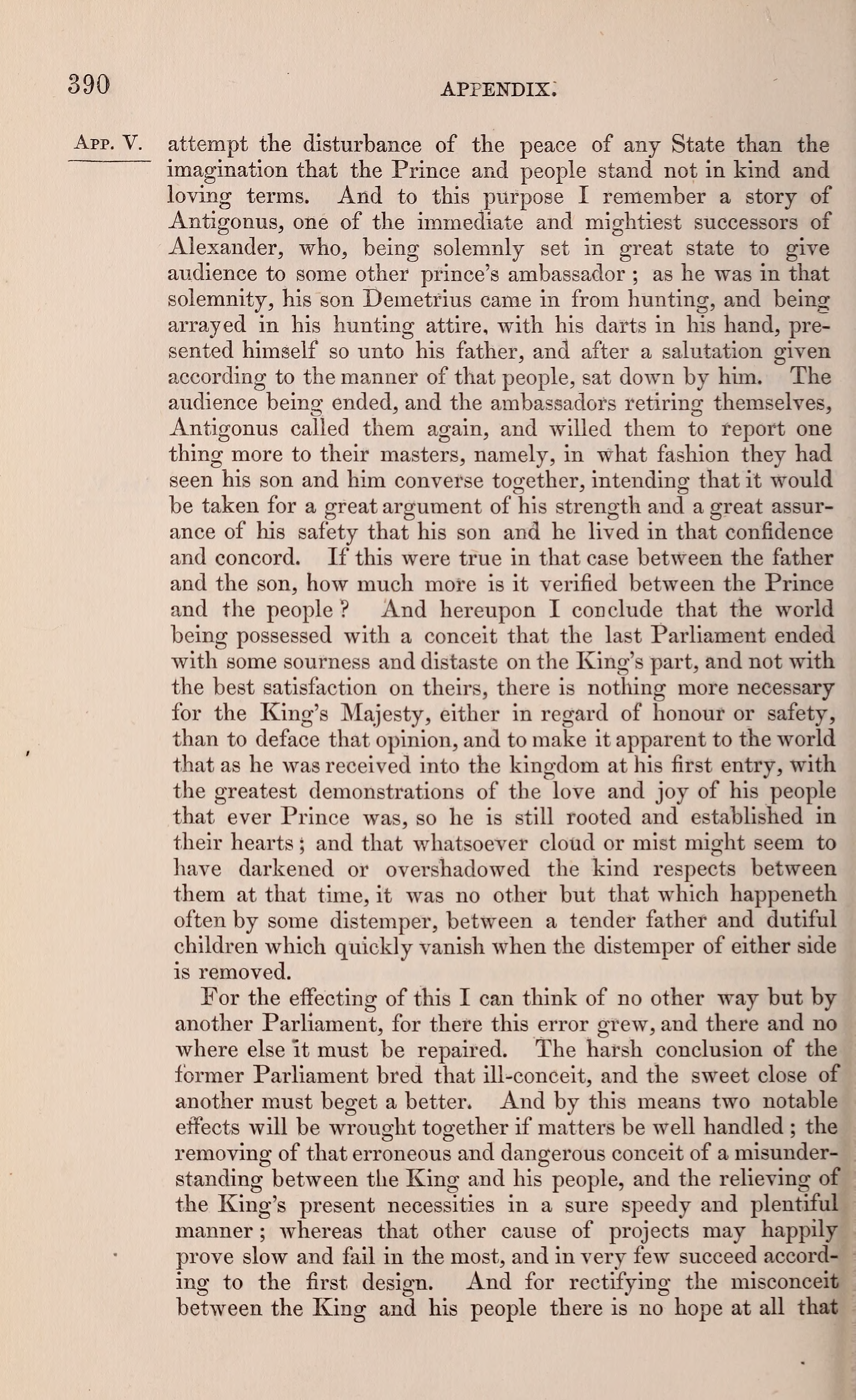
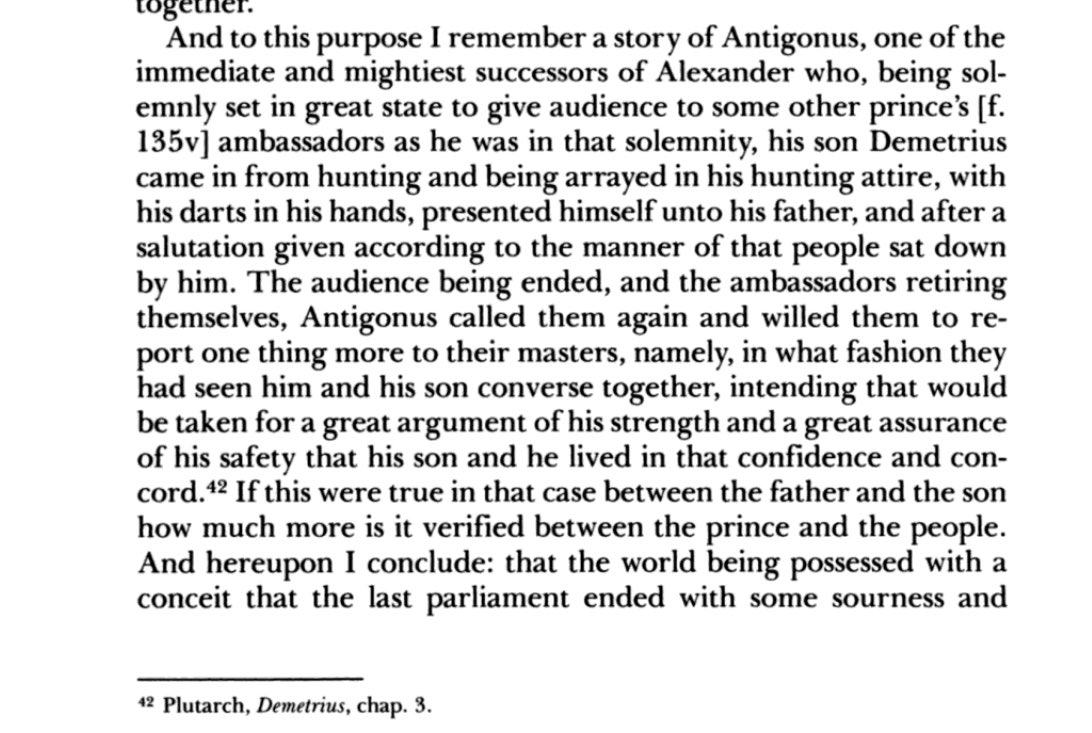
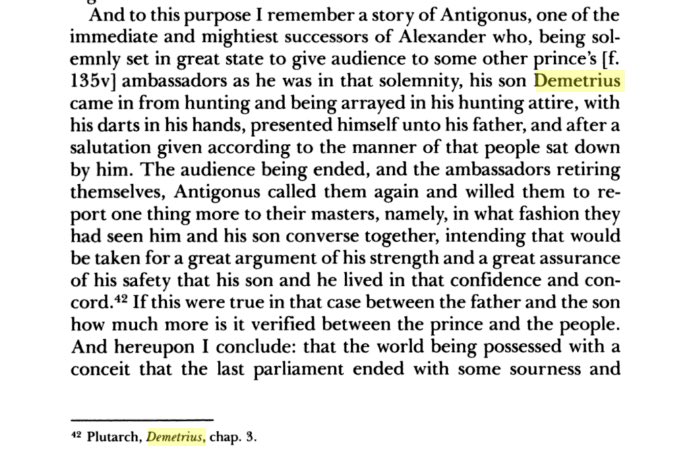
- “And to this purpose I remember a story of Antigonus, one of the immediate and mightiest successors of Alexander who, being solemnly set in great state to give audience to some other prince’s ambassadors ... his son Demetrius came in from hunting ...”
- “Antigonus called them again and willed them to report one thing more to their masters, namely, in what fashion they had seen him and his son converse together ...”
- “If this were true in that case between the father and the son how much more is it verified between the prince and the people.”
Gardiner printed edition, Appendix V, pp. 389-394
- Gardiner prints the full Advice under the title
An Advice [by Sir Henry Neville] Touching the Holding of a Parliament. - The opening frames the question as whether the King should relieve his wants by Parliament or by projects and devices for raising money.
- Printed p. 390 contains the same Antigonus/Demetrius passage used in the North's Plutarch comparison.
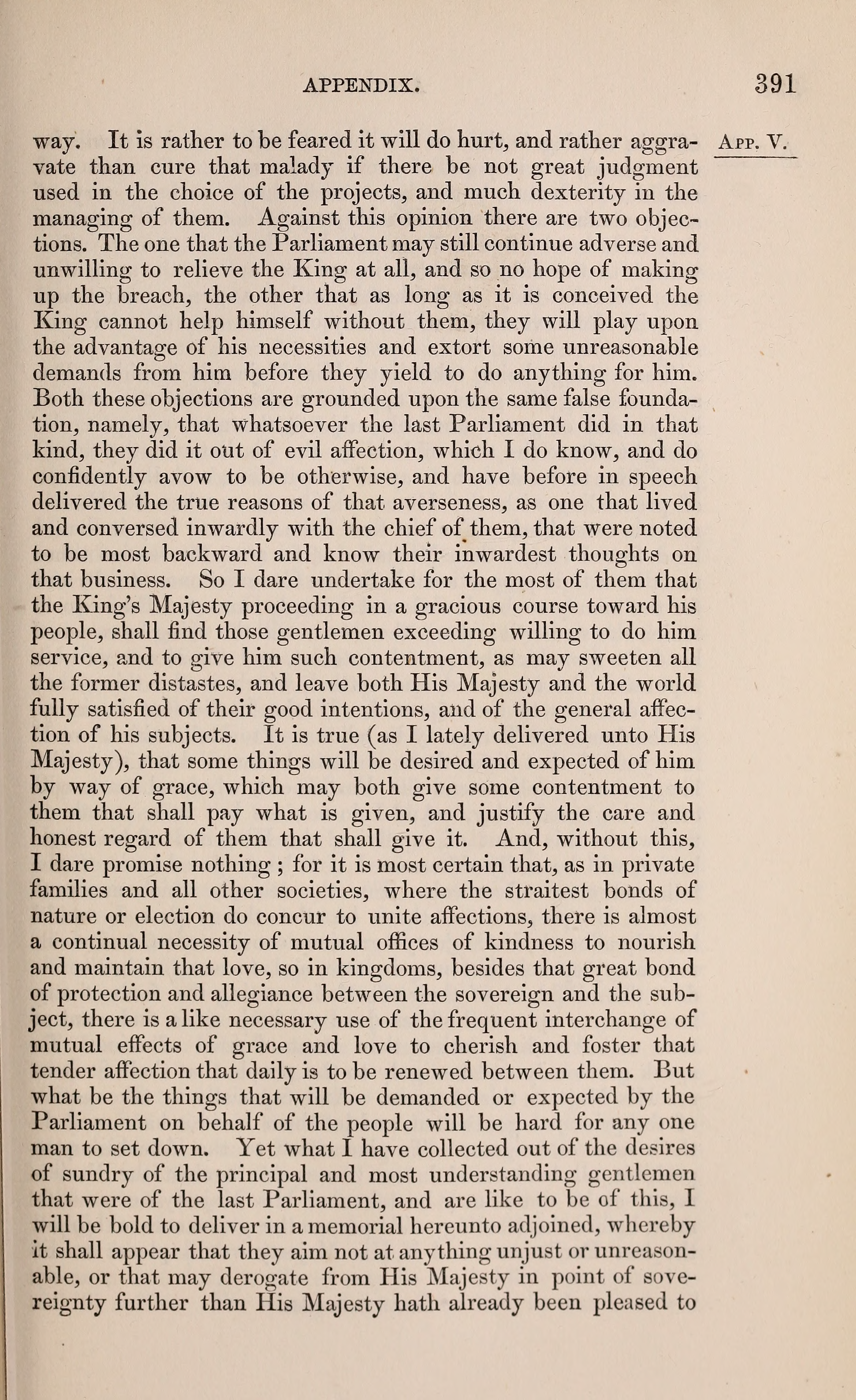
- Printed p. 392 contains the parliamentary-management phrase
proposed betimes and followed close afterwards. - A raw OCR extraction has been saved locally, but it should be proofread against the page images before being used as final quotation copy.
Thomas North's Plutarch, A09802
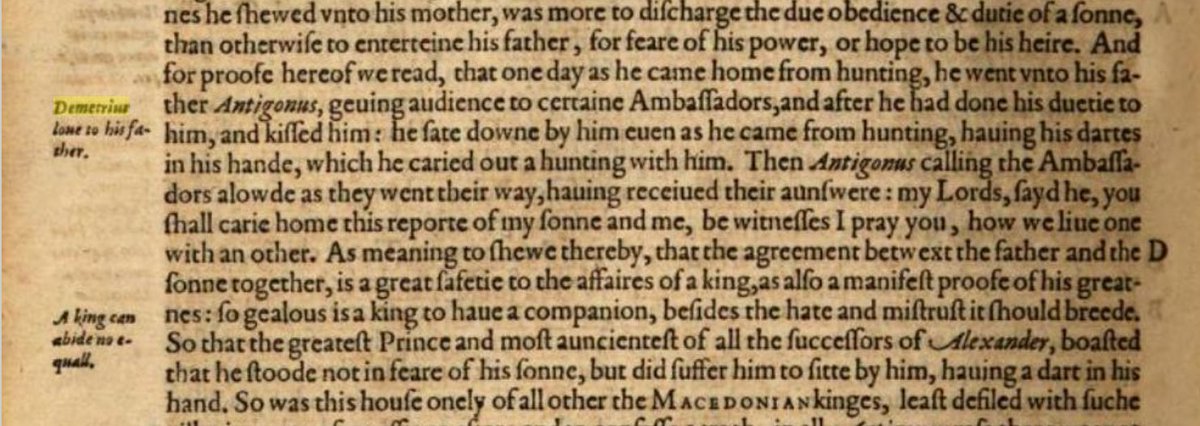
- “... one day as he came home from hunting he went vnto his father Antigonus, geuing audience to certain ambassadors ...”
- “... he sate downe by him euen as he came from hunting, hauing his dartes in his hande ...”
- “My lords, sayd he, you shall carie home this reporte of my sonne and me, be witnesses I pray you how we liue one with an other ...”
Comparison Notes
- Neville: “being solemnly set in great state to give audience to some other prince’s ambassadors”
- Neville: “his son Demetrius came in from hunting”
- Neville: “with his darts in his hands”
- Neville: “report one thing more to their masters”
- Neville: “how ... they had seen him and his son converse together”
- Neville: “confidence and concord”
North: “geuing audience to certain ambassadors”
North: “one day as he came home from hunting”
North: “hauing his dartes in his hande”
North: “you shall carie home this reporte”
North: “be witnesses ... how we liue one with an other”
North: “the agreement betwext the father and the sonne together”
New central finding: Neville's ending is closer to Amyot than to North
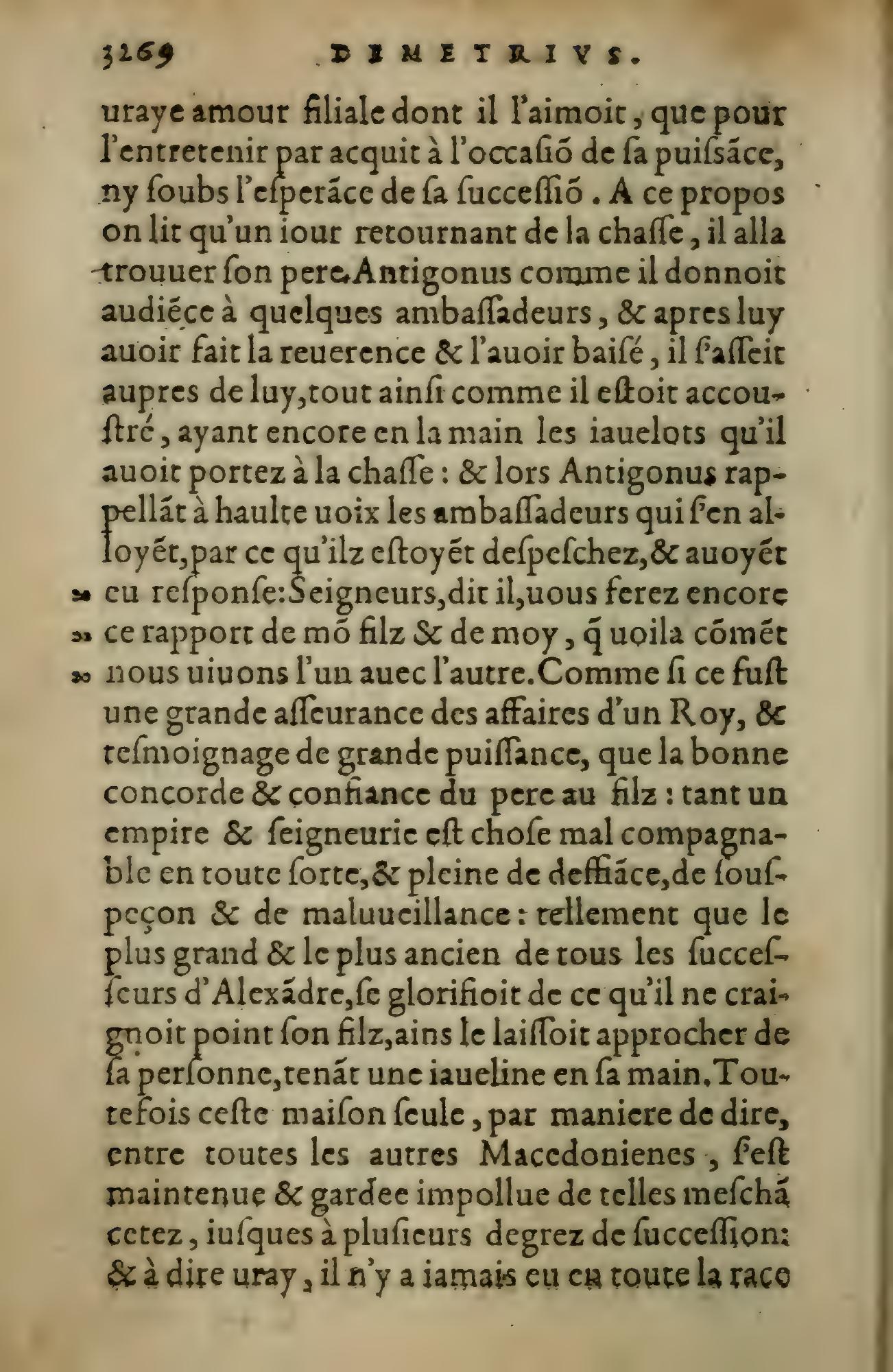
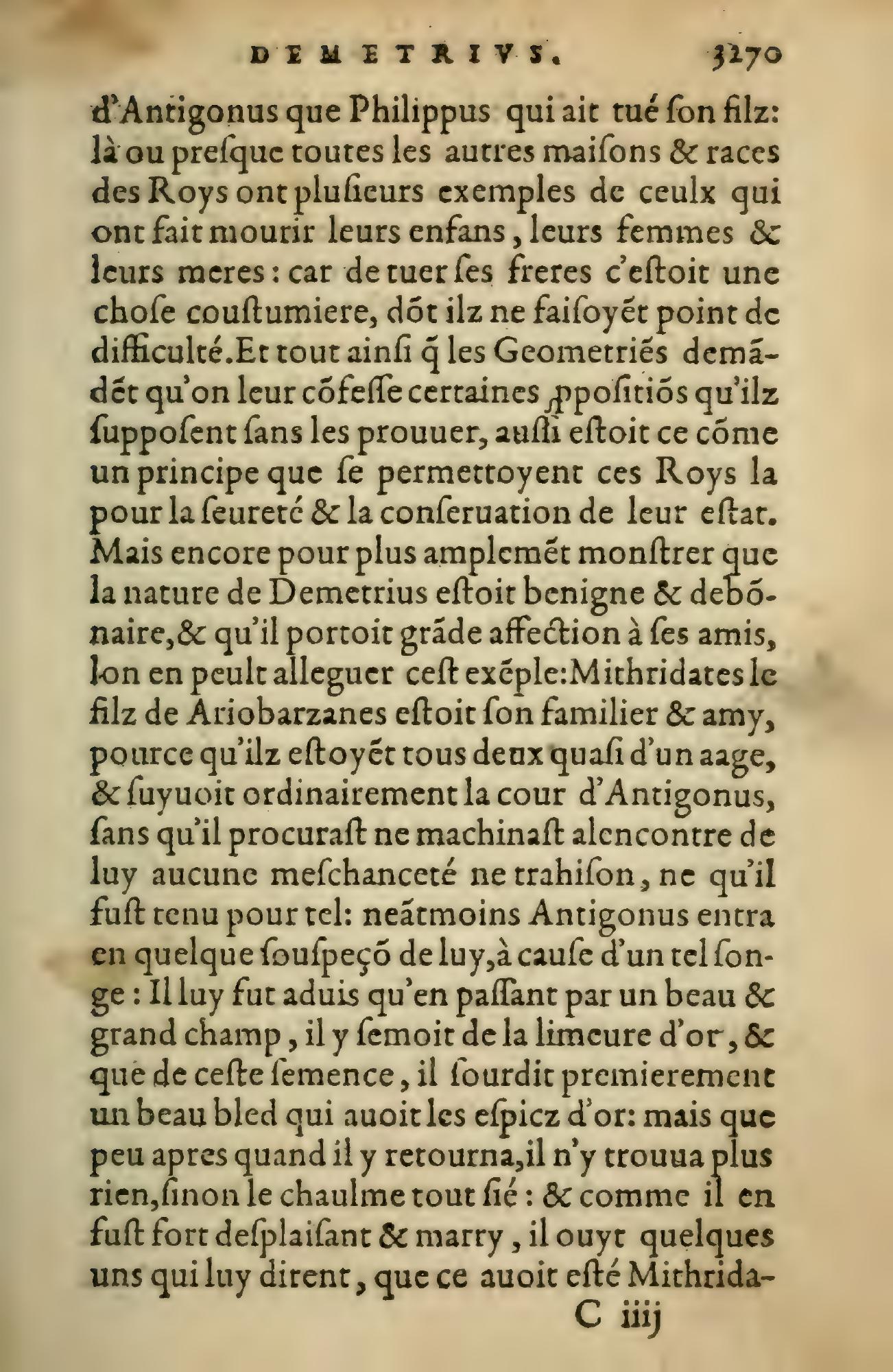
The direct three-way collation changes the source-book question. Jacques Amyot's 1567 French Plutarch gives the same narrative sequence and concludes:
la bonne concorde & confiance du pere au filz
Neville concludes that Antigonus and Demetrius lived:
“in that confidence and concord.”
North, in both the 1579 and 1595 English witnesses, instead writes:
“the agreement betwixt the father and the sonne together”
The reversal of Amyot's noun order (concorde & confiance / confidence and concord) does not look like a mechanical copy, but the preservation of both nouns is materially closer to Amyot than to North. Other details also deserve a source-chain collation:
| Narrative element | Amyot 1567 | North 1595 | Neville's Advice |
|---|---|---|---|
| return from hunting | retournant de la chasse | “came home from hunting” | “came in from hunting” |
| diplomatic audience | donnoit audience à quelques ambassadeurs | “giving audience to certaine Ambassadors” | “give audience to some other prince's ambassadors” |
| gesture to father | fait la reverence & l'auoir baisé | “done his duetie to him, and kissed him” | “a salutation given according to the manner of that people” |
| hunting weapons | ayant encore en la main les iauelots | “having his dartes in his hand” | “with his darts in his hands” |
| report | ce rapport de mon filz & de moy | “cary home this report of my sonne and me” | “report one thing more to their masters” |
| political meaning | la bonne concorde & confiance | “the agreement betwixt” | “confidence and concord” |
Five-witness collation of the climactic clause (2026-08-09)
| Element | Greek, Demetrius 3 | Latin, Frankfurt 1580 | Amyot 1567 | North 1579 / 1595 / 1603 | Neville's Advice |
|---|---|---|---|---|---|
| the quality itself | ὁμόνοιαν καὶ πίστιν — two nouns | concordiam ... fidelem — noun + adjective | concorde & confiance — two nouns | the agreement — one noun | confidence and concord — two nouns |
| the “strength” term | ἰσχύν τινα πραγμάτων βασιλικῶν | robur ... regni | asseurance des affaires d'un Roy | a great safetie to the affaires of a king | a great assurance of his safety |
| the “proof” term | δυνάμεως ἐπίδειξιν | potentiæ documentum | tesmoignage de grande puissance | a manifest proofe of his greatnes | a great argument of his strength |
Three points follow. (1) On the noun pair, Neville agrees with the Greek and Amyot against every English edition. (2) He reverses the order — Greek and Amyot both run concord-first — so this is not mechanical copying from any single witness. (3) His clause contains both Amyot's noun (assurance) and North's noun (safety); if it is source-derived at all, it is derived from more than one language.
Shakespeare control: Antony and Cleopatra does not show the same profile
The same divergence test was run on Antony and Cleopatra, using Amyot's and North's Lives of Antonius. At five hand-checked loci — the Actium force figures (“nineteen legions … twelve thousand horse”), Cleopatra's sixty ships, the name of Caesar's envoy, the soothsayer's demon gloss, and the perfume detail in the Cydnus passage — North fully accounts for the play, and Amyot agrees with North at each. Notably, the Folio's Thidias is not explained by Amyot, who also reads Thyreus.
This is a genuine asymmetry between the two texts and should be reported as such, but it is not an authorship argument in either direction: a dramatist working with the English folio open will reproduce that folio's wording, while a man writing a short persuasive paper from recollection will not. Mode of composition explains the difference at least as economically as identity of author. Detail in the 2026-08-09 pass, §8.
This opens three central research possibilities that should remain distinct until further collation:
- Neville consulted Amyot directly while composing the Advice.
- Neville remembered a bilingual Plutarch tradition, using North for narrative sequence and French for the political maxim.
- Neville used another intermediary derived from Amyot whose wording has not yet been identified.
The family-library evidence makes the Amyot route more than a merely hypothetical source search. The Billingbear catalogue includes Oeuvres de Plutarque par Amyot 2 vols _ Genev 1627. That edition postdates Henry Neville's death in 1615 and therefore cannot be claimed as his personal copy. It does show that Amyot's Plutarch later stood in the Billingbear library tradition. The combined Audley End/BRO spreadsheet does not presently return a textual Amyot or Plutarque match, so the later volumes have not yet been connected to a surviving Audley End object.
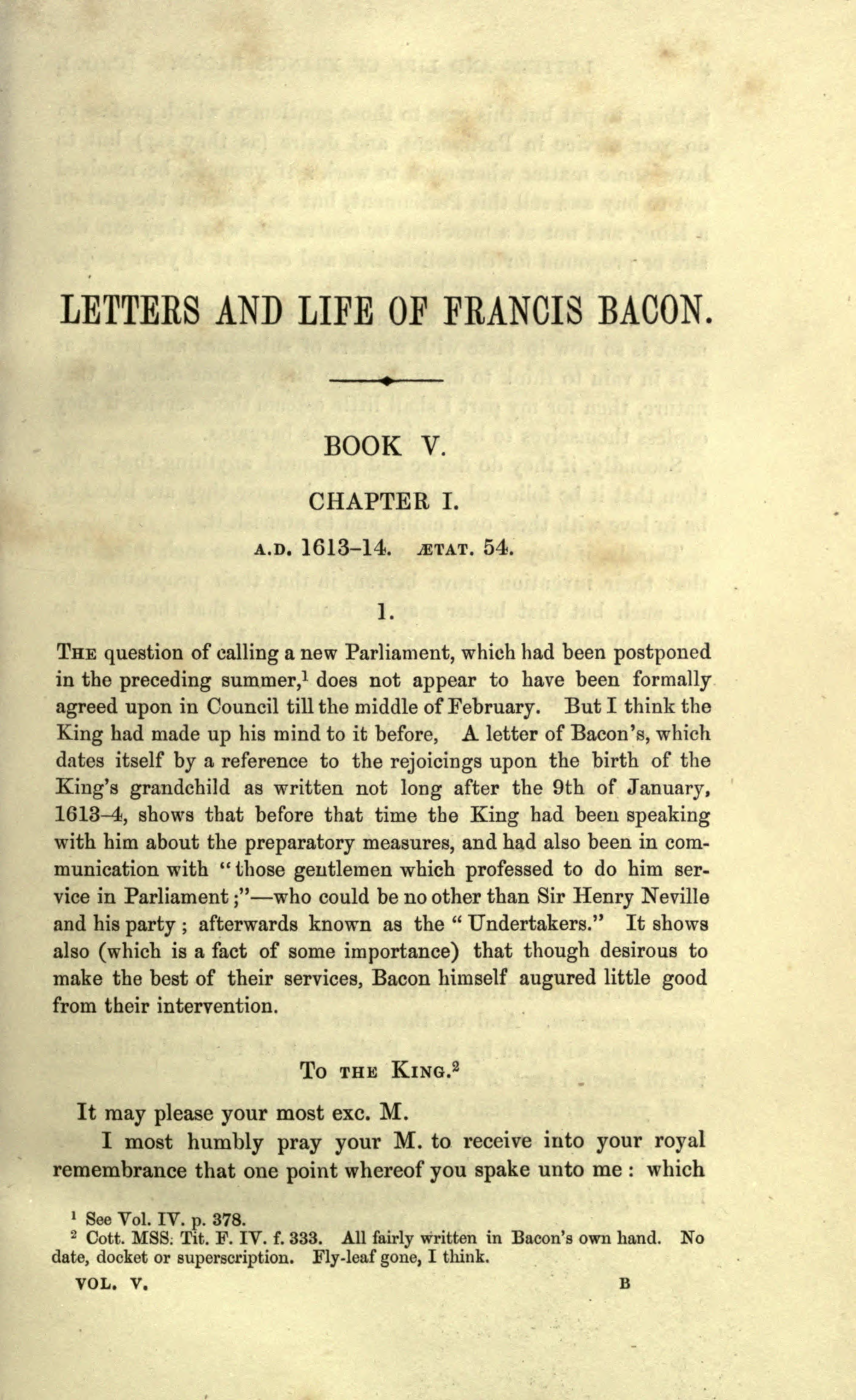
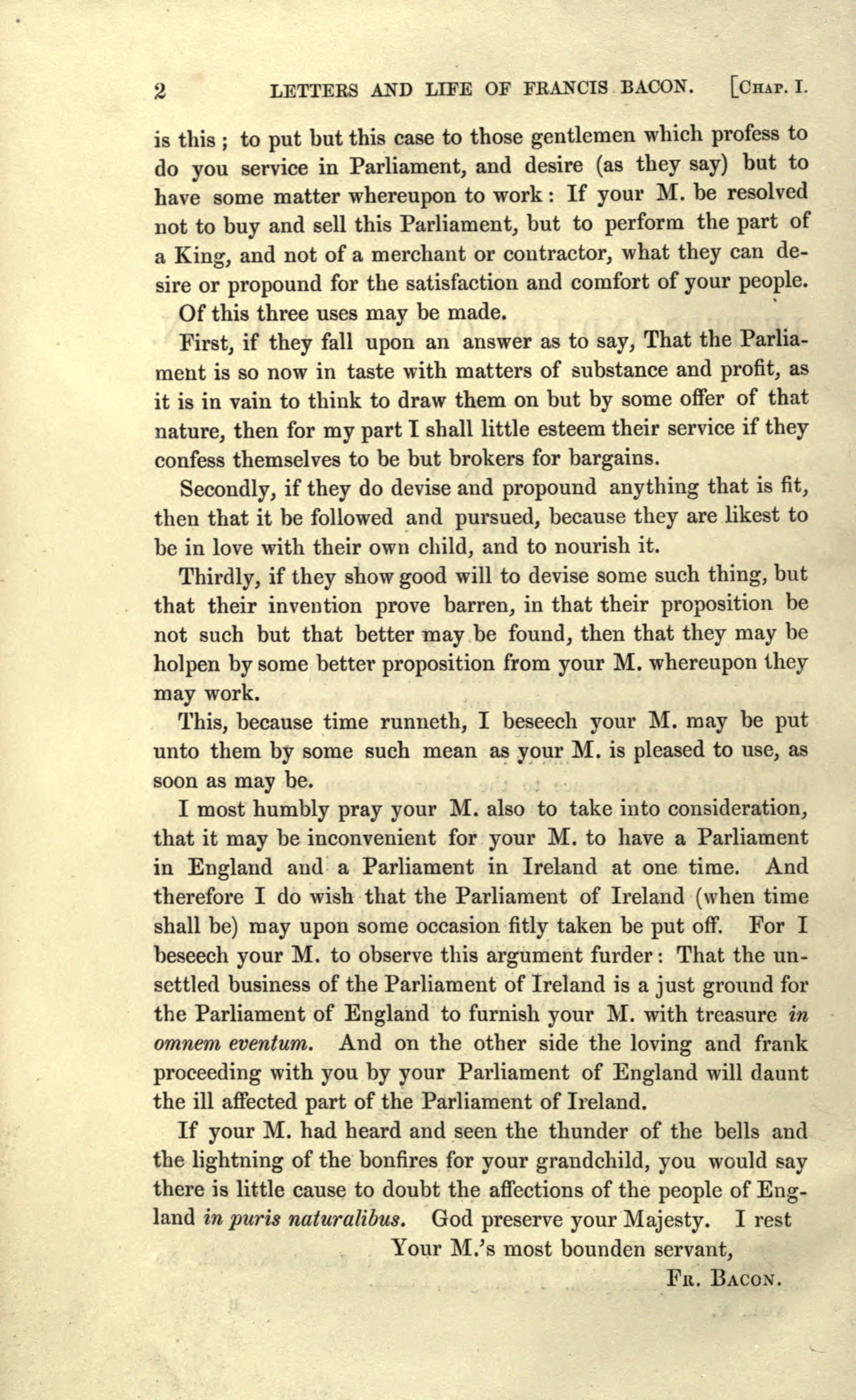
Spedding, Letters and Life, vol. V
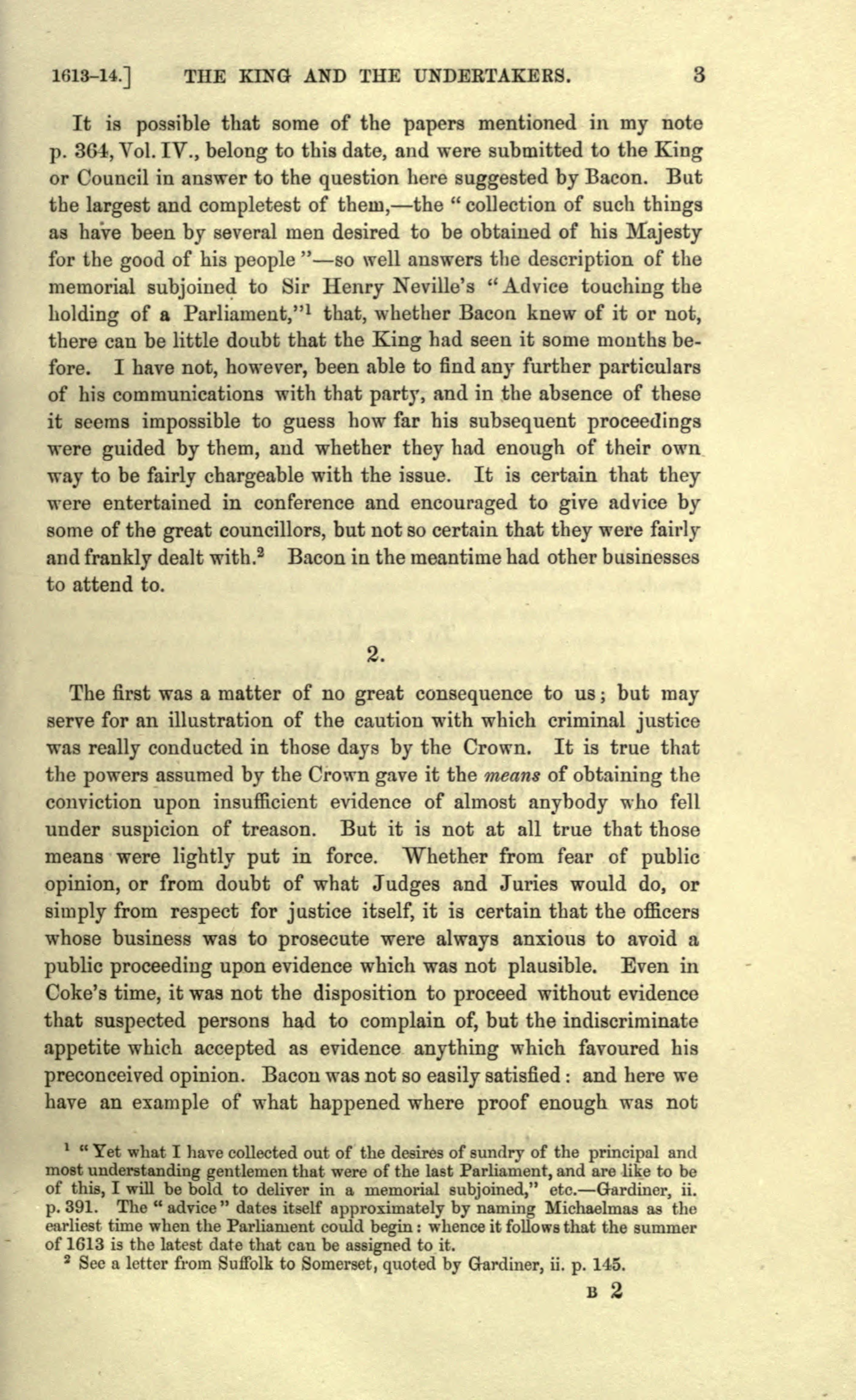
- Spedding opens the 1613-14 parliamentary chapter by identifying the King's pre-parliamentary communications with Sir Henry Neville and his party, later called the Undertakers.
- On printed p. 3, Spedding names Sir Henry Neville's
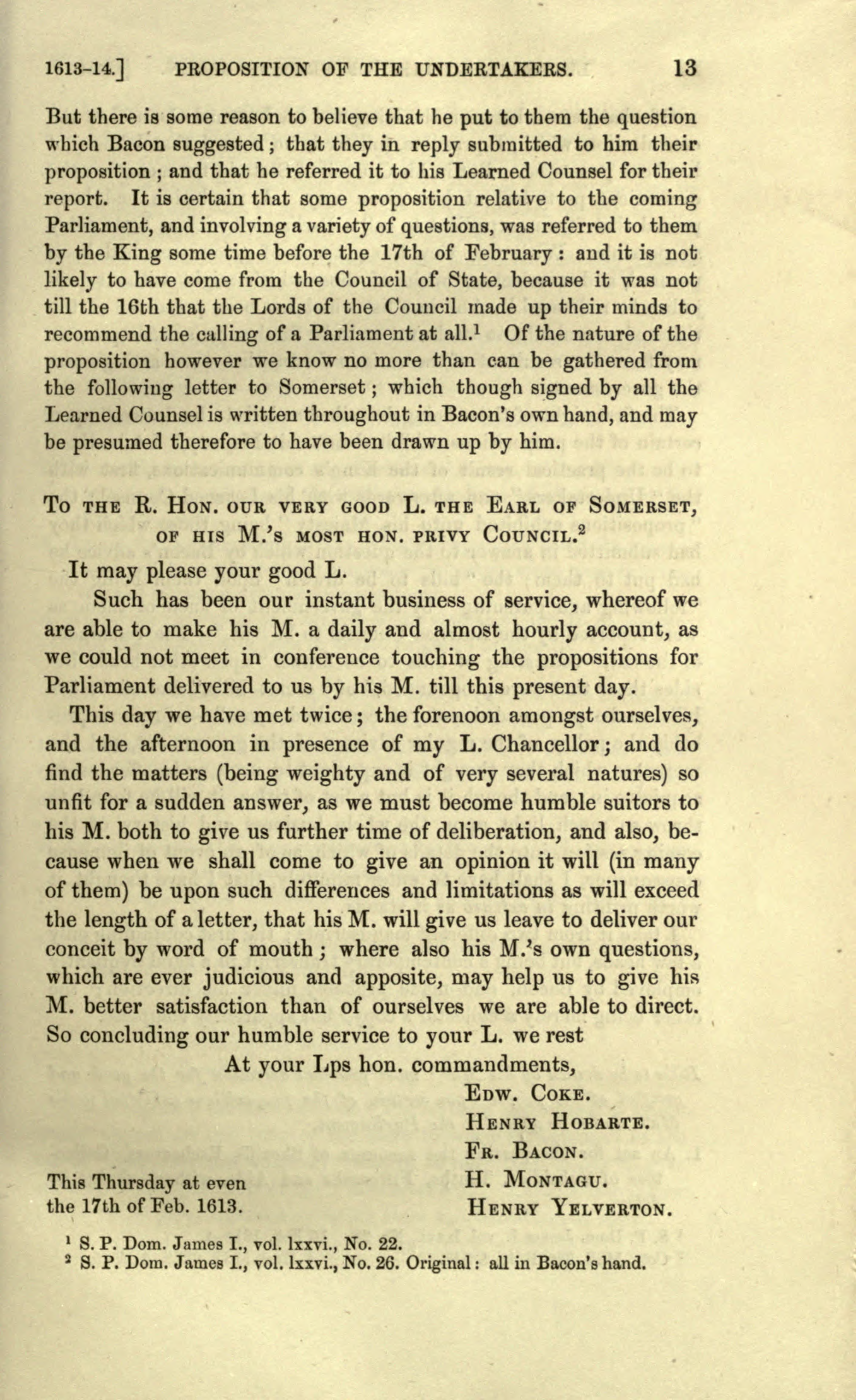
Advice touching the holding of a Parliamentand says the King had probably seen it some months before. - On printed p. 13, Spedding labels the matter
Proposition of the Undertakers, notes that the exact communications had not been discovered by him, and ties the proposition to learned-counsel review before 17 Feb. 1613/14. - The Spedding images are therefore supporting source-context images for the
Advicetradition, not a substitute for the full Advice witness in TNASP 14/74, no. 44, Gardiner, or the local Neville Letters Corpus.
Ken Feinstein tweets
- “Coincidentally, here is Henry Neville quoting Plutarch in 1612.”
- “By funny coincidence, Henry Neville also read Thomas North’s translation of Plutarch’s Lives. And coincidentally he references here Demetrius and Antigonus.”
- “Look how closely Henry Neville follows North's translation of Plutarch in 1612. Coincidentally, William Shakespeare owned the same book and did the same thing in his late plays.”
- “The next few months you'll hear a lot about Shakespeare quoting Thomas North. Here is Henry Neville (1612) directly quoting Thomas North's Plutarch. This is not supposition. This an undeniable historical fact.”
- “As I have said, it is a fact of history that Henry Neville read North's translation of Plutarch and quoted from it almost verbatim. Here is one of the manuscript copies of this "Advice" (not Neville's handwriting). This is a fact.”
4. Citations
- Neville Letters Corpus v8,
document_neville_advice, paragraph5, local XML witness. - North, Thomas, translator. The lives of the noble Grecians and Romanes compared together by that graue learned philosopher and historiographer, Plutarke of Chæronea.
1579.TCP A09802. EEBO witness in EarlyPrint corpus database and EarlyPrint computational index. - Amyot, Jacques, translator. Les vies des hommes illustres grecs et romains, vol. 6. 1567. Internet Archive item `lesviesdeshomm06plut`, printed p. 3269. Local OCR, PDF, metadata, scan map, and checked page images: central_neville_shakespeare_2026-07-11.
- North, Thomas, translator. The lives of the noble Grecians and Romanes, second English edition. 1595. Internet Archive item `plutarchnorthlives2ed`, printed p. 941. Local OCR, metadata, scan map, and checked page image: central_neville_shakespeare_2026-07-11.
- Billingbear Book List Transcription:65, entry
Oeuvres de Plutarque par Amyot 2 vols _ Genev 1627.The date prevents attribution of this particular edition to Henry Neville. - north plutarch antigonus demetrius A09802, local extracted witness text for the Demetrius passage in
A09802. - work in parliament, existing packet preserving the source trail for the
Advicedispute and the Bacon / 1614 parliamentary references. - SOURCE NOTES, local source-image notes for the North Plutarch scan, the Advice manuscript images, and the Spedding printed witness.
- Gardiner, Samuel Rawson. History of England from the Accession of James I. to the Disgrace of Chief-Justice Coke: 1603-1616. Vol. II. London: Hurst and Blackett, 1863. Appendix V, pp. 389-394. Internet Archive item
historyofengland02gard_0, https://archive.org/details/historyofengland02gard_0. Page images and raw OCR extraction preserved in SOURCE NOTES. - Neville Advice Review, existing cleaner local working transcription generated from the local Neville Advice XML/text workflow; use as a working text, not as the public page-image witness.
- Feinstein, Ken. “Coincidentally, here is Henry Neville quoting Plutarch in 1612.” X, 20 Nov. 2020, https://twitter.com/user/status/1329662515802820608. Local archive trail: Books Read.
- Feinstein, Ken. “By funny coincidence, Henry Neville also read Thomas North’s translation of Plutarch’s Lives. And coincidentally he references here Demetrius and Antigonus.” X, 1 Dec. 2020, https://twitter.com/user/status/1333834062499176449. Local archive trail: Books Read.
- Feinstein, Ken. “Look how closely Henry Neville follows North's translation of Plutarch in 1612. Coincidentally, William Shakespeare owned the same book and did the same thing in his late plays.” X, 14 Jan. 2021, https://twitter.com/user/status/1349598533230346240. Local archive trail: Books Read.
- Feinstein, Ken. “The next few months you'll hear a lot about Shakespeare quoting Thomas North. Here is Henry Neville (1612) directly quoting Thomas North's Plutarch. This is not supposition. This an undeniable historical fact.” X, 28 Jan. 2021, https://twitter.com/user/status/1354670049282334720. Local archive trail: Books Read.
- Feinstein, Ken. “As I have said, it is a fact of history that Henry Neville read North's translation of Plutarch and quoted from it almost verbatim. Here is one of the manuscript copies of this "Advice" (not Neville's handwriting). This is a fact.” X, 30 May 2021, https://twitter.com/user/status/1398881439622467584. Local archive trail: Books Read.
- “Work in Parliament.” Henry Neville Research Wiki, 11 Oct. 2019, http://nevilleresearch.com/index.php?title=Work_in_Parliament. Local preservation: wiki parliament.
- Spedding, James, editor. The Letters and the Life of Francis Bacon. Vol. V. London: Longmans, Green, Reader, and Dyer, 1869. Internet Archive item
worksoffrancisba12bacoiala, https://archive.org/details/worksoffrancisba12bacoiala. Local page images preserved in SOURCE NOTES. - Proceedings in Parliament, 1614 (House of Commons). Google Books path preserved in work in parliament.
5. Evidence Images
North's Plutarch image witness
Amyot's French Plutarch image witness
Advice manuscript images from the local tweet archive
Gardiner full printed Advice text
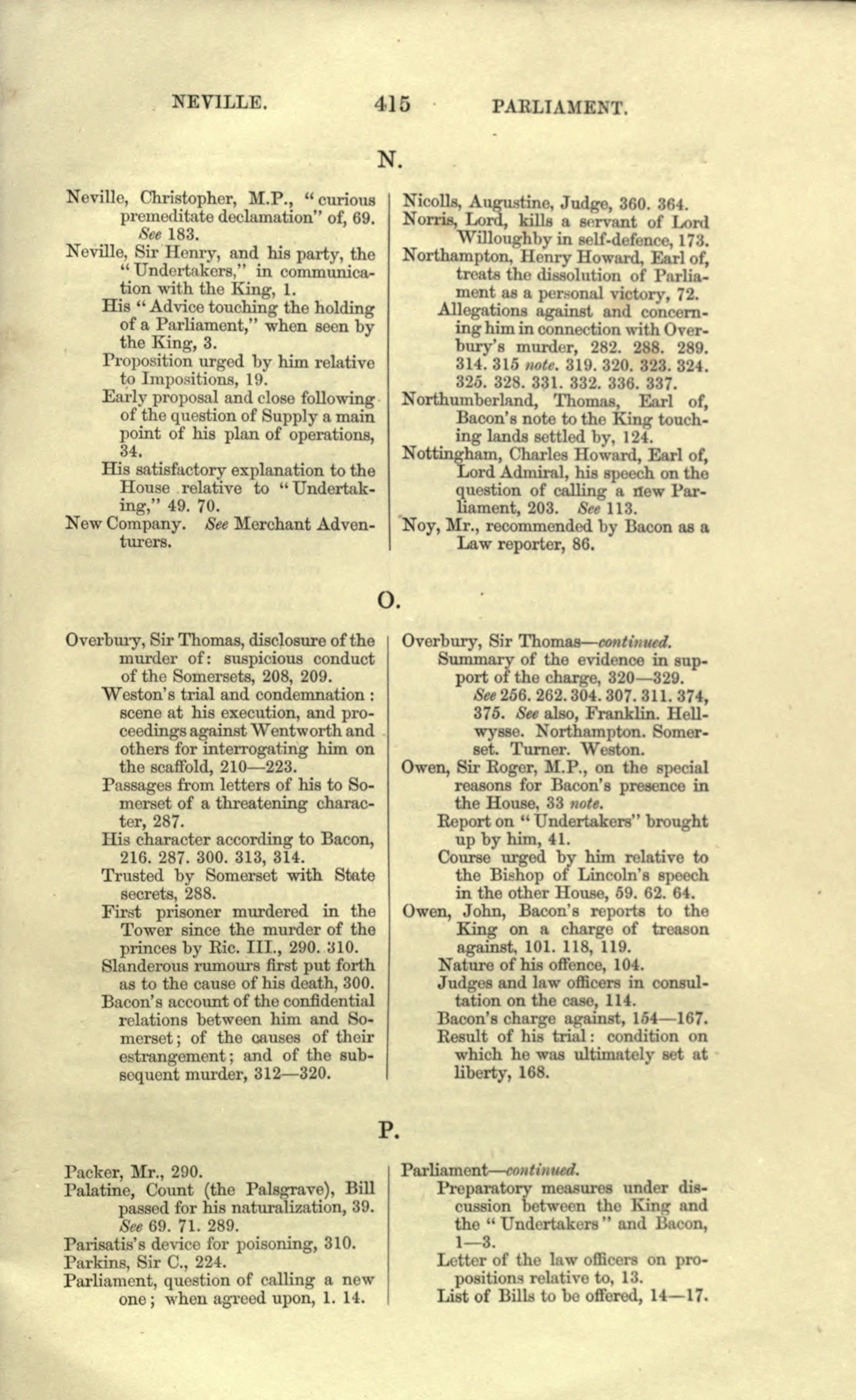
Spedding printed-witness images
Prior tweet-image trail
6. Notes on Access
- This packet is now anchored to the direct XML witness for
document_neville_advicein the Neville letters corpus. - The packet now also preserves the direct EEBO/TCP witness path for North's
1579Plutarch,A09802. - The Ken Feinstein tweet/image trail remains useful because it preserves comparison images and the original local research trail that identified this match.
- The packet now includes a direct motif-by-motif comparison between the Neville
Advicepassage and the North excerpt. - The packet now includes the full printed Advice text lane: Gardiner 1863, vol. II, Appendix V, pp. 389-394, with local page images and raw OCR. This upgrades the "full Advice text" source beyond tweet images while leaving direct TNA manuscript-image control open.
- The packet now includes Spedding page images for the printed parliamentary source trail: p. 1, p. 2, p. 3, p. 13, and the index entry on p. 415.
- Unlike several other source-book packets, this one is no longer only a tweet-led lead: the core comparison is now carried by the XML and EEBO witnesses themselves.
7. Additional Fact-Source Notes
- The Advice is a two-classical-author packet, not only a Plutarch packet. Its final Latin tag,
seu bene seu male facta premunt, is Tacitus, Histories I.7. See the2026-08-22update above before citing this: the reading is common to the whole early printed tradition and does not point to any particular edition. Full control is in henry neville tacitus textual fingerprints.
- Archive.org item plutarchnorthlives now provides the public North image route; EarlyPrint/TCP
A09802remains the text witness for the North comparison. - The Archive.org variant sweep also found plutarchnorthlives2ed, a public image/text route for the
1595second edition of North's Plutarch. This does not alter the core Advice comparison, which is controlled through the1579TCPA09802witness, but it is useful for source-availability discussion and for checking whether later Shakespeare source-book arguments should distinguish the1579and1595printed witnesses. - Gardiner 1863 remains the best public full printed Advice route in this workspace: Appendix V, pp.
389-394, gives the source as State Papers Domesticlxxiv. 44, matching theSP 14/74, no. 44archival lane. - Spedding remains a parliamentary source-trail witness, not the full Advice text. Use Spedding for context around Bacon, James, Neville, and the Undertakers; use Gardiner/TNA/local XML for the Advice text itself.
- This remains one of the strongest source-book-use packets, but its most productive next form is a Plutarch source-chain packet rather than a North-only packet. Neville demonstrably uses the anecdote; the exact English and French dependencies remain to be resolved.
- Open source-control step: obtain or identify the direct TNA image/copy source for
SP 14/74, no. 44and any relevantSP 14/74/44-46variants.