Neville Inquisition (1615)
Topic: Neville Inquisition (1615)
Source-Control Summary
- Death anchor:
decimo die Julijandapud Billingberecontrol the IPM death/place witness. - Heir anchor:
Henricus Nevill Armigeris the son and nearest heir, agedviginti septem annor et amplius. - Estate-purpose anchor: the 21-year mechanism is for debts, legacies, and
educacoe liberor. - Guardrail: the IPM is strong estate and family evidence, but it currently conflicts with the probate register on date, burial place, and executor list.
Overview
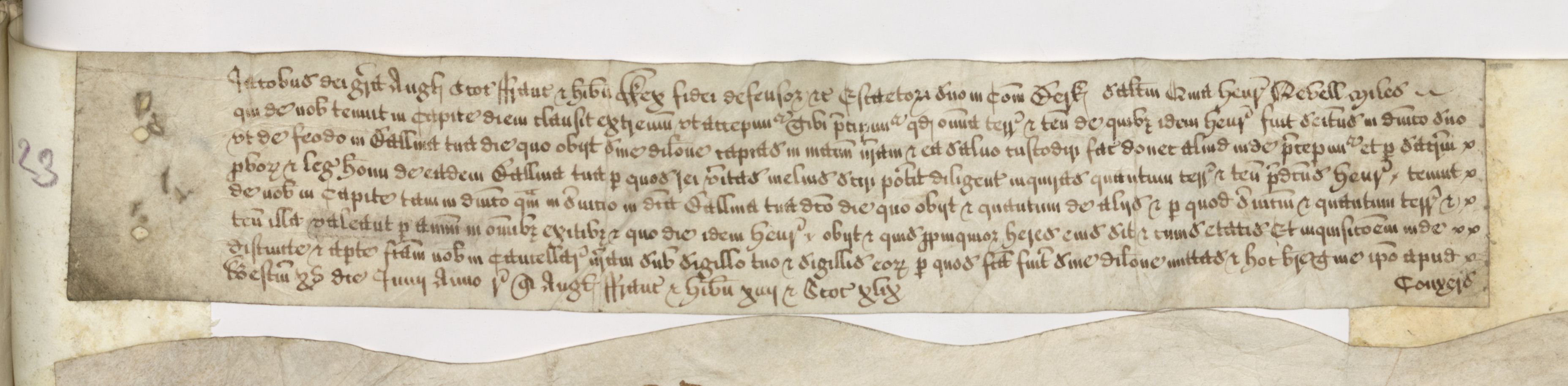
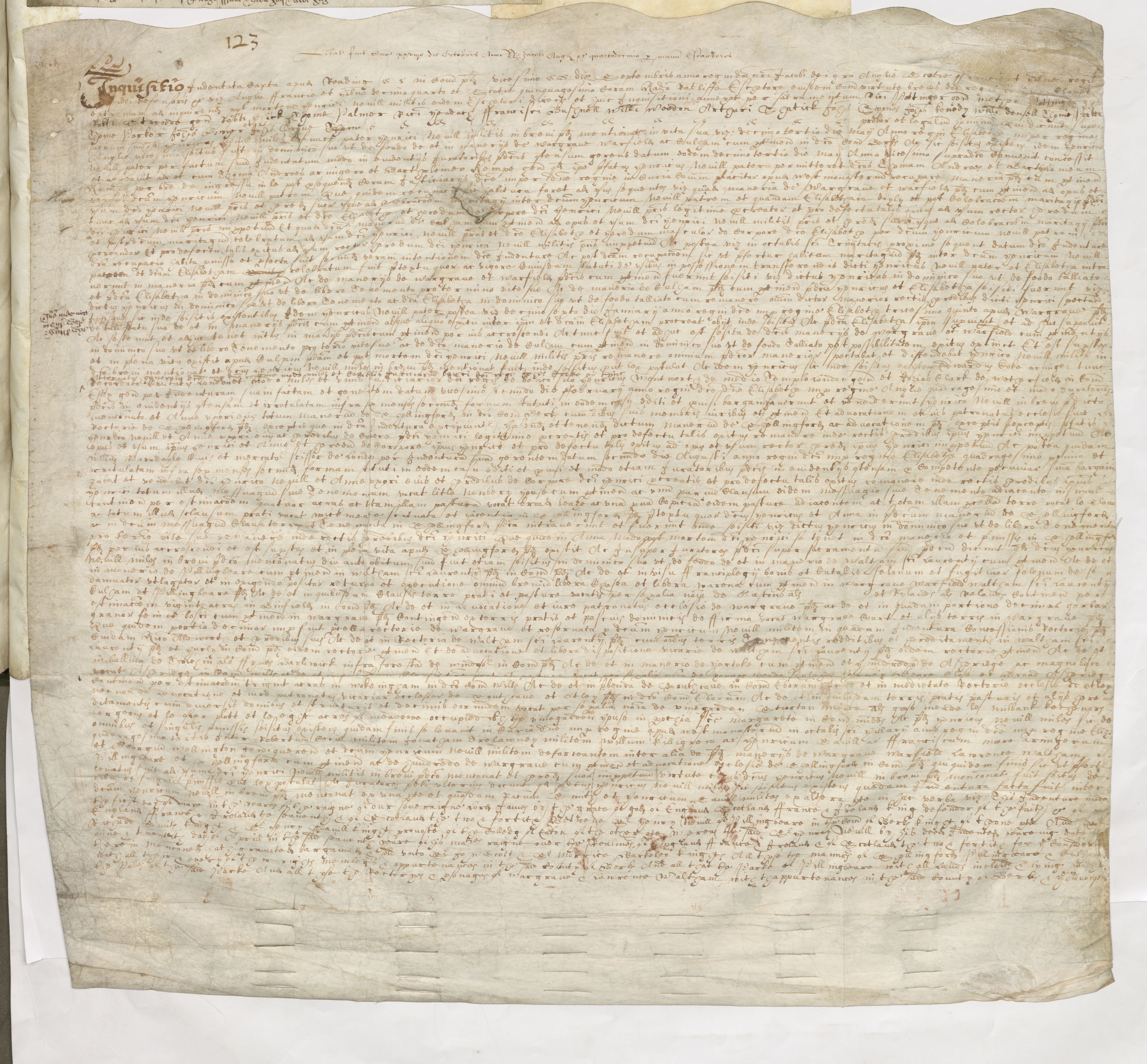
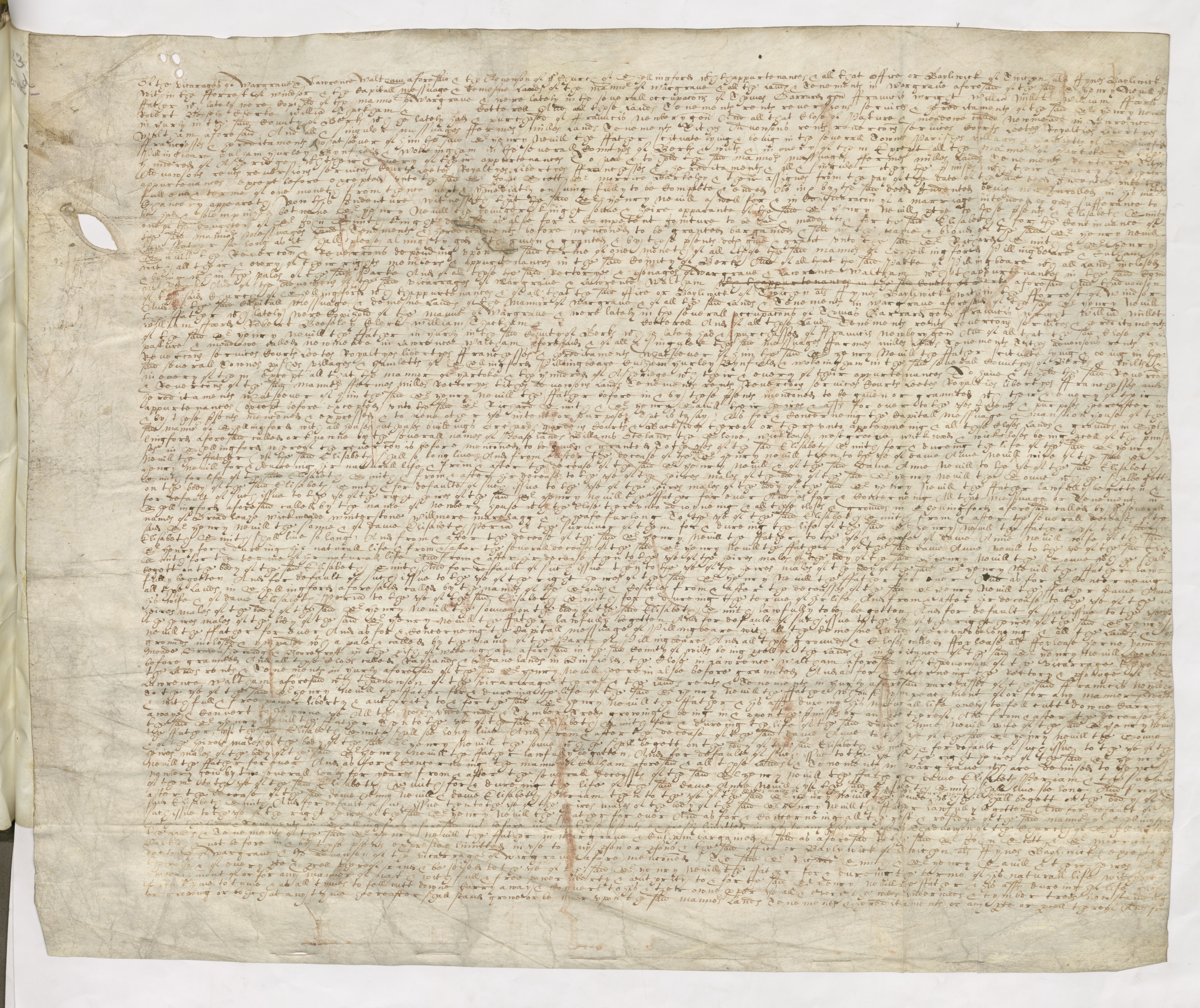
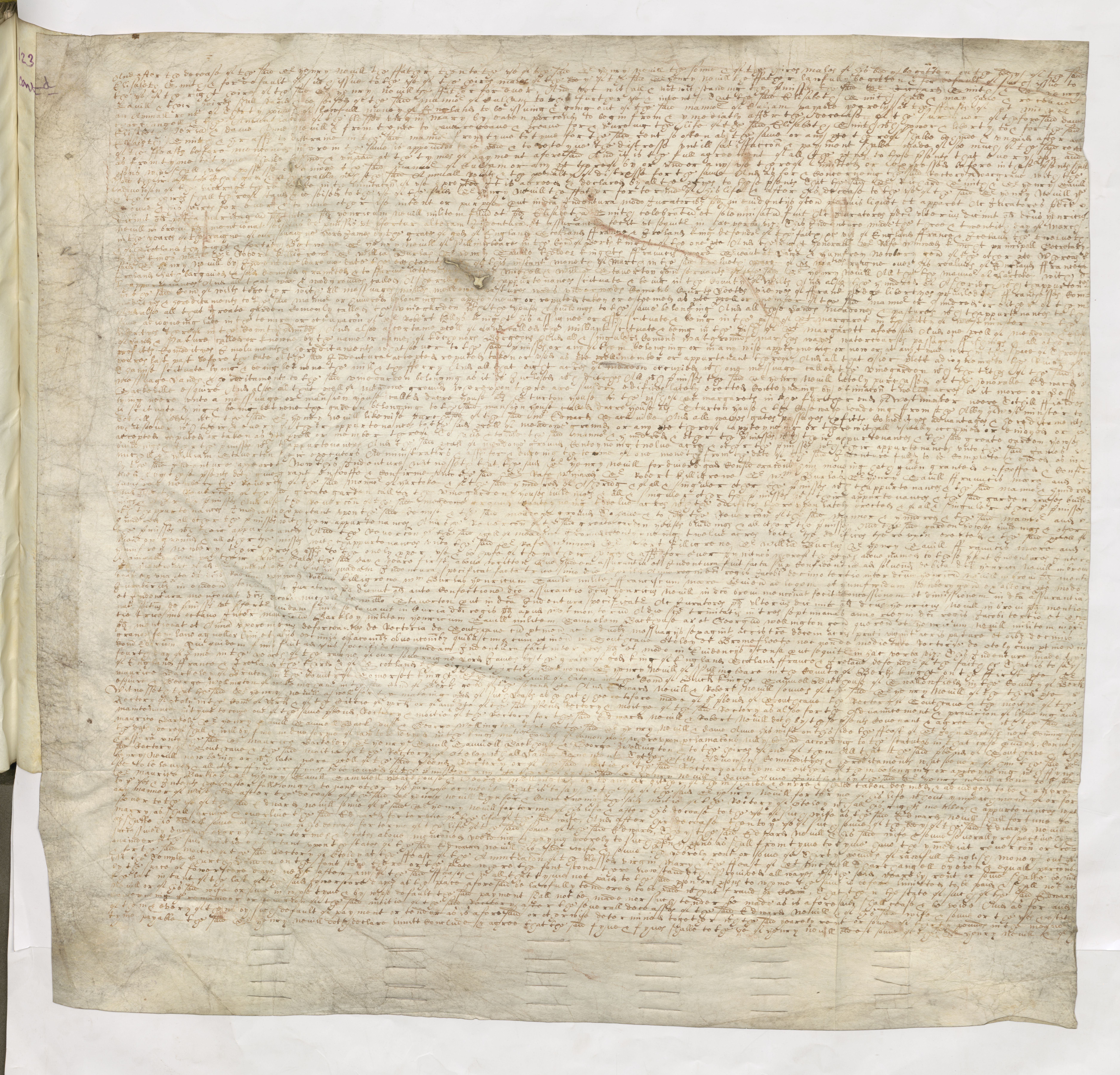
This packet controls the inquisition post mortem for Sir Henry Neville, C 142/356/123. A redone transcription set was added on 2026-05-27 and materially upgrades the earlier local transcription. The older transcription captured important Latin passages, but the comparison file states that it omitted the English vernacular material on images 003, 004, and 005, confused the sheet order, and missed or misread parts of the writ.
The redone transcription is therefore the current working control witness for topic use. It is still a working transcription, not a final paleographic edition.
1. Verified Sourced Facts
- The writ is dated
15 June 13 James Iand concerns lands held in chief by Sir Henry Neville, knight, who had died. The redone transcription restores a major omitted writ clause requiring the escheator to take into the king's hand all lands and tenements of which Neville was seised in demesne as of fee on the day he died.
- The inquisition was taken at Reading on
18 October 13 James Ibefore William Willscote, escheator for Berkshire.
- The top-margin delivery note says the inquisition was delivered into court on
27 October 14 James I.
- The jurors named in the redone transcription are Robert Stile, Roger Knight, John Leveche, William Knight, Richard Pottinger, Francis Phippes, Richard Whitlock, John Iremonger, Thomas Vachell, Thomas Towne, William Mountague, William Iremonger, Edward Blagrave, Richard Aldworth, Richard Edes, James Winch, Richard Staverton, Richard Swayne, and John Hearssey.
- The inquisition states that Sir Henry Neville died on
10 July 13 James Iat Billingbear.
- It states that Dame Anne Neville survived him and was living at Billingbear.
- It names Henry Neville, esquire, as the son and nearest heir, aged
27 and more.
- It directly establishes the following son sequence:
- Henry Neville, eldest son and heir, aged 27+ at the father's death.
- William Neville, second son.
- Edward Neville, third son.
- Charles Neville, fourth son.
- Richard Neville, fifth son.
- Henry Neville, sixth son, who must not be confused with the eldest Henry.
- The restored English text on image
005states that William, Edward, Charles, Richard, and the younger Henry were all living at Billingbear at the relevant time. This is stronger than the older packet, which only preserved the Latin living-status line for Anne, Richard, and Henry.
- The inquisition recites a
31 May 3 James Iindenture by which Henry Neville and Anne Neville held Billingbear, Waltham Laurence, and Warfield/Berkshire premises for life, with remainder to Henry Neville's male issue by Anne, then heirs of Henry's body, then right heirs.
- The
31 May 1605settlement names Sir Henry Savile, George Burnell, and Sir William Killigrew as feoffees/trustees.
- The inquisition recites a
1 May 10 James Iindenture concerning the Warfield manor, rectory, and advowson, with limitations after Anne's life to William, Edward, Charles, Richard, and the younger Henry in sequence.
- Identity firewall added
2026-07-12: these are sons of the ambassador Sir Henry Neville. Foster's Oxford entries separately identify another Edward, Charles, and Richard as sons of Henry's brother Edward of Culham/Windsor. The ambassador's son Edward is the Eton and King's College, Cambridge man who died in1632; Edward of Culham's son Edward is the Merton fellow and later rector of Farleigh. Foster's Charles, fourth son of Edward of Windsor, and Foster's Richard, son of Edward of Windsor and Merton fellow who died in1644, must not be assigned to the ambassador's IPM family merely because their forenames repeat. See edward neville ii brother windsor mp will witness and culham family.
- William upgrade added
2026-07-12:Willi Nevill filium suum secundumcan now be followed into a continuous post-1615 biography. Foster identifies him as Sir Henry's son and Henry III's brother; the Oxford register records his B.C.L. and D.C.L. and calls him Chancellor of Chichester; a REED/WSRO court route places him as Chichester vicar general in July1628; and Foster reports him as a Doctors' Commons advocate in1634. The 1665–66 visitation printsRichard Nevill Doctor of Lawebut its footnote corrects the Chichester civilian to William, a correction independently supported by Oxford. See william neville merton civil law doctors commons and chichester.
- Robert correction added
2026-07-12: the five younger sons in the1 May 1612Warfield remainder sequence are not a complete list of every son born to Henry and Anne. Neville's19 August 1604letter reports Cecil's favourto christen my son; History of Parliament identifies that child as Robert from the Waltham register and Winwood; and HullU DDBA/4/139namesEdward and Robert Nevill (sons of Sir Henry Nevill)and assigns South Cave to Robert. Robert is absent from the1612settlement, where Charles is fourth son. The deed's8 May 1609witness date may show Robert was then living, but the original must establish whether the operative appointment or only its recited 1605 covenant names him. His death before1 May 1612remains a reconstruction pending the register/deed chain. See robert neville 1604 cecil christening south cave and missing son.
- The inquisition recites a
20 February 7 James Iindenture with Sir Henry Savile, George Burnell, and Sir William Killigrew covering a much broader estate settlement. The redone transcription restores the English text of this material across images002,003, and004.
- The restored
20 February 1609/10material includes Southwick manor and the site of the late priory, West House, West Barn, West Barn fields, home park, park meadows, horse pastures, Dairy Leaze, East Wood, West Wood, High Wood, Sope Coppice, Cole Coppice, Howell Wood, and the advowson/vicarage/rectory of Southwick.
- The same settlement includes Wombridge, Shiffnal/Idsall, Sutton Maddock, Loppington tithes, Uppington lands, Wargrave, Lawrence Waltham, the office or bailiwick of Wargrave and Lawrence Waltham, and the seven hundreds.
- The same settlement includes Sussex, Essex, Somerset, and other properties, including Blackington, Goringlee, Chiltington, Pulborough, Torrington, Alvington/Allington, Westham lands bought of Lord Dacre, Gaynes in Essex, South Brent, Lottisham, East Pennard, Hornblotton, Pillingbere, and related rectories, advowsons, woods, tithes, rents, reversions, and services.
- The restored settlement text repeatedly uses 21-year terms for executors or administrators after Neville's death, especially for payment of debts, performance of legacies, and education or preferment of children.
- The will recital in the redone IPM states that Henry Neville made his will on
9 July 13 James I, requested burial in Wargrave parish church, and referred back to two deeds of covenant or assurance dated20 February 7 James I.
- The IPM will recital names four people in its executor/trustee passage: Dame Anne Neville, Sir Henry Savile, Sir John Bourchier of London, and Thomas Windebank, described as Neville's loving kinsman.
- The IPM recital states that Anne Neville, Savile, Bourchier, and Windebank took upon them the burden of execution and were seised of the relevant manors/premises for the 21-year term after Neville's death.
- This executor/trustee passage is important but currently conflicts with the located probate-will packet, whose preferred v3 transcription reads Anne Neville and Sir Henry Savile as the named executors and reads the probate act as saying they renounced execution, with administration issued to Henry Neville the son. Do not collapse these witnesses. The correct next step is image-level reconciliation of
C 142/356/123/005withPROB 11/126/63. - The two records also control different property lanes. The IPM primarily describes land, manors, rectories, woods, rents, and 21-year terms created through deeds. The PCC commission concerns the deceased's goods, rights, and credits. Neither record alone establishes who physically held books, cabinets, or loose papers.
- Henry Swinburne's contemporary probate treatise further shows that executor renunciation did not forbid simple safekeeping: taking goods into custody so they remained safe from theft was not, by itself, acting as executor. Anne's renunciation therefore does not settle the physical paper-custody question; the son's commission settles the formal administration named in the registered probate act.
- The IPM recital also conflicts with the located probate will on date and burial place: the IPM says the will was made on
9 July 1615and requests burial at Wargrave, while the current probate-will v3 transcription is dated the last day of April1615and requests burial at Laurence Waltham church. Both witnesses use health/memory language rather than sickness language.
- Tenure/value findings preserved in the redone transcription include:
- Billingbear/Waltham/Warfield premises held in chief by knight service, one-twentieth knight's fee, annual value 20 pounds.
- Southwick held in chief by knight service, one-twentieth knight's fee, annual value 20 pounds.
- Shiffnal/Wombridge held in chief by knight service, one-twentieth knight's fee, annual value 20 pounds.
- Wargrave held in chief by knight service, one-twentieth knight's fee, annual value 20 pounds.
- Warfield manor/rectory/advowson held of East Greenwich in socage by fealty only, annual value 10 pounds.
- Pillingbere, Sussex/Essex premises, and Somerset premises held of East Greenwich in socage, annual value 10 pounds each in the recited groupings.
2. Ken Feinstein Twitter and Blog Information
- No Ken Feinstein Twitter/blog material is isolated in this packet at present.
Quoted Source Passages
Follow SOURCE QUOTATION STANDARD. These passages are from the redone IPM transcription and local C 142/356/123 images.
Death and place
- Source: Inquisition post mortem for Sir Henry Neville,
C 142/356/123; local complete PDF/images and redone transcription. - Quotation:
"decimo die Julij ... apud Billingbere"
- What it proves: The IPM records Sir Henry Neville's death on 10 July at Billingbear.
- Limits: This is the IPM witness; reconcile against probate and other death notices when building final chronology.
Heir and age
- Source: Same IPM witness.
- Quotation:
"Henricus Nevill Armiger est filius et heres ppinquior"
"viginti septem annor et amplius"
- What it proves: The IPM names Henry Neville esquire as son and next heir, aged 27 or more.
- Limits: This controls heir/age at IPM level; it does not list all daughters or resolve every family-structure question.
Sons in settlement recital
- Source: Same IPM witness, settlement/will recital.
- Quotation:
"Willi Nevill filium suum secundum"
"Edwardum Nevill filium suum tercium"
"Carolum Nevill filium suum quartum"
"Rici Nevill filium suum quintum"
"Henricum Nevill filium suum sextum"
- What it proves: The IPM directly names Neville sons in birth-order/settlement language.
- Limits: This is not a complete child list and should not be used to prove the absence of daughters.
Will/executor recital
- Source: Same IPM witness, English will/settlement recital.
- Quotation:
"my lovinge wiffe Dame Anne Nevill"
"Sir Henry Savile knight"
"education and preferment of my children"
- What it proves: The IPM preserves a will/settlement recital naming Anne Neville, Savile, and the children-education purpose.
- Limits: This recital conflicts in places with the probate-will packet; do not collapse the IPM and probate witnesses without image-level reconciliation.
3. Quoted Source Text
Core Latin / administrative text
- "apud Readinge in Com Berk decimo octavo die Octobris"
- "Henricus Nevill miles"
- "decimo die Julij ... apud Billingbere"
- "Henricus Nevill Armiger est filius et heres ppinquior"
- "viginti septem annor et amplius"
- "Willi Nevill filium suum secundum Edwardum Nevill filium suum tercium Carolum Nevill filium suum quartum Rici Nevill filium suum quintum et Henricum Nevill filium suum sextum"
- "Henricum Savile militem Georgium Burnell gener et Willm Killigrewe milit"
- "de dno Rege in capite p servicium militare"
- "ut de Manerio suo de Eastgreenwich in Com Kanc in socagio"
Restored English will/settlement recital
- "In the name of god Amen I Sir Henry Nevill of Billingbere in the county of Berks knight beinge in perfect health and memory"
- "my body to be buried in the parish church of Wargrave"
- "my lovinge wiffe Dame Anne Nevill and my very good friends Sir Henry Savile knight Warden of Merton Colledge in Oxon Sir John Bourchier of London knight and my lovinge kinsman Thomas Windebanke esquier"
- "tooke upon them the burthen of the execution"
- "payment of my debts performance of my legacies and education and preferment of my children"
- "William Nevill second sonne ... Edward Nevill third ... Charles Nevill fourth ... Richard Nevill fifth ... Henry Nevill sixth"
4. Evidence Images
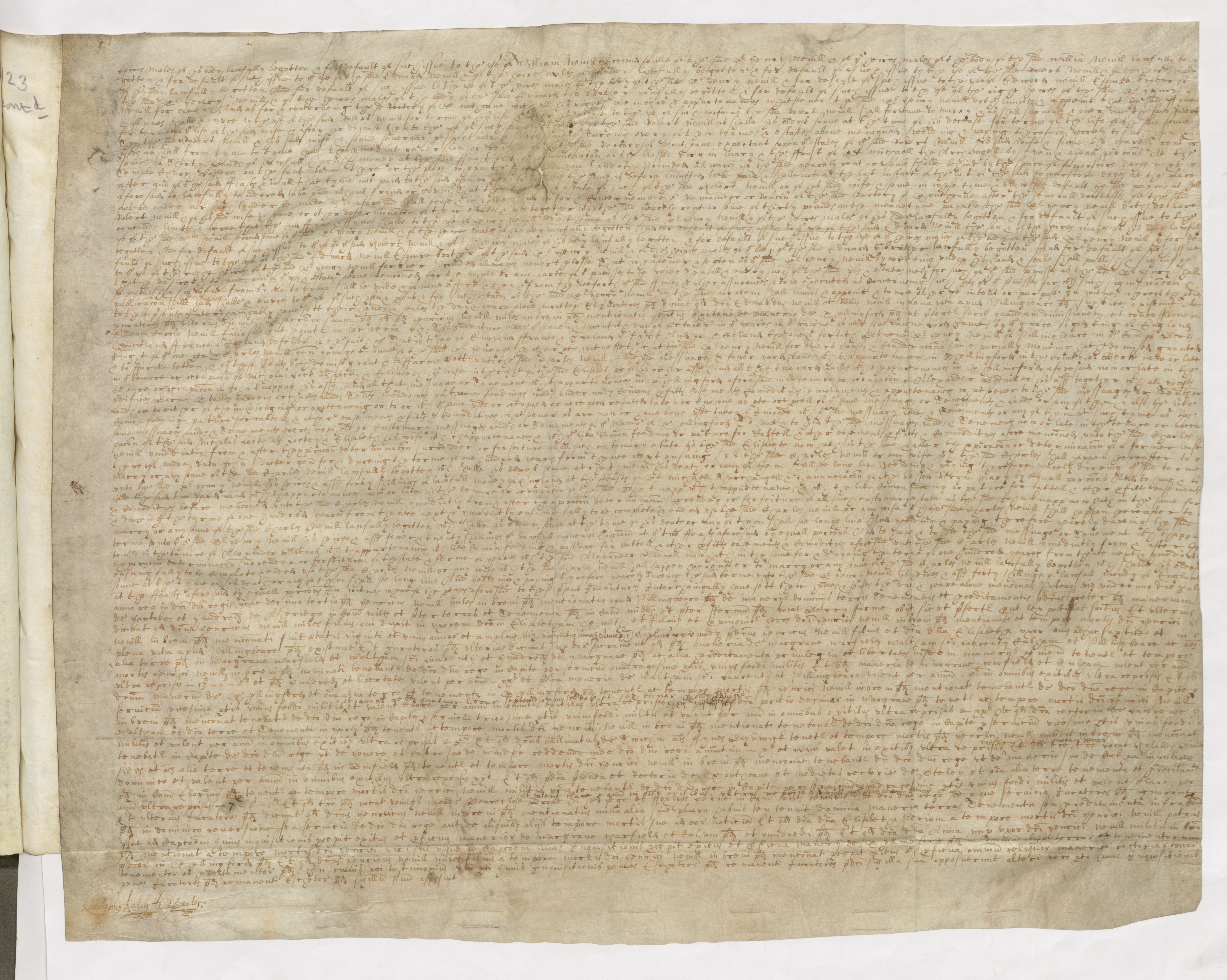
5. Citations
- Inquisition Post Mortem for Sir Henry Neville. The National Archives,
C 142/356/123. Local complete PDF with images: Neville Inquisition Complete. - Redone transcriptions,
2026-05-27, research collections: redone_transcriptions. - Redone transcription page 1: C 142 356 123 001.
- Redone transcription page 2: C 142 356 123 002.
- Redone transcription page 3: C 142 356 123 003.
- Redone transcription page 4: C 142 356 123 004.
- Redone transcription page 5: C 142 356 123 005.
- Comparison report: Neville Inquisition Transcription Comparison.
- Combined transcription PDF: Neville Inquisition Combined Transcriptions.
- Genealogy source note: INQUISITION SOURCE NOTE.
- Children control packet: henry neville anne killigrew children.
- Direct will packet: henry neville will 1615.
- Paper-custody/probate synthesis and Swinburne page images: NEVILLE PAPER CABINET AND POSTHUMOUS CUSTODY FRESH RESEARCH 2026 07 12; SOURCE NOTES.
6. Notes on Access
- The redone transcription has been copied into three local control locations:
- redone_transcriptions
- redone_transcriptions
- Neville_Inquisition_Redone_Transcriptions
- The old local transcription remains available for comparison but is superseded for ordinary topic use because it omitted large English sections on images
003,004, and005. - The inquisition is direct evidence for the named sons in its settlement sequence, heirship, death date, death place, principal landholding, estate settlements, and the IPM's own recital of the will. It should not be used as a complete list of all children ever born: Robert's 1604 birth and 1609 South Cave remainder independently demonstrate an additional son, while the document supplies no complete daughter list.
- The IPM recites property settlements and will provisions; it is not identical to the probate register witness. Where the two conflict, preserve the conflict until both images have been audited line by line.
- The Sir William Killigrew named in the settlement recitals is the older Sir William Killigrew of Lothbury/Hanworth, father of Sir Robert Killigrew. Current DNB/HoP-derived dating gives his death at Lothbury on
23 November 1622, so his appearance in the 1605 and 1609/10 settlement recitals is chronologically possible. Do not confuse him with the younger Sir William Killigrew, 1606-1695.