Holinshed's Chronicles, the Killigrew Copy, and Henry Neville
Topic: Holinshed's Chronicles, the Killigrew Copy, and Henry Neville
Governing kinship and provenance correction — 28 August 2026
William Killigrew, whose name appears in the 1577 Kansas copy, was Anne Killigrew Neville's paternal uncle: William was the younger brother of Anne's father, Sir Henry Killigrew. He was not Anne's brother and not Henry Neville's brother-in-law. The copy is at the University of Kansas, not Audley End.
The title-page inscription and the immediate Killigrew–Neville in-law route are documented. Henry Neville's use of this physical copy is not. Its annotations remain unattributed and should not be assigned to Neville. This packet concerns Holinshed, not Hall's Chronicle; there is no relevant Audley End Hall's Chronicle claim.
Source-Fact Audit — 7 August 2026 (Round 3)
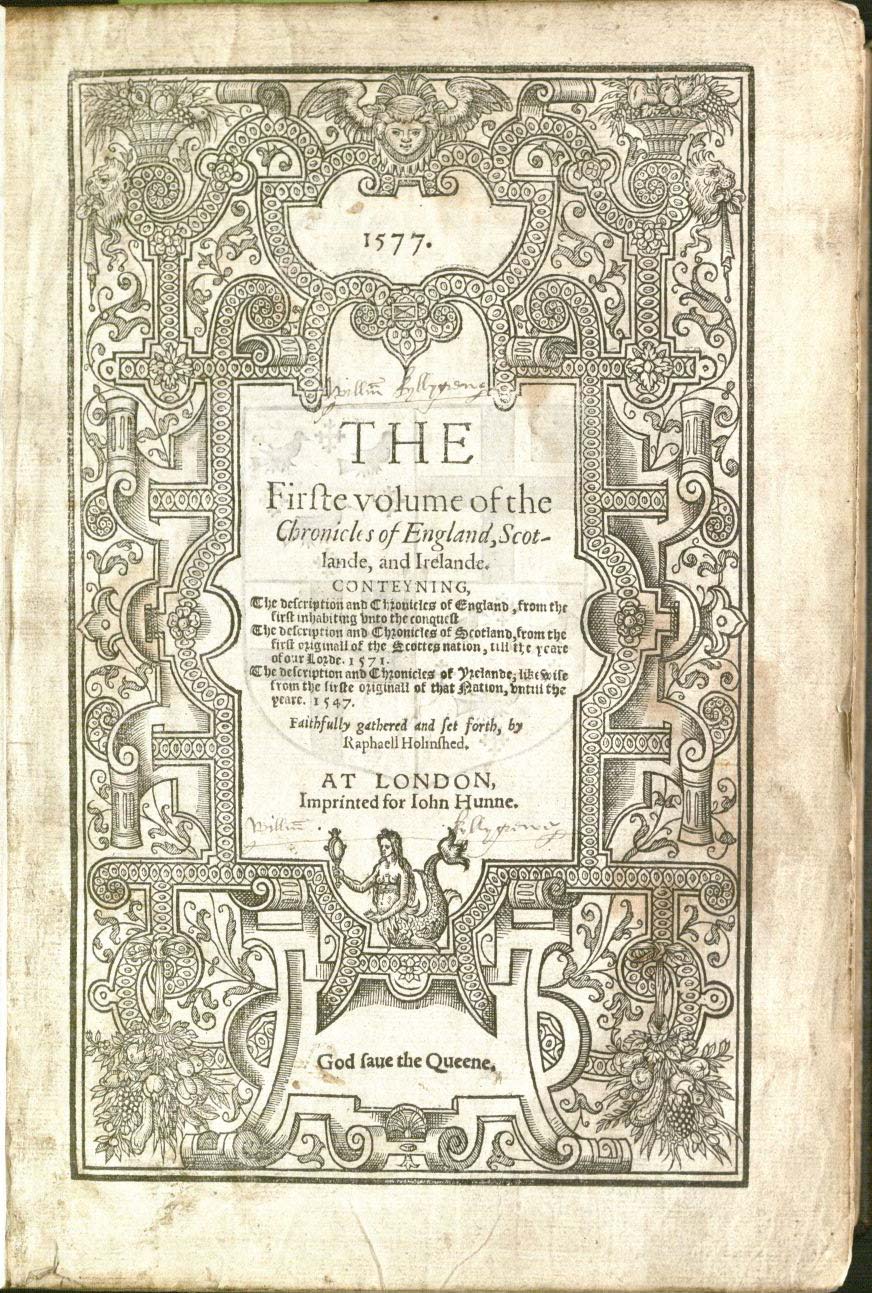
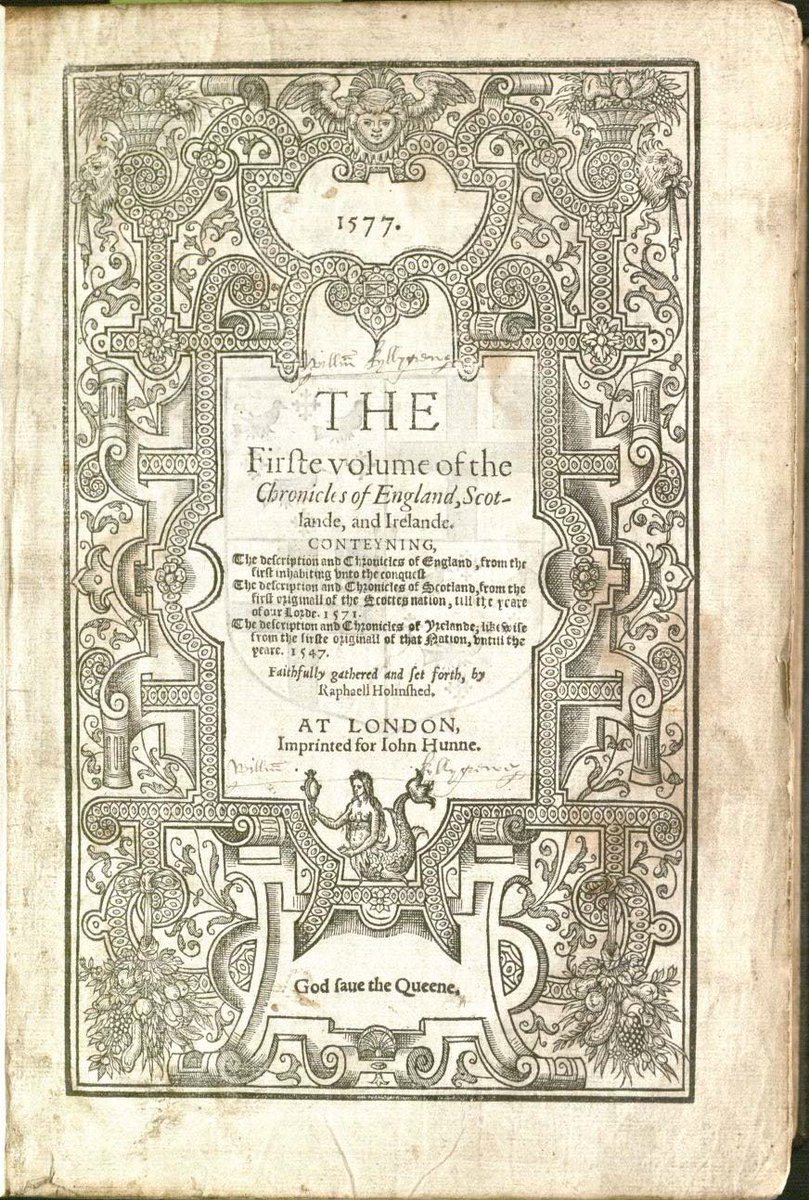
- The checked title page of the 1577 Chronicles bears the name “William Kyllygrewe” twice. This is direct evidence for a Killigrew ownership or possession inscription, not for Henry Neville's ownership.
- The volume contains marked passages, but the annotating hand has not been identified as Killigrew's or Neville's. Ownership, annotation, and later descent are therefore separate questions.
- The Killigrew–Neville family connection is independently documentable through Anne Killigrew Neville; it does not identify who made any particular mark in the book.
- Comparisons between marked chronicle passages and Shakespeare remain passage correspondences. They should be quoted from both witnesses and not converted into a claim that the book supplied Shakespeare's wording.
- Public control: University of Kansas, Spencer Research Library, “Shakespeare’s Holinshed”. The next object-level step is handwriting comparison against independently attributed Killigrew hands and a complete provenance history for the volume.
Web / Archive Notes
- No new external source found in this pass directly links Henry Neville to ownership or annotation of the Killigrew Holinshed witness.
- The useful public route remains the KU Spencer Library provenance discussion, paired with Clegg/APC material for the broader Holinshed review/censorship context.
- Project correction: the annotations are still important because of the marked passages and source-book relevance, but Ken's current view is that they do not match Neville's known annotations.
- Current book-safe formulation: the packet supports a Killigrew/Neville-family source-book environment and Holinshed-control lane. It should not be used as an individual Henry Neville annotation claim.
1. Verified Sourced Facts
- The associated image witness shows the
1577title page of Holinshed's Chronicles withWilliam Killigrewwritten on it.
- Direct KU source packet,
2026-06-09: the University of Kansas / Kenneth Spencer Research Library evidence has now been separated into SOURCE NOTES. The packet preserves the KU blog, all eight KU blog images, Ken's blog post and image files, and Karen Severud Cook's original26 June 2019Gmail attachmentPryce D11-Holinshed annots.
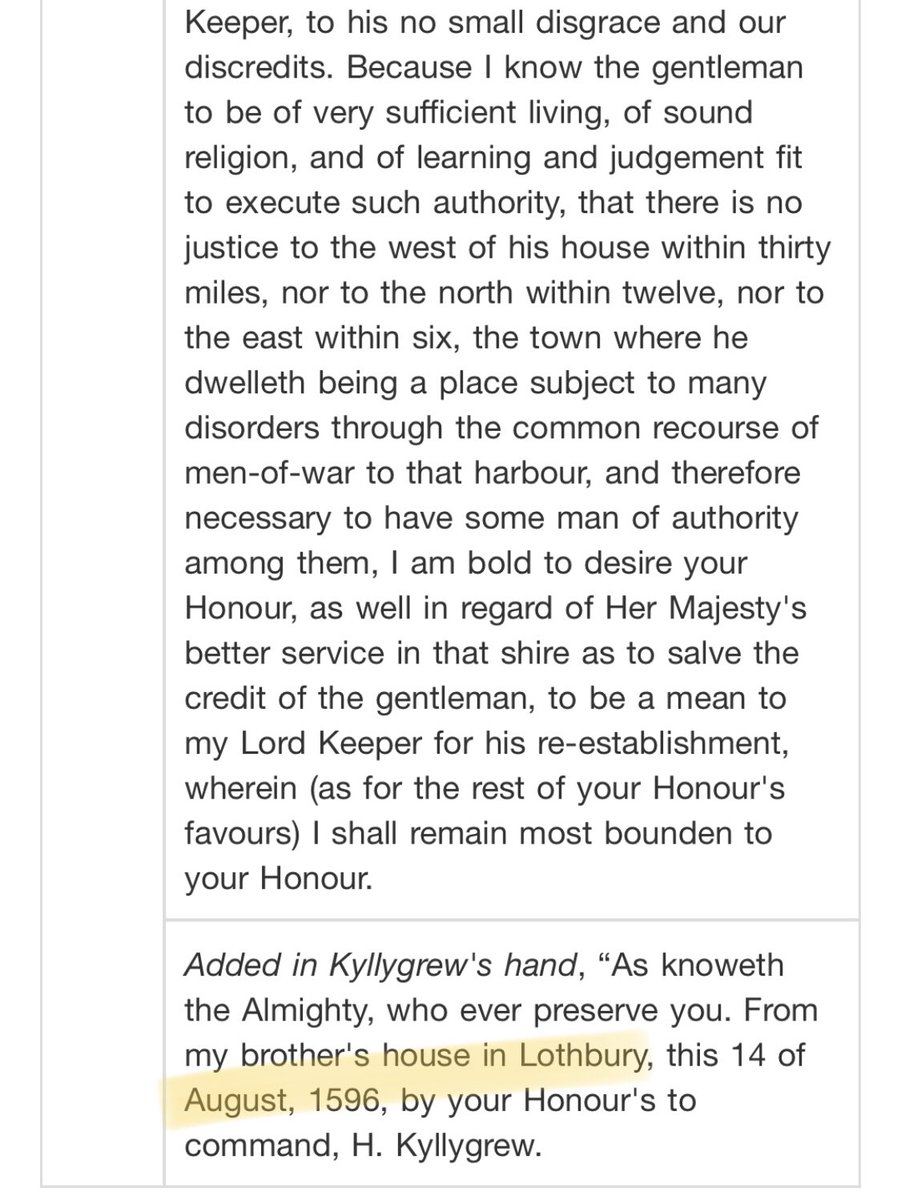
- The associated image preserves the wording:
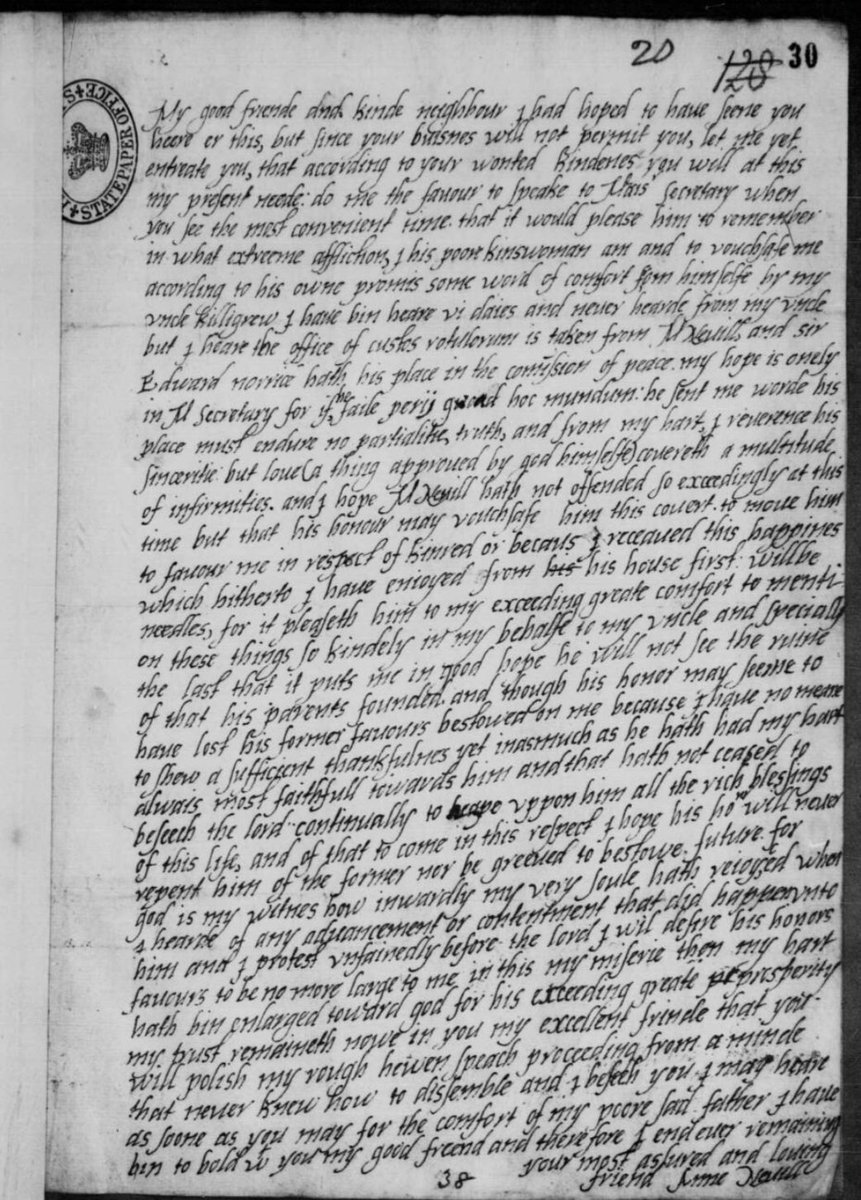
“From my brother's house in Lothbury, this 14 of August, 1596”
- The associated images show marked passages in the Killigrew copy at:
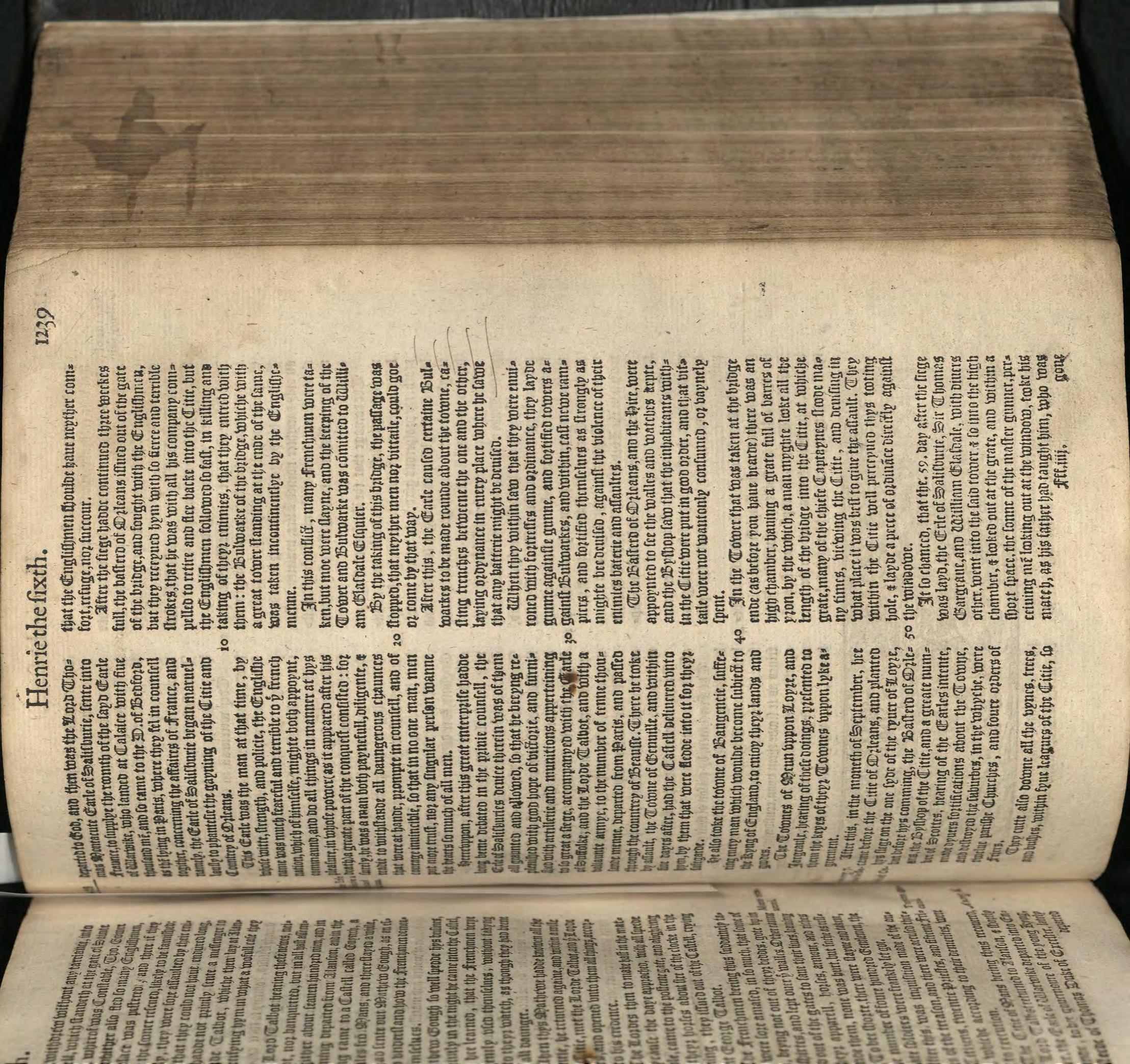
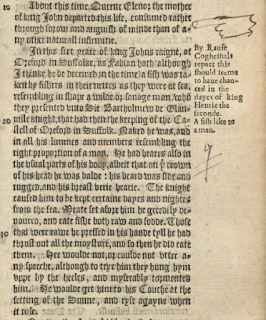
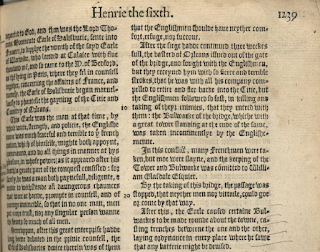
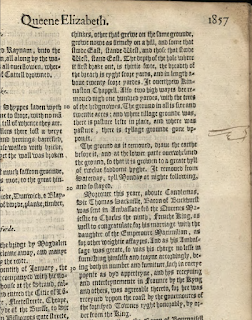
King John, p.559Henry VI, p.1239- the
1571earthquake section in the Elizabeth material
- The topic's current verified layer is a source-access and marked-passage claim, not an annotation-attribution claim: the marked
1577Holinshed copy is connected to William Killigrew and to the Killigrew/Neville in-law world, but the annotations should not be attributed to Henry Neville and currently appear not to match Neville's known annotation hand.
- Source-control position: killigrews of lothbury now collects verified Lothbury evidence for the Killigrews. The strongest additions are British Library catalogue entries for William Killigrew property in St Margaret Lothbury / St Stephen Coleman Street (
Add Ch 76967-76970) and Folger court-calendar entries placing Jael, Lady Killigrew, at Lothbury in1601. This strengthens the family-household access route, but it still does not prove Neville used or annotated William Killigrew's Holinshed copy.
- Source-control position: the uploaded Cyndia Susan Clegg chapter has been located, copied, extracted, rendered, and checksummed in SOURCE NOTES. This supersedes the earlier unresolved local-PDF status.
- Source-control position: Clegg directly quotes the Privy Council order for the
1587Holinshed recall/review. The order asks Archbishop Whitgift to divide the work amongMr. Randolph,Mr. H. Killegrew, andMr. Doctour Hammondfor review and reformation. Clegg cites this to Dasent, Acts of the Privy Council, X,311-12. This hardens Henry Killigrew's role from a Feinstein/blog lead into a directly sourced Oxford Handbook / Privy Council claim.
- Source-control position: Clegg's analysis also clarifies the nature of the
1587censorship. The concern was not history-writing in general, but late-state material involving Scotland and the King of Scots, England's Low Countries diplomacy and Leicester, and Catholic criticism of the English justice system. Clegg further says the Scottish removals were probably part of the first censorship stage overseen by Hammond and Killigrew, and that Leicester material survived the first stage probably because Killigrew was Leicester's client.
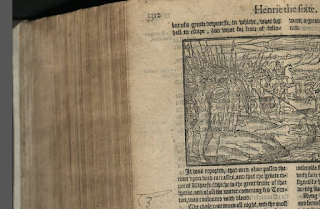
- Source-control position: the KU/Gmail evidence now directly verifies the institutional chain for the marked-page images. Karen Severud Cook's
26 June 2019email identifies the endpaper/call-number image and marked pages321,322,352,521,559,625,1239,1312,1788, and1857; the PDF attachment has been downloaded from Gmail, checksummed, and rendered into individual page images in the KU packet. Cook's27 June 2019follow-up also records KU's position that provenance beyond the blog was not known, that the book appears to have been trimmed after marks were made, and that she had checked the volumes twice. KU's permission language remains important: the email images were supplied for personal study and need KU permission before publication or public display.
- In v10 book structure, this packet feeds two separate chapters:
- Chapter Six for source-book access.
- Chapter Thirteen for history-play / family-history development.
2. Ken Feinstein Twitter and Blog Information
- A Ken Feinstein tweet dated
27 June 2019states:
“The University of Kansas has a copy of the 1577 edition signed by William Killigrew.”
- The associated tweet image shows the
1577title page withWilliam Killigrewwritten on it.
- A Ken Feinstein tweet dated
27 June 2019states:
“Here is a letter from 1596 where Henry Killigrew says he is staying at his brother's house in Lothbury.”
- A Ken Feinstein tweet dated
27 June 2019states:
“Here is a letter from Neville's wife which specifically mentions her uncle (William Killigrew)”
- A Ken Feinstein tweet dated
27 June 2019states:
“So here are the annotated sections of the 1577 Holinshed's Chronicles.”
- A Ken Feinstein blog post states:
“Henry Killigrew was one of the three people chosen to review and censor the second edition of the book before it was published.”
- Source-control note,
2026-06-09: that blog claim is now independently supported by Clegg's Oxford Handbook chapter and the Privy Council order Clegg quotes.
- The blog/tweet layer also supplies the working interpretation that the marked
King John,Henry VI, and Elizabeth passages matter because they are passages relevant to Shakespeare's history plays. The underlying images exist locally, but the scene-by-scene comparison has not yet been completed.
3. Quoted Source Text
Ken Feinstein tweets and blog post
- “The University of Kansas has a copy of the 1577 edition signed by William Killigrew.”
- “Here is a letter from 1596 where Henry Killigrew says he is staying at his brother's house in Lothbury.”
- “Here is a letter from Neville's wife which specifically mentions her uncle (William Killigrew)”
- “So here are the annotated sections of the 1577 Holinshed's Chronicles.”
- “Henry Killigrew was one of the three people chosen to review and censor the second edition of the book before it was published.”
Clegg / Privy Council order
- “matters of later yeeres that concern the State”
- “Mr. Randolph and Mr. H. Killegrew, with Mr. Doctour Hammond”
- “reviewed and reformyd”
- “initial stage of censorship overseen by Hammond and Killigrew”
- “censor Killigrew was Leicester's client”
Local packet rule for book use
- “Do not attribute the annotations to Henry Neville.”
- “The annotations are of interest, but they do not appear to match Neville's known annotations.”
- “Use the copy as family/source-access evidence unless and until a direct handwriting or provenance argument is separately established.”
4. Citations
- Cook, Karen Severud. "A Holinshed's Chronicles Provenance Puzzle." Kenneth Spencer Research Library Blog, University of Kansas Libraries,
6 February 2018, https://blogs.lib.ku.edu/spencer/a-holinsheds-chronicles-provenance-puzzle/. Local preservation and image archive: SOURCE NOTES. - Cook, Karen Severud. Email to Ken Feinstein,
26 June 2019, subjectRE: Thank you for speaking with me today, Gmail message ID16b94d9593a4ad07, attachmentPryce D11-Holinshed annots. Local attachment and rendered pages: ku email original pryce d11 holinshed annots. - Cook, Karen Severud. Email to Ken Feinstein,
27 June 2019, subjectRE: Thank you for speaking with me today, Gmail message ID16b99fd80441c9da. Notes provenance limit, trimming, and two-pass inspection of the volumes. - Feinstein, Ken. “William Killigrew's Holinshed's Chronicles, Henry Neville, and Shakespeare?” kenfeinstein.blogspot.com, 26 June 2019, https://kenfeinstein.blogspot.com/2019/06/william-killigrews-holinsheds.html. Local preservation: blog killigrews holinshed neville 2019 06 26.
- Feinstein, Ken. “There are two editions of Holinshed's Chronicles: 1577 and 1587. Generally Shakespeare is believed to have used the 1587 edition, but there is no reason to think he didn't read both. The University of Kansas has a copy of the 1577 edition signed by William Killigrew.” X, 27 June 2019, https://twitter.com/user/status/1144125526556065793. Local archive: twitter Books Read.
- Feinstein, Ken. “Here is a letter from 1596 where Henry Killigrew says he is staying at his brother's house in Lothbury. There are many letters from Neville sent from Lothbury. His son was married there in 1609 at the church that has the tombs of Henry and William Killigrew.” X, 27 June 2019, https://twitter.com/user/status/1144129817974960128.
- Feinstein, Ken. “Here is a letter from Neville's wife which specifically mentions her uncle (William Killigrew)” X, 27 June 2019, https://twitter.com/user/status/1144130191897194496.
- Feinstein, Ken. “So here are the annotated sections of the 1577 Holinshed's Chronicles. It was owned by William Killigrew, the uncle of Henry Neville's wife. Henry Neville stayed at Lothbury often while in London either with William or his brother Henry (Neville's father-in-law).” X, 27 June 2019, https://twitter.com/user/status/1144337526116589568.
- Clegg, Cyndia Susan. "Censorship." In Paulina Kewes, Ian W. Archer, and Felicity Heal, eds., The Oxford Handbook of Holinshed's Chronicles. Oxford University Press,
2013, pp.43-60. DOI: https://doi.org/10.1093/oxfordhb/9780199565757.013.0003. document witnesses/text/source note: SOURCE NOTES. - Dasent, J. R., ed. Acts of the Privy Council of England. Vol. X, pp.
311-12, as quoted and cited in Clegg, "Censorship," pp.45-46. - Kewes, Paulina, Ian W. Archer, and Felicity Heal, eds. The Oxford Handbook of Holinshed's Chronicles. Oxford University Press,
2013. Online ISBN9780191750533; print ISBN9780199565757; DOI: https://doi.org/10.1093/oxfordhb/9780199565757.001.0001. - Clegg, Cyndia Susan. "'By the Choise and Inuitation of al the Realme': Richard II and Elizabethan Press Censorship." Shakespeare Quarterly
48.4(1997),432-448. document witnesses: Clegg Richard II Press Censorship 1997. Status: background only for Holinshed censorship; not a direct source for naming Henry Killigrew as a reviewer.
5. Evidence Images
6. Notes on Access
- This packet is designed for the book's source-books chapter and keeps together three distinct things:
- William Killigrew's
1577Holinshed copy - the Lothbury / family-access path linking Neville to the Killigrews
- Henry Killigrew's now-documented role in the
1587edition review/censorship process - The title-page ownership point and the
1587review/censorship point are both now directly sourced, but they remain separate evidentiary lanes: William Killigrew's1577Kansas copy does not by itself prove Henry Neville's use, and Henry Killigrew's1587review role does not by itself prove access to the Kansas copy. - Clegg's chapter has now been extracted directly. The remaining source-control target is optional but useful: a primary image or full citation check for Dasent, Acts of the Privy Council, X,
311-12. - The KU catalog permalink and KU blog are now extracted in the
2026-06-09source packet. Remaining KU-side actions are permissions and, if needed, a better image of p.352. - The marked passages are part of the evidentiary value of the copy, but this packet does not attribute the annotations to Henry Neville; the current project position is that they do not match Neville's known annotation hand.
- The present claim is narrower: the annotated
1577Holinshed was owned by William Killigrew and sits inside Neville's immediate in-law / Lothbury world as a plausible access route. - The Lothbury-access argument is now separated into killigrews of lothbury, which should be used for property/household facts rather than overloading this Holinshed packet.
- For Chapter Thirteen, the next required pass is a direct comparison table:
- marked Holinshed page,
- exact Holinshed passage,
- corresponding Shakespeare scene,
- whether the play merely follows the chronicle or alters the material in a way relevant to Neville family history.
2026-07-14 Marked-Passage Collation
Three original-resolution witnesses were opened directly in this pass: the KU title-page inscription detail, the supplied image of p. 559, and the supplied image of p. 1239. The two printed passages can now be compared with exact Folger text without attributing either mark to Henry Neville.
Ownership inscription
The title-page detail reads William Kyllygrewe (the final letters are written in an extended flourish). KU independently identifies the name and compares it with William Killigrew's 1579 Surrey History Centre letter and a 1601 KU deed. This promotes the ownership-name identification. It does not identify the hand responsible for every later manicule or underline in the volumes.
Page 559: King John's mother
The marked Holinshed paragraph reads:
About this time, Queene Elenor, the mother of king John departed this life, consumed rather through sorrow and anguish of minde than of any other naturall infirmitie.
The corresponding Folger scene reports both Eleanor's death and John's immediate political disorientation:
MESSENGER My liege, her ear
Is stopped with dust. The first of April died
Your noble mother. And as I hear, my lord,
The Lady Constance in a frenzy died
Three days before. But this from rumor's tongue
I idly heard. If true or false, I know not.
KING JOHN, [aside]
Withhold thy speed, dreadful occasion!
O, make a league with me till I have pleased
My discontented peers. What? Mother dead?
How wildly then walks my estate in France!—
—King John 4.2.122-132, Folger.
The mark sits beside the Chronicle's death notice. The play keeps the death but changes its dramatic function: Eleanor's death arrives with Constance's, invasion news, and John's failing control.
Page 1239: Orleans, trenches, bulwarks, and ordnance
The underlined/marked Holinshed paragraph reads:
After this, the Earle caused certaine Bulwarkes to be made rounde about the towne, casting trenches betweene the one and the other, laying ordynaunce in every place where he sawe that any batterie might be devised.
Folger's Orleans scene begins:
MASTER GUNNER
Sirrah, thou know'st how Orleance is besieged
And how the English have the suburbs won.
It then develops the same siege apparatus:
How the English, in the suburbs close entrenched,
Went through a secret grate of iron bars
In yonder tower, to overpeer the city,
And thence discover how with most advantage
They may vex us with shot or with assault.
To intercept this inconvenience,
A piece of ordnance 'gainst it I have placed,
—1 Henry VI 1.4.1-2, 1.4.11-17, Folger.
The connection is a source-passage comparison: siege at Orleans, entrenchment, observation, assault, and placed ordnance. It is not a handwriting attribution and does not show who first noticed or marked the passage.
Image and text witnesses
- Holinshed v1 tp ALL hi res top name detail.
- page 559 rotated.
- page 1239 rotated.
- Karen Severud Cook, “A Holinshed's Chronicles Provenance Puzzle”.
- act 04 scene 02 and act 01 scene 04.