Cannons in the Canon 5: Iron Ordnance in King John
Topic: Cannons in the Canon 5: Iron Ordnance in King John
Round 8 Folio spelling resolution — 8 August 2026
The open ordnance question can now be answered at the First Folio text level. The 1623 TCP witness reads By the compulsion of their Ordinance, not Ordnance. The surrounding lines make its artillery sense explicit:
KING JOHN
The cannons have their bowels full of wrath,
And ready mounted are they to spit forth
Their iron indignation 'gainst your walls.
All preparation for a bloody siege
And merciless proceeding by these French
Confronts your city's eyes, your winking gates,
And, but for our approach, those sleeping stones,
That as a waist doth girdle you about,
By the compulsion of their ordinance
Thus the blog's claim that the play prints the exact technical spelling ordnance is false, while its claim that the passage is about cannon remains true from syntax and context. The Neville-side cast Iron ordnance documents remain a separate exact-wording lane. A spelling difference must not erase the semantic artillery fact or be normalized into lexical identity.
Named-Piece Lexicon Update, 20 July 2026
The Shakespeare-wide named-piece comparison now has its own controlled packet: ordnance name lexicon minion falcon saker culverin basilisk. Its central correction is that period artillery vocabulary cannot be reduced to surface matches. In the Folger corpus minion and falcon occur only in non-gun senses, saker is absent, culverin occurs once in the technical list in 1 Henry IV 2.3, and basilisk moves between artillery and monster/gaze senses. The ordnance argument should compare semantic choice and size hierarchy, not merely the presence of words that could name guns.
Mayfield / O23 Image Notes
- The Neville-side ordnance background is now backed by a dedicated Mayfield / Wealden iron source-image packet. It stages
D/EN/O23manuscript images for the Sackville/Jones ordnance lane, Bell-Irving page renders, Privy CouncilMafeld, and Lawton's early-modern metal-working chapter. - This update strengthens the claim that Neville had direct involvement in cast-iron ordnance transactions. It does not change the play-side guardrail: Folger King John has
ordinance, not exactordnance, and the play argument still requires Folio/edition-history checking.
Uploaded Scholarship Notes
- New digest: MAYFIELD WEALDEN IRON UPLOADED ARTICLES DIGEST 2026 06 22.
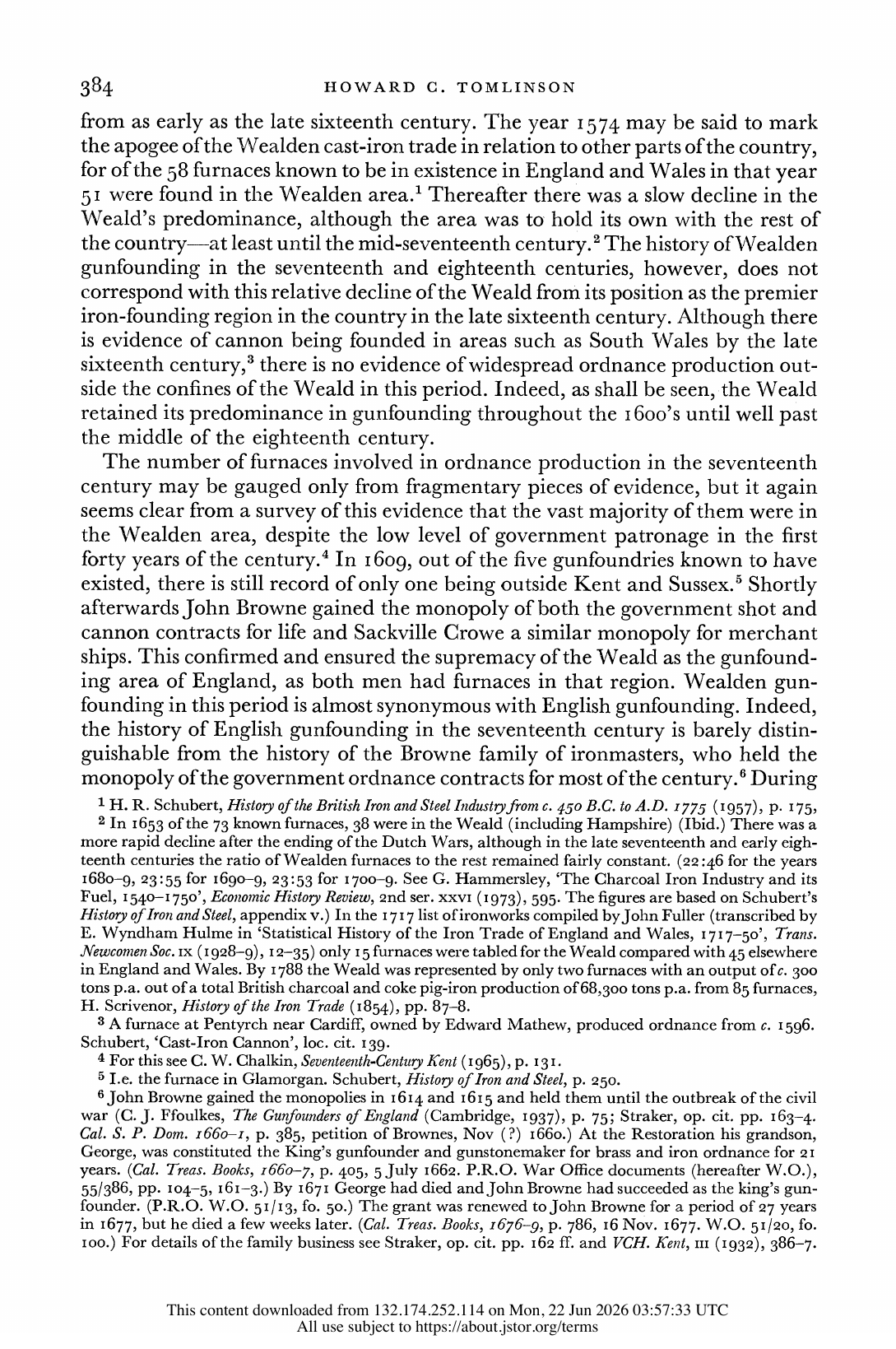
- Tomlinson gives the strongest new gunfounding control: the Weald's long importance as a cast-iron gunfounding region makes Neville's
D/EN/O23ordnance business andletter_038casting vocabulary part of a larger technical economy. - Crossley, Hammersley, King, Awty, and Richards add management, fuel, output, skilled-labor, and terminology controls for the same Wealden context.
- Guardrail unchanged: this strengthens the Neville/Weald ordnance background for King John, but the play-side
ordinance/ordnanceissue still requires First Folio and edition-history checking.
Source-Control Position
- This packet has been moved from
leadtomixed. The Mayfield/BRO ordnance evidence and the King John cannon passages are real, checked source lanes; the authorship inference remains interpretive. - The inherited blog-summary claim that King John uses the technical term
ordnanceneeds correction. The Folger text has no exactordnancehit in King John. It hasordinanceonce in2.1, inside the siege/cannon passage:By the compulsion of their ordinance. - Because
ordinanceandordnancecan be editorially and historically entangled, do not use this packet's title phrase "Iron Ordnance in King John" as a settled play-text claim until the First Folio and major editions have been checked. A safer book formulation is: King John has unusually dense cannon, artillery, bullet, battery, and iron-indignation language in the Angiers siege scene, while Neville's 1590s papers independently document cast-iron ordnance business. - Visual spot-checks on
IMG 0230,IMG 8404, andIMG 8405support the local D/EN/O23 transcription anchors for the Sackville delivery letter and Abraham Jones'scast Iron ordnanceletter. This is a spot-check, not a full diplomatic collation.
1. Verified Sourced Facts
Play Text
- The Folger King John text is the Folger Shakespeare Library text created from FDT
0.9.2.2, with local chunks under[local source path removed]. - Folgerpedia states that research suggests Shakespeare wrote King John in
1594-96and that it was published in the1623First Folio. - The Folger King John text has direct cannon language in
1.1:
"The thunder of my cannon shall be heard."
- The Folger King John text has dense siege artillery language in
2.1, including:
"Our cannon shall be bent"
"The cannons have their bowels full of wrath"
"Their iron indignation 'gainst your walls"
"Our cannons' malice vainly shall be spent"
"Their battering cannon charged to the mouths"
"Turn thou the mouth of thy artillery"
"Shall rain their drift of bullets on this town"
"What cannoneer begot this lusty blood?"
"He speaks plain cannon fire, and smoke, and bounce."
- The Folger King John text does not contain an exact
ordnancehit. It containsordinanceonce, in2.1, in the line:
"By the compulsion of their ordinance"
- The Folger text also has an Arthur/Hubert iron passage in
4.1, includingIron Age,fiery indignation, andhammered iron; this is a separate iron-imagery lane from the2.1Angiers siege cannon passage.
Shakespeare-Wide Folger Control
- Exact Folger string count for
ordnance:7line hits in6chunks: 1 Henry VI1.4and2.3, 2 Henry VI4.1, The Taming of the Shrew1.2, Hamlet5.2, and Henry V2.4. - Exact Folger string count for
ordinance:8line hits in7chunks, including King John2.1; most hits are legal/order/providence contexts rather than cannon contexts. - Exact Folger string count for
cannon:21line hits in19chunks. King John supplies4singularcannonline hits. - Exact Folger string count for
cannons:5line hits in4chunks. King John supplies2pluralcannonsline hits. - Exact Folger string count for
cannoneer:2line hits, in Hamlet5.2and King John2.1. - Exact Folger string count for
artillery:5line hits, including King John2.1.
Neville / BRO Ordnance Evidence
- BRO/Royal Berkshire
D/EN/O23transcriptions directly document the Berkshire Record Office ordnance lane cited in the original blog post. Doc 43c D EN O 23preserves a copy/draft letter to Robert Sackville concerning Neville's ordnance deliveries at Millhall, Lewes, Maidstone, and Weymouth, with quantities totaling152 ton 3 quarters of a hundredand then175 ton.- The same
Doc_43cfile refers tomy L: of Bergavenny, to the delivery and return of bonds, and to a marginal draft frommaighfeild. Doc 44 D EN O 23preserves Abraham Jones writing from Lewes to Sir Henry Neville on23 November 1595about Neville'scast Iron ordnance, shipped pieces, and remaining pieces at Lewes.- The BRO audit marks both
Doc_43candDoc_44asOK, with final spot-check still useful. - Visual spot-check on
2026-05-29supports the core anchors:IMG 0230visibly carries the Sackville delivery quantities, Bergavenny bond lane, Weymouth delivery, andmaighfeildmarginal draft;IMG 8404visibly carries the Abraham Jones letter body, including thecast Iron ordnancelane and Lewes quantities;IMG 8405visibly carries the address/docket to Henry Neville at Billingbear andAbraham Jones l[ett]re / 23 November 1595. - Neville's
19 Nov. 1599 O.S.Paris letter to Robert Cecil, preserved asletter_038in the canonical v22 corpus and in the Winwood transcript, says the French king had been careful to furnish himself withordinance, had ordered thecasting of 50 or 60 piecesin the arsenal, and had30already cast and tried. - These records verify that Neville was involved in large-scale cast-iron ordnance transactions and used current cannon-casting vocabulary in diplomatic reporting. They do not by themselves prove that King John alludes to Neville.
- Uploaded-scholarship source position: Tomlinson (
1976) strengthens the Weald's gunfounding frame; Crossley (1966), Hammersley (1973), King (2005), Awty (1981), and Richards (1931) add technical and historiographic controls. None of these sources alters the Folgerordinanceguardrail.
2. Ken Feinstein Twitter and Blog Information
- A Ken Feinstein blog post dated
8 Dec. 2018states:
“The play references "iron indignation" and uses the technical term "ordnance" for cannons”
- Source check,
2026-05-29:iron indignationis present in Folger King John2.1; exactordnanceis not present in the Folger text. The nearby Folger reading isordinance. - The same post describes this as:
“anachronistic for King John's medieval setting.”
- The same post states:
“Henry Neville owned and operated an ironworks in Sussex from the mid-1580s through mid-1590s, producing ordnance.”
- The same post states:
“A 1599 letter from Neville discusses furnishing "Ordinance" and casting "50 or 60 Pieces."”
- The same post also states:
“Berkshire Records Office documents from 1593-1597 detail Neville's transactions involving ordnance pieces.”
- The same post states:
“The Oxford Shakespeare dates King John around 1596”
- The same post states:
“Shakespeare employed "ordnance" in multiple plays”
- The same post concludes that this represents:
“compelling circumstantial evidence”
- Folgerpedia's King John page states that research suggests Shakespeare wrote King John in
1594-96and that the play was published in the1623First Folio. This supports the broad chronology used by the blog but does not verify the authorship argument.
- The 1599 Neville letter cited by the blog has now been checked directly in the local Neville letters corpus.
letter_038, dated1599-11-19in the local topic packet and headedParis 19th Nov. 1599 O.S.in the transcript, contains the same ordinance/casting passage preserved in Winwood's transcript: the French king had taken order forthe casting of 50 or 60 peecesin the arsenal,30already beingcast and tryed, and had appointed arms to be bought in sundry towns.
2b. Quoted Source Text
King John
- "The thunder of my cannon shall be heard"
- "Our cannon shall be bent"
- "The cannons have their bowels full of wrath"
- "Their iron indignation 'gainst your walls"
- "By the compulsion of their ordinance"
- "Their battering cannon charged to the mouths"
- "Turn thou the mouth of thy artillery"
- "What cannoneer begot this lusty blood?"
- "He speaks plain cannon fire, and smoke, and bounce."
BRO / Royal Berkshire D/EN/O23
- “cast Iron ordnance”
- “at Millall”
- “at Lewes”
- “at maidstone”
- “at Weymouth”
- “our letter to my L: of Bergavenny”
- “from maighfeild”
Neville to Cecil, Paris, 19 Nov. 1599 O.S.
- "furnish himself of ordinance"
- "casting of 50 or 60 peeces"
- "30 are already cast and tryed"
3. Citations
- Feinstein, Ken. “Cannons in the Canon 5: Iron Ordnance in King John.” kenfeinstein.blogspot.com, 8 Dec. 2018, https://kenfeinstein.blogspot.com/2018/12/cannons-in-canon-5-iron-ordnance-in.html. Local preservation: blog cannons5 king john 2018 12 08.
- Neville, Henry, to Robert Cecil, Paris,
19 Nov. 1599 O.S.,letter_038: letter 038. Historical computational witness used by this packet: Neville Letters Corpus v17. Current canonical search control: Neville Letters Corpus v22 Enriched. Winwood transcript: Neville Letter 1599 11 29 NS. - “King John.” Folgerpedia, Folger Shakespeare Library, https://folgerpedia.folger.edu/King_John.
- Shakespeare, William. King John. Folger Shakespeare Library online text, https://www.folger.edu/explore/shakespeares-works/king-john/. Local chunk witnesses: front matter, act 01 scene 01, act 02 scene 01, and act 04 scene 01.
- mayfield manor and ironworks, related packet.
- Mayfield / Wealden iron research pass,
2026-06-21: MAYFIELD WEALDEN IRON RESEARCH PASS 2026 06 21. - Mayfield / Wealden iron source-image packet,
2026-06-21: SOURCE NOTES. - Uploaded Mayfield / Wealden iron article digest,
2026-06-22: MAYFIELD WEALDEN IRON UPLOADED ARTICLES DIGEST 2026 06 22. - Copy letter / draft to Robert Sackville concerning ordnance delivery,
8 Feb. 1595,D/EN/O23/3: Doc 43c D EN O 23. - Abraham Jones to Sir Henry Neville concerning cast-iron ordnance, Lewes,
23 Nov. 1595,D/EN/O23: Doc 44 D EN O 23. - BRO transcription audit,
2026-05-29: BRO AUDIT 2026 05 29. - bro transcriptions source dossier, source map for the BRO/Royal Berkshire transcription corpus.
4. Notes on Access
- The preserved local export for this post does not include embedded images.
- This is now a mixed source-control packet, not a blog-only lead packet.
- The Neville letter side is now directly cited from the current local letters XML, the local
letter_038packet, and the Winwood transcript. - The Berkshire Record Office ordnance documents are represented through local D/EN/O23 transcriptions and a narrow visual spot-check. Full line-by-line image collation is still required before extended quotation.
- The play-side quotations have now been extracted from the Folger chunks. The old open task has changed: it is no longer "find
ordnancein King John"; it is "decide whether the Folgerordinancereading can support an ordnance/cannon argument after checking Folio and edition history." - Web/source audit result: the dating context, Neville/BRO ordnance lane, and King John cannon/iron passages are supported. The specific claim that King John uses
ordnanceis not supported by the Folger text and should be demoted or rephrased.