Cannons in the Canon 3: Neville, Shakespeare, and Hamlet
Topic: Cannons in the Canon 3: Neville, Shakespeare, and Hamlet
Denmark, naval preparation, and the northern tensions — 31 August 2026
Canonical v22 letter_062 contains Neville's Paris dispatch to Robert Cecil of 9 May 1600 O.S. The exact passage has now been visually checked in Ralph Winwood, Memorials, vol. 1 (1725), printed p. 183 / Archive leaf n216:
The Ambassador of Wirttenberg told me lately, that he had receaved Advertisement
from a Friend of his in Hambourg, that the King of Denmark maks **very great
Preparation by Sea, which gives occasion of much Discourse, no Man seeing any
apparent Cause for it**. I doe not doubt if any such thing be, but your Honor is
sufficiently advertised of it; yet I thought it my duty to relate what I heard of
it, considering his demeanor the last Sommer toward our Fishermen, and the
Northern Jealousies.
Public witness: Winwood, vol. 1, printed p. 183.
The information chain is explicit: a Hamburg informant told the Württemberg ambassador, who told Neville, who relayed it to Cecil. The report therefore documents Neville's handling of Denmark as an intelligence problem, not his direct observation of Christian IV's fleet. Chapter 24 now places this beside Hamlet 1.1's unexplained Danish watch, cannon, foreign arms market, impressed shipwrights, and northern danger. The topic does not equate Neville's broad “Northern Jealousies” with the play's specific Fortinbras–Norway conflict.
Canonical and book integration update — 31 August 2026
Canonical Neville-letter control is v22: 168 letters, 3 longer documents, 138,969 words, SHA-256 8787d328581f4adacc3b160dcfef6eb1c04a683efbdf2e10cb7404900cdbba25. letter_038 controls the 19 November 1599 report. The revised Chapter 24 now presents the full two-part correspondence—arsenal cannon casting plus arms bought in several towns beside Hamlet's cannon casting/cost crux plus foreign mart—rather than treating cast as an isolated word. Q1/Q2 cost and F1/Folger cast remain explicit.
Context Controls
- User correction: the important Hamlet point is not just that one witness reads
cast. The stronger comparison is between the full context of Neville's Winwood letter and the full context of Marcellus's speech. - Neville's
19 Nov. 1599 O.S.letter warns that French protection of the States could set up a more dangerous enemy, then reports that the French king is furnishing himself with ordinance, ordering pieces to be cast in the Arsenal, and buying arms in many towns. - Hamlet 1.1 places the cannon line inside a parallel war-preparation cluster: Horatio reads the Ghost as an eruption to the state; Marcellus asks about the strict watch, cannon, foreign mart for war implements, impressed shipwrights, and labor that joins night to day.
- Timing is materially relevant: the Neville letter is
19 Nov. 1599 O.S./29 Nov. 1599 N.S.; Hamlet is usually placed in the1599-1601composition window, was entered in the Stationers' Register by26 July 1602, and survives in Q11603, Q21604, and F11623. - New source-image packet: SOURCE NOTES.
- Book-safe formulation: Q1 and ISE Q2 support
cost; Folio/Folger supportcast; the evidentiary weight lies in the whole matched war-preparation complex plus Neville's direct foundry background, not in ignoring the textual variant. - Hand caution: the SP 78/43 image for
letter_038is a manuscript/copy witness for the letter text, not proof of Neville's own hand. The handwriting is likely Winwood's or Packer's, or another scribal/copy hand in the letter's transmission.
Wealden Gunfounding Scholarship Notes
- New digest: MAYFIELD WEALDEN IRON UPLOADED ARTICLES DIGEST 2026 06 22.
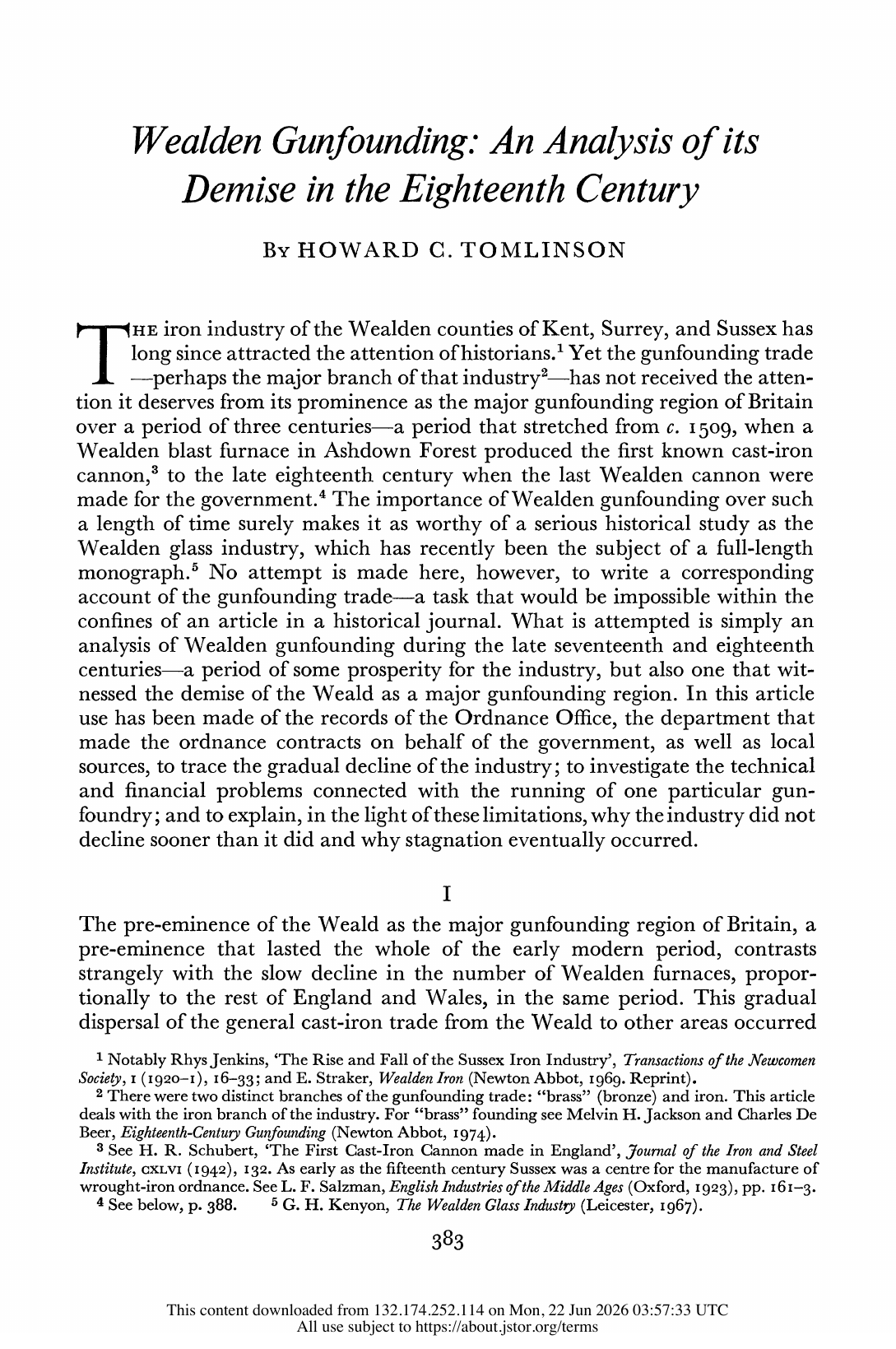
- Tomlinson strengthens the background claim that the Weald was a major English cast-iron gunfounding region, making Neville's ordnance vocabulary in the Winwood letter technically unsurprising rather than isolated.
- Crossley and Hammersley improve the industrial context for casting, fuel, woodland, and transport economics behind Neville's foundry world.
- This update does not add a new Hamlet textual witness. The Hamlet argument still rests on the
cost/castcrux, the full war-preparation context, the19 Nov. 1599 O.S.Neville letter, and controlled dating.
Twitter Thread Batch 02 Crosswalk
- Requested thread
#36is now routed here through twitter thread research batch 02 networks lucan amiens windsor. - Preserve the thread's "cast" insight as part of the larger Hamlet packet: Neville's 1599 letter reports artillery casting and arms procurement in a state-danger context; Hamlet 1.1 places the cannon/cost/cast crux inside a similar war-preparation scene.
- Current witness status remains variant-aware, not weaker: Q1/Q2
costand Folio/Folgercastmust both be stated because the crux itself is part of the argument.
Source-Control Position
- This packet has been upgraded from
leadtomixed: the Hamlet and Neville-letter facts now have local source anchors, but the larger interpretive claim still needs controlled rarity work and a full textual-witness table. - Book-safe formulation: the Folger modern text and First Folio witness give
daily castin thebrazen cannonline, while the First Quarto and Internet Shakespeare Editions Q2 transcription givedaily cost. This makes the line a real textual crux, not a settled proof-text. - The Neville comparison is sourceable: letter_038 reports that the French king had taken order for the casting of 50 or 60 pieces in the arsenal, that 30 were already cast and tried, and that arms were being bought in sundry towns.
- The current packet should not claim that Neville influenced Hamlet, nor that
castin the artillery-manufacture sense is proven rare. A local FTS spot-check was useful for controls but too noisy to support a rarity conclusion.
1. Verified Sourced Facts and Quoted Source Passages
- The Folger Hamlet text is identified in its front matter as the Folger Shakespeare Library edition edited by Barbara A. Mowat and Paul Werstine, with Michael Poston and Rebecca Niles, created from FDT version 0.9.2.
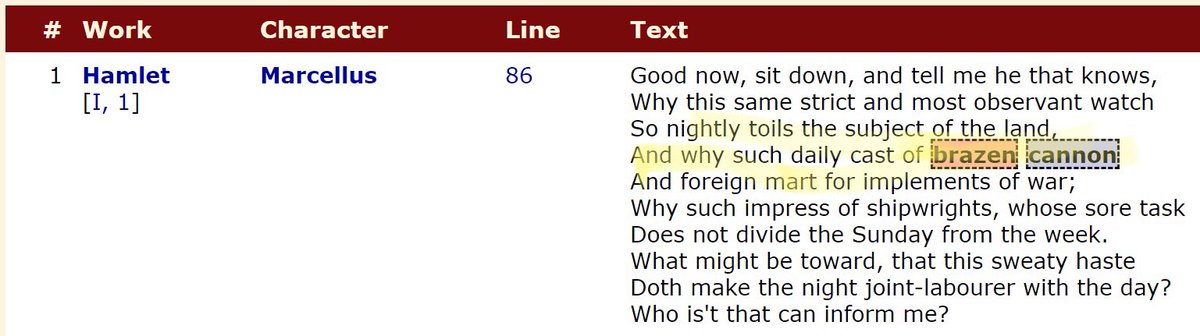
- In the Folger Hamlet, Act 1, Scene 1, Marcellus asks why there is "daily cast of brazen cannon" and a "foreign mart for implements of war." This anchors the edited modern reading used by the packet.
- In the Folger Hamlet, Act 5, Scene 2, Claudius orders, "Let all the battlements their ordnance fire," followed by "The trumpet to the cannoneer without" and "The cannons to the heavens." The final stage direction also calls for "a peal of / ordnance" to be shot off.
- The EarlyPrint database contains a 1603 Hamlet quarto witness, TCP
A11959, whose stripped text gives the line as "dayly cost of brazen Cannon" followed by "forraine marte, for implements of warre."
- The same EarlyPrint database contains the 1623 First Folio, TCP
A11954, whose stripped text gives the line as "dayly Cast of Brazon Cannon" followed by "Forraigne Mart for Implements of warre."
- The Internet Shakespeare Editions transcriptions align with this crux at the transcription level: Q1 gives
dayly cost, Q2 givesAnd with such daily cost of brazen cannon, and F1 givesdayly Cast. The Q2 claim still needs a page-image or facsimile check before it becomes a fully hardened primary-witness fact.
- The local
letter_038packet, current Neville Letters Corpus XML, and Winwood transcript all place Henry Neville's Paris letter to Robert Cecil under19 Nov. 1599 O.S./date_ns="1599-11-19"with source filenameNeville Letter 1599 11 29 NS.
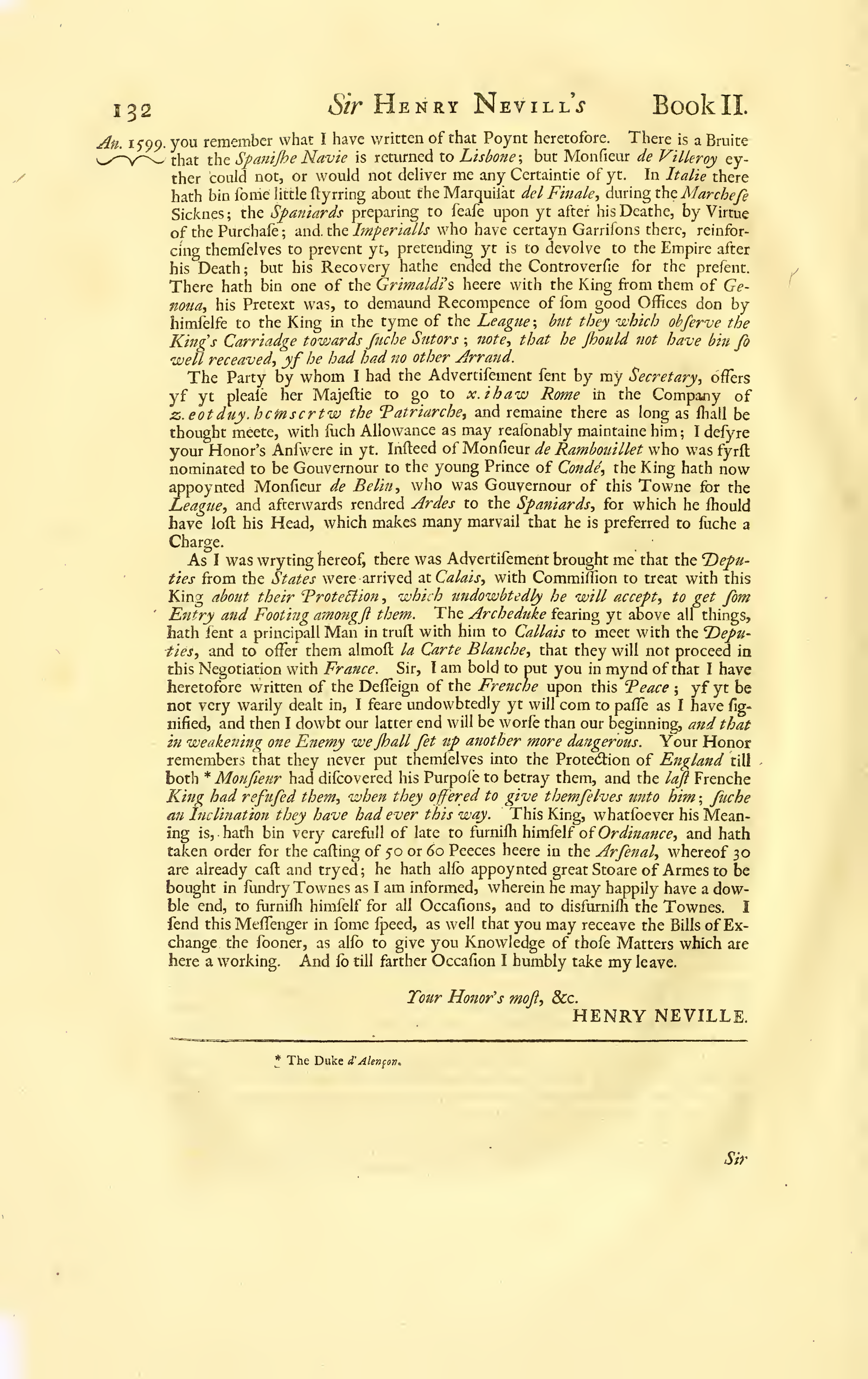
- In that letter, Neville reports that the French king had been careful "to furnish himself of ordinance," had ordered "the casting of 50 or 60 peeces" in the arsenal, that 30 were "already cast and tryed," and that "great stoare of armes" was to be bought in sundry towns.
- The full Winwood context matters: this artillery and arms report follows Neville's warning about French designs on the Dutch peace/protection negotiations and his fear that weakening one enemy could set up another more dangerous one. This makes the comparison to Hamlet 1.1 a context match, not only a lexical match.
- Uploaded-scholarship source position: Tomlinson (
1976), Crossley (1966), and Hammersley (1973) strengthen the Wealden gunfounding and industrial background for Neville's artillery vocabulary, but do not alter the textual-witness guardrail for Hamlet 1.1.
2. Ken Feinstein Twitter and Blog Information
- A Ken Feinstein blog post dated
26 Nov. 2018frames the Hamlet 1.1 line as a textual crux in Marcellus's account of war preparations. - The post contrasts
daily costin the First Quarto withdaily castin the First Folio at thebrazen cannonline. - The post supports the
castreading by comparing it with Henry Neville's19 Nov. 1599 O.S.letter to Robert Cecil. - The Neville phrases highlighted by the post include
casting of 50 or 60 Pieces,30 are already cast and tried, and arms being bought in multiple towns. - The post also claims that artillery-manufacture
castwas uncommon; that claim remains a research prompt, not a verified fact in this packet.
- The blog's core source map is now partly hardened: the
cost/castcrux is supported by Folger, EarlyPrint, and ISE Q2 transcription checks; the Neville artillery passage is supported by the local letter packet, v10/v11 XML, Winwood transcript, Winwood page image, and SP 78/43 manuscript/copy image. The SP 78/43 image should not be treated as Neville autograph evidence.
- The blog's rarity claim remains unverified. A EarlyPrint FTS spot-check over 1560-1625 found
brazen cannonas a narrow exact phrase only in TCPA11959, but broadercastsearches returned many nontechnical uses. The exact phrasecast and tryedreturned a 1623 newsbook example about artillery, which is a warning against claiming uniqueness without better controls.
3. Citations
- Feinstein, Ken. “Cannons in the Canon 3: Neville, Shakespeare, and Hamlet.” kenfeinstein.blogspot.com, 26 Nov. 2018, https://kenfeinstein.blogspot.com/2018/11/cannons-in-canon-3-neville-shakespeare.html. Local preservation: blog cannons3 hamlet 2018 11 26.
- Shakespeare, William. Hamlet. Folger Shakespeare Library local chunks: front matter, act 01 scene 01, and act 05 scene 02. Public Folger URL preserved in the front matter: https://shakespeare.folger.edu/shakespeares-works/hamlet/.
- EarlyPrint corpus analysis database: EarlyPrint corpus database, TCP
A11959for the 1603 Hamlet quarto and TCPA11954for the 1623 First Folio. - Internet Shakespeare Editions transcription checks: Q1 Ham_Q1 1.1, Q2 Ham_Q2 1.1, and F1 Ham_F1 1.1.
- Internet Shakespeare Editions, Q2 old-spelling transcription and facsimile route: Hamlet Q2 old-spelling transcription and Hamlet, Quarto 2 facsimile viewer.
- Neville, Henry, to Robert Cecil, Paris,
19 Nov. 1599 O.S./date_ns="1599-11-19",letter_038, source filenameNeville Letter 1599 11 29 NS. Local topic packet: letter 038. XML witnesses: Neville Letters Corpus v10 and Neville Letters Corpus v11. Winwood transcript: Neville Letter 1599 11 29 NS. - Hamlet/Winwood source-image packet,
2026-06-21: SOURCE NOTES. - Uploaded Mayfield / Wealden iron article digest,
2026-06-22: MAYFIELD WEALDEN IRON UPLOADED ARTICLES DIGEST 2026 06 22. - EarlyPrint local FTS spot-check database: EarlyPrint computational index. Patterns checked in
word_text, date window 1560-1625:"brazen cannon","dayly cost","dayly cast","daily cast", and"cast and tryed". - mayfield manor and ironworks, related ironworks packet.
4. Notes on Access
- This is now a mixed-evidence packet: several local source claims are verified, but the influence and rarity claims remain open.
- The locally preserved Blogger export records no embedded images for this post.
- The Neville-letter side is anchored in the local letter packet, v10/v11 XML, and Winwood transcript, not only in the blog post.
- The Q1 and F1 readings are locally checked in EarlyPrint. The Q2 reading is checked at transcription level through Internet Shakespeare Editions and should be upgraded to a page-image/facsimile coordinate check.
- No public EarlyPrint BlackLab query was saved in this pass. The local FTS checks are recorded as spot-checks only and should not be cited as a finished rarity audit.
- A dedicated
Hamletplay packet remains the right place for a full act/scene table and a Q1/Q2/F1/Folger witness apparatus.
2026-08-07 Full-Context Comparison
The comparison is not one word. Neville's 19 November 1599 O.S. report moves from a possible change in the European balance of power to a ruler furnishing himself with ordnance, ordering pieces cast in an arsenal, buying arms across several towns, and simultaneously furnishing himself and disfurnish[ing] the townes:
the casting of 50 or 60 peeces here in the arfenal, whereof 30
are already cast and tryed; he hath also appoynted great stoare of armes to be
bought in fundry townes
Marcellus likewise moves from an eruption to our state into an interrogative inventory of militarized preparation:
Why this same strict and most observant watch
So nightly toils the subject of the land,
And why such daily cast of brazen cannon
And foreign mart for implements of war,
Why such impress of shipwrights, whose sore task
Does not divide the Sunday from the week.
The bold terms mark correspondence, not identity of wording. The joined fact is a shared operational complex—state danger, accelerated armament, cannon production/procurement, and extraordinary labor—close in date to the play's usual composition window. Q1 and Q2 read cost, while F1 and the Folger edition read cast; both textual states belong in the record. Neville's separate, direct participation in Wealden gunfounding explains why his report's ordnance language was grounded in practical experience, without deciding how the play acquired its own language.