John Davies of Hereford, *Microcosmos*, and Henry Neville
Topic: John Davies of Hereford, Microcosmos, and Henry Neville
2026-08-27 controlled Sonnet 111 synthesis
Essential evidence
The Davies/Neville connection now intersects Sonnet 111 in two distinct ways. Davies supplies the strongest identifiable public occasion for the sonnet's Fortune/public-work/stain argument. Neville supplies a recurring private penitential structure in letters of 1600 and 1608. These roles can coexist; neither proves authorship.
Davies's player stanza reads:
Players, I loue yee, and your Qualitie,
As ye are Men, that pass time not abus'd,
And some I loue for painting, poesie,
And say fell Fortune cannot be excused,
That hath for better vses you refused:
Wit, courage, good shape, good parts, and all good,
As long as all these goods are no worse vsed,
And though the stage doth staine pure gentle bloud,
Yet generous ye are in mind and mood.
Source: John Davies of Hereford, Microcosmos (Oxford, 1603), p. 215, STC 6333, ESTC S109344, TCP A19903; EarlyPrint text. The margin identifies W. S. R. B.; Folger Shakespeare Documented treats this as a credible William Shakespeare/Richard Burbage allusion.
The corresponding Sonnet 111 structure is:
O, for my sake do you with Fortune chide,
The guilty goddess of my harmful deeds,
That did not better for my life provide
Than public means which public manners breeds.
Thence comes it that my name receives a brand;
And almost thence my nature is subdued
To what it works in, like the dyer's hand.
Source: William Shakespeare, Sonnet 111.1-7, Folger Shakespeare Library.
What the pairing proves: Davies explicitly joins Fortune, refused better use, named players, and the stage's stain; Sonnet 111 joins Fortune, failure to provide better, public means, brand, and occupational dye. The relation is more precise than the shared word Fortune.
Limits: The pairing does not fix direction unless the sonnet can be dated. It does not show that the separate Davies poem addressed to Sir Henry Neville contains a Shakespeare allusion.
Jackson's contribution
MacDonald P. Jackson's article is the controlling secondary study: “Shakespeare's Sonnet CXI and John Davies of Hereford's Microcosmos (1603),” The Modern Language Review 102, no. 1 (January 2007): 1-10, JSTOR 20467148, DOI.
Jackson argues for Davies-to-Shakespeare direction on four cumulative grounds: Fortune withholds a better vocation; both clauses use that ... better; theatrical/public work stains or brands; and Davies names players while marking W. S. R. B. He dates Microcosmos presswork to 21-27 July 1603 and prefers a 1603-1606 setting for Sonnet 111. His rare-word appendix links the sonnet most often with Othello and next with All's Well That Ends Well and King Lear. He also uses Davies's Drink hath three offices beside the Macbeth Porter's three effects of drink as subsidiary evidence that Shakespeare read the book.
Jackson's argument is strong but not compulsory. Sonnet 111 was first printed in 1609, its composition date remains uncertain, and manuscript circulation or later revision cannot be excluded. Jackson's article establishes a source/occasion case, not a Neville authorship case.
Why Neville changes the question
The full letter comparison is maintained in sonnet 66 25 111 neville letter parallels. Its narrow synthesis is:
letter_123, 10 January 1600: Neville describes his embassy as a burden, then proposes to do pennance for the faults I committe heere. This predates Microcosmos and supplies a private public-service-to-penance configuration.letter_130, 15 September 1608: Neville writes that errors were redoubled, that errors go not single, asks Windebank to pardon both, and calls confession and contrition two parts of penance, with satisfaction to be enjoined by the friend. This is structurally close todouble penanceand the friend's cure, but probably later than Jackson's preferred composition range.
Integrated judgment: Davies explains why Sonnet 111 may have been written; Neville helps explain how its penitential language could belong to a recurring private idiom. Under conventional attribution, Neville's letters are strong contemporary analogues. Under a Neville-authorship hypothesis, Davies can remain the printed provocation while the two letters supply a recurring personal structure. No direct evidence presently proves that Neville read Microcosmos or wrote the sonnet.
Rarity control
EarlyPrint searches rerun 27 August 2026 show that double penance is not unique: [lemma="double"][lemma="penance"] returns 13 hits in 13 documents, including pre-1609 witnesses. Correct correction also has earlier printed analogues. The evidentiary interest in letter_130 lies in its whole sequence -- redoubled errors, not single, pardon both, two parts, third satisfaction -- not in an isolated phrase claim. Public corpus: EarlyPrint BlackLab.
Status and limits
- Davies W.S./R.B. stanza: direct printed witness plus Folger contextual control.
- Jackson article: read and evaluated in full; source argument retained with chronology caveats.
- Neville
letter_123: John O'Donnell human diplomatic transcription controls quotation; manuscript-image collation pending. - Neville
letter_130: manuscript text page and 1608 outer docket inspected; O'Donnell transcription and CSPD p. 456 independently control identity and date. - Overall status:
mixed. The texts and chronology are controlled; transmission and authorship remain unresolved.
2026-08-26 controlled Shakespeare comparison
The completed exploratory analysis is routed through the detailed illustrated PDF, the public-source report, and their adjacent reproducibility scripts and result tables.
Its narrow positive finding is a rhetorical comparison with Shakespeare's Sonnet 17: both poems consider whether high poetic praise can be believed, using a shared cluster around time, rhyme, saying, touching, men, and truth. The Neville poem ranks first among 33 fourteen-line Davies controls for similarity to Sonnet 17.
The broader control is negative. Across 45 Shakespeare work groups, the Neville poem ranks 23rd of the 33 Davies controls on mean rank, with no top-five work result and four top-ten results. Filtering common and nested n-grams reduces 20,060 raw exact-match rows to 42 maximal informative rows; the longest exact formula, there was a time when, is common across EarlyPrint/EEBO and appears in the post-1603 Coriolanus and The Two Noble Kinsmen. The result supports a thematic Sonnet 17 parallel, not a distinctive Shakespeare lexical fingerprint.
The separate Shakespeare Documented W.S. marginal-note evidence elsewhere in Microcosmos remains relevant book context but is not evidence that the Neville poem itself alludes to Shakespeare.
Source-Control Position
- Rechecked EarlyPrint/TCP
A19903: it controls the 1603 Microcosmos title/imprint and the Neville dedication poem, including the closingNe-vile/denies the vilepun. - The 1616
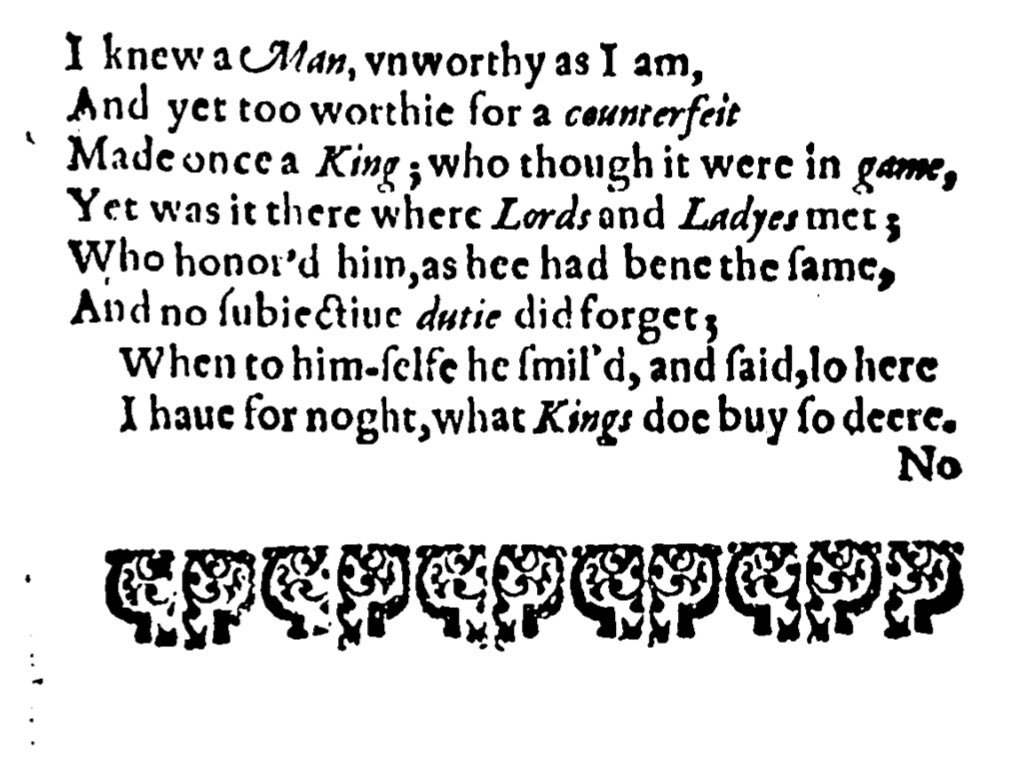
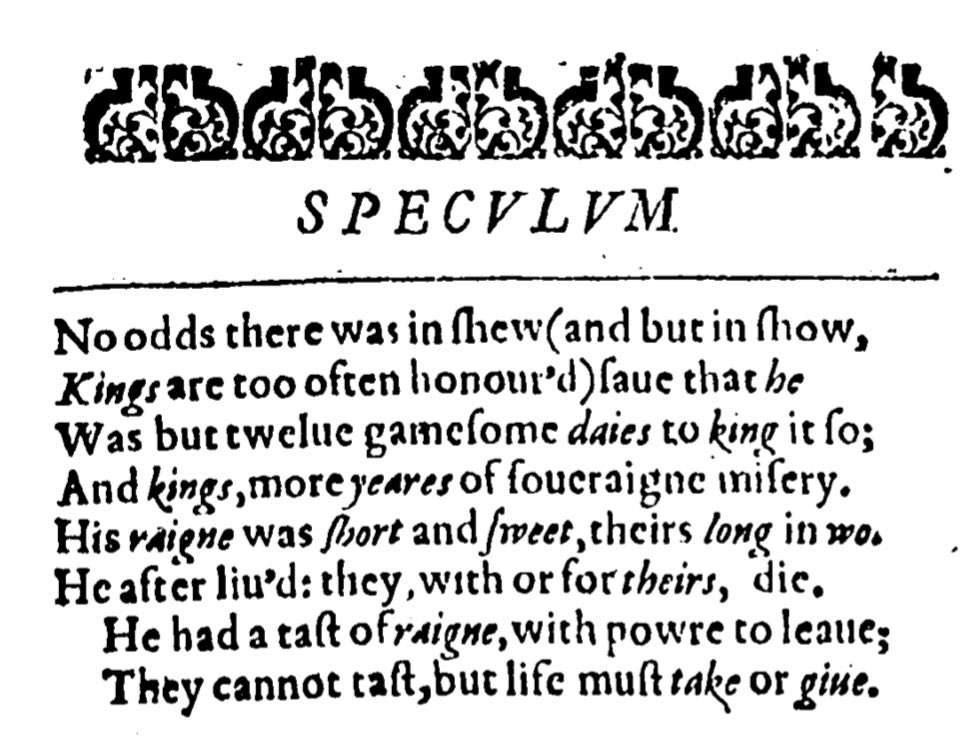
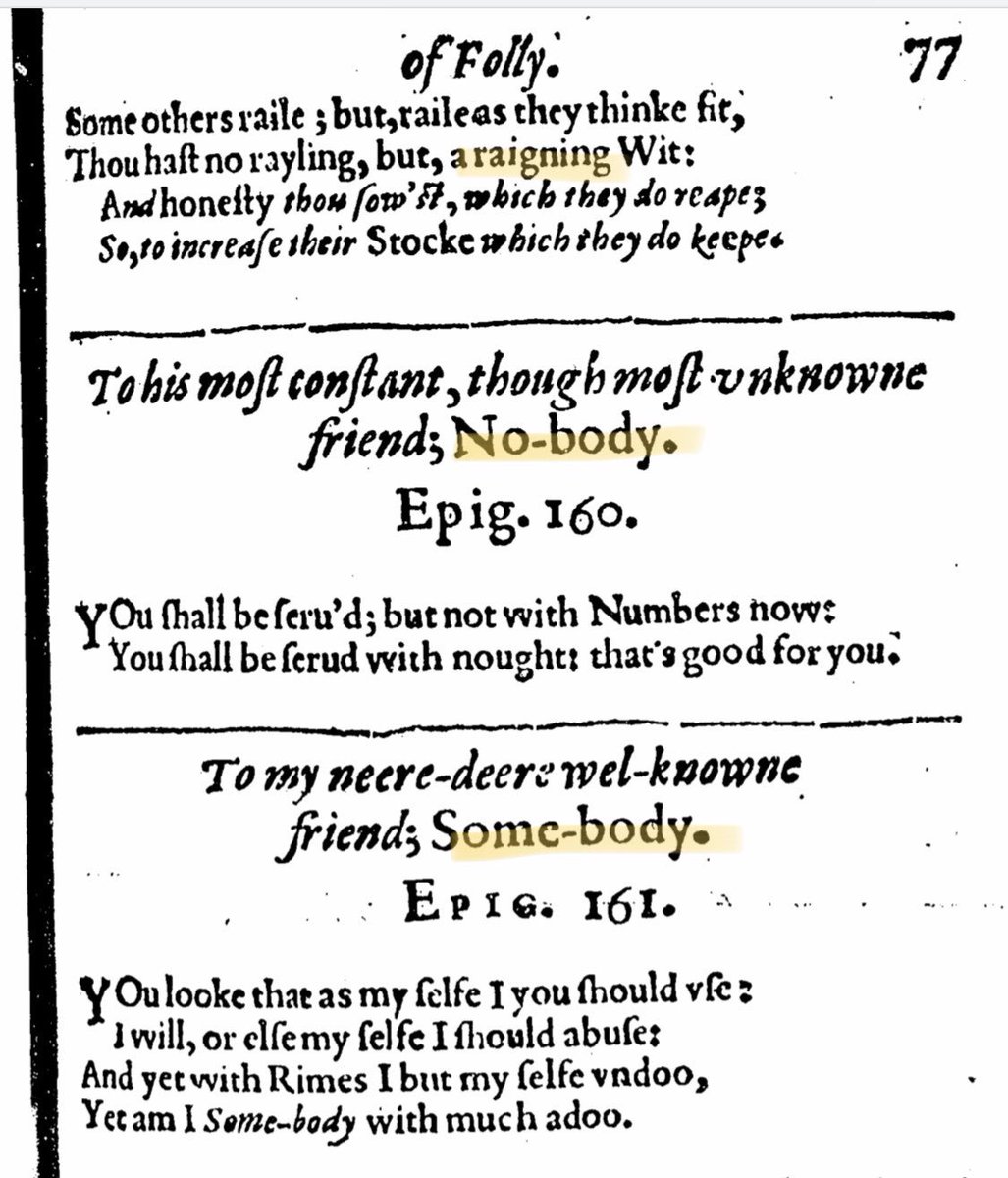
too worthie for a counterfeitlane belongs to local TCPA19911, not toA19903. It should be routed through the Davies chronology / Some-body-No-body packet before being used as reception evidence. - Keep the identity guardrail from francis bacon: Bacon's 1603 letter is to Sir John Davies the lawyer-poet, not John Davies of Hereford.
- BRO sweep found no direct Davies witness.
1. Verified Sourced Facts
STC 6333,ESTC S109344,TCP A19903is titled:
“Microcosmos The discovery of the little world, with the government thereof. By Iohn Davies.”
- The same TCP witness gives the imprint:
“At Oxford : Printed by Ioseph Barnes, and are to bee solde in Fleetestreete at the signe of the Turkes head by Iohn Barnes, 1603.”
- The TCP witness contains a poem headed:
“To the Noble, discreete, and wellbeloved Knight Sir Henry Nevill.”
- The same poem opens:
“THere was a Time when, ah that so there was,”
- The next line reads:
“Whie not there is? There is and was a Time,”
- Later in the same poem, Davies writes:
“Th' art Vertue, Valour, Truth, and Honors friend;”
- The poem closes with the pun:
“Because thy noble name Ne-vile. denies the vile.”
- An existing EEBO packet in this corpus already records that
TCP A19903contains the dedication:
“to the noble discreete and wellbeloved knight sir Henry Nevill ...”
- The same thread states:
“Why does Davies of Hereford call Neville “discreet”?”
2. Ken Feinstein Twitter and Blog Information
- A Ken Feinstein tweet dated
1 Jan. 2021states:
“Shakespeare Authorship Day 8: Many scholars have independently found parallels between the works of John Davies of Hereford and Shakespeare. Here is his Sonnet to Henry Neville from 1603.”
- A Ken Feinstein tweet dated
16 June 2019states:
“Perhaps I am not making this clear. John Davies of Hereford wrote this epigram to Henry Neville in 1603. In 1616 he wrote this — immediately after Neville’s death.”
Quoted Source Passages
Follow SOURCE QUOTATION STANDARD. The direct witness is the 1603 printed Microcosmos text; the tweets preserve Ken's interpretation and discovery trail.
Printed dedication heading
- Source: John Davies of Hereford, Microcosmos (Oxford, 1603),
STC 6333,ESTC S109344,TCP A19903; Archive.org page-image route cited below. - Quotation:
"To the Noble, discreete, and wellbeloved Knight Sir Henry Nevill."
- What it proves: The 1603 printed book contains a poem directly addressed to Sir Henry Neville.
- Limits: This proves a Davies-to-Neville printed dedication, not a Shakespearean authorship connection by itself.
Neville-name pun
- Source: Same
TCP A19903witness and Archive.org scan route. - Quotation:
"Ne-vile. denies the vile."
- What it proves: Davies explicitly plays on Neville's name in the closing of the poem.
- Limits: The pun is direct printed evidence, but its broader interpretive meaning remains to be argued from context.
3. Quoted Source Text
TCP A19903
- “To the Noble, discreete, and wellbeloved Knight Sir Henry Nevill.”
- “THere was a Time when, ah that so there was,”
- “Whie not there is? There is and was a Time,”
- “Yet may I say (I hope) and not transgresse,”
- “Th' art Vertue, Valour, Truth, and Honors friend;”
- “Because thy noble name Ne-vile. denies the vile.”
Ken Feinstein tweet, 1 Jan. 2021
- “Shakespeare Authorship Day 8: Many scholars have independently found parallels between the works of John Davies of Hereford and Shakespeare. Here is his Sonnet to Henry Neville from 1603.”
Ken Feinstein tweet, 16 June 2019
- “Perhaps I am not making this clear. John Davies of Hereford wrote this epigram to Henry Neville in 1603. In 1616 he wrote this — immediately after Neville’s death.”
- “Why does Davies of Hereford call Neville “discreet”?”
4. Citations
- Davies, John. Microcosmos The discovery of the little world, with the government thereof. By Iohn Davies. At Oxford, printed by Ioseph Barnes, and are to bee solde in Fleetestreete at the signe of the Turkes head by Iohn Barnes, 1603.
STC 6333.ESTC S109344. Early English Books Online Text Creation Partnership,TCP A19903. - Davies, John. Microcosmos The discovery of the little world, with the government thereof. Archive.org witness, https://archive.org/details/microcosmosdisco00davi/page/n291/mode/1up.
- Feinstein, Ken. “Shakespeare Authorship Day 8: Many scholars have independently found parallels between the works of John Davies of Hereford and Shakespeare. Here is his Sonnet to Henry Neville from 1603.” X, 1 Jan. 2021, https://twitter.com/user/status/1344910344292978688. Local archive: twitter Books Read.
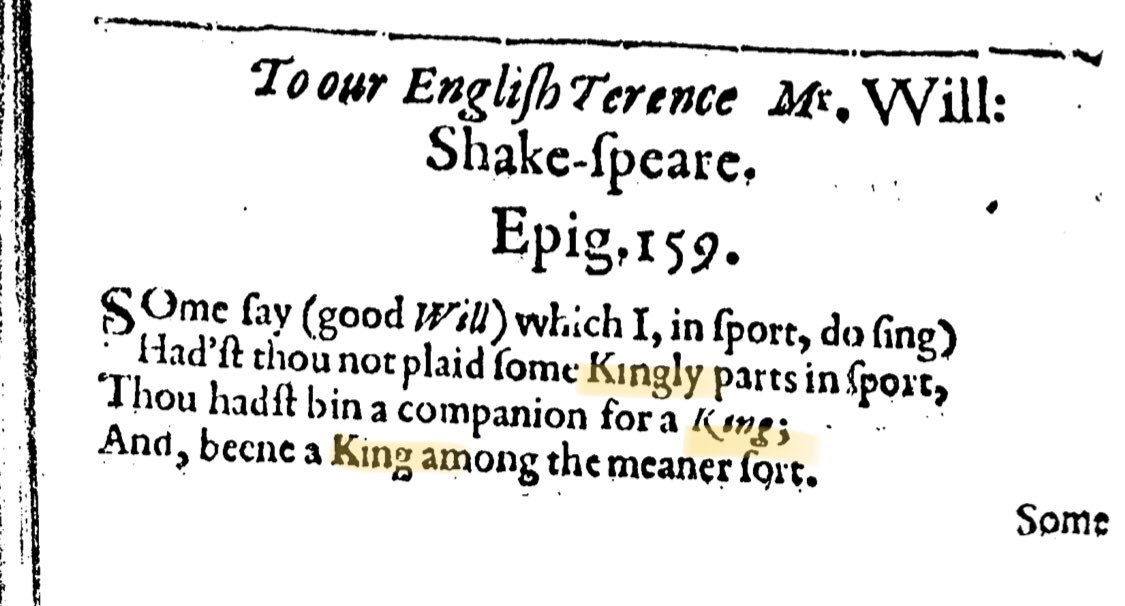
- Feinstein, Ken. “This is one of the most important texts for solving the Shakepeare Authorship Question. It was written by John Davies of Hereford in 1616. Compare to Scourge of Folly.” X, 16 June 2019, https://twitter.com/user/status/1140319266924687360. Local archive: twitter John Davies.
- eebo texts mentioning or dedicating henry neville, existing packet that already records
A19903as a Henry Neville dedication witness. - francis bacon, related packet for Bacon’s
28 Mar. 1603letter to Sir John Davies, with an identity guardrail separating him from John Davies of Hereford.
5. image witnesses Witnesses
6. Notes on Access
- This packet is built on a direct EEBO/TCP witness plus the Archive.org scan you supplied.
- The Ken Feinstein tweets are preserved here as a separate source class and not rewritten as anonymous factual narration.
- The larger interpretive link between the
1603sonnet and Davies’s later1611and1616writings belongs partly in this packet but also connects directly to: - francis bacon
- thomas vicars
- the John Davies materials in
[local source path removed]
Additional Fact-Source Notes
- The direct controls remain EEBO/TCP
A19903, the supplied Archive.org scan route, and Ken Feinstein's tweet-image/source trail. General web search did not add a superior public witness in this pass. - Treat the
1603Davies/Neville item as a direct printed witness first. The later links to Davies's 1611/1616 writings are interpretive extensions and should be source-tiered separately. - Book use: keep Ken's tweet images as original project research preserving source access, not as anonymous web evidence.
2026-07-13 Deep Research Update: Complete Page-Image Collation
The open page-image task is complete. Archive.org leaf n291 was inspected directly at full-page resolution. The image confirms the heading:
To the Noble, discreet, and wellbeloued
Knight Sir Henry Neuill.
It also controls the entire fourteen-line poem:
THere was a Time when, ah that so there was,
Whie not there is? There is and was a Time,
When Men might cal Gold, Gold; & Brasse, but Brasse;
And saie it, without check, in Prose or Rime.
Yet should I call thee Gold, some (Brasse perchance)
Would saie I err'd because I nere touch'd thee,
And so did cal thee through meere ignorance,
Or (which is worse) through abiect Flatteree.
I am too ignorant (I doe confesse)
To iudge thy worth, which worthiest Men commend,
Yet may I say (I hope) and not transgresse,
Th'art Vertue, Valour, Truth, and Honors friend;
All which presume thou art not gilt by guile
Because thy noble name denies the vile.
The printed marginal note divides the name as Ne-vile, and the poem is signed I. D. The image therefore confirms details that OCR flattened: the heading uses Neuill, the poem is a sonnet-length fourteen lines, and the name-pun is explicitly signaled in the margin.
Placement in the commendatory sequence
The Neville poem is not isolated. On the preceding page Davies addresses “the thrice Noble and valorous Knight / Sir Edward Wingfield”; immediately after Neville he addresses “the Right Worshipfull and most worthy / Knight Sir Edward Dyer.” The sequence places Neville among named martial, courtly, and literary figures. That placement is a firmer research question than treating the poem as a generic commendation detached from its book: who organized this sequence, what relations joined its recipients to Davies or Oxford, and why does Neville receive the distinctive claim that “worthiest Men commend” him?
What the rhetoric actually says
Davies expressly says he has never “touch'd” Neville and is too ignorant to judge his worth directly. His praise is therefore represented as reputation received from “worthiest Men,” not as testimony of close personal acquaintance. This does not weaken the printed association; it defines its form. The poem is evidence that Neville's reputation for “Vertue, Valour, Truth, and Honors” circulated in the milieu from which Davies drew his commendatory subjects.
Direct witness: Archive.org leaf n291. Local render: davies microcosmos 292.
Source-Fact Audit — 8 August 2026 (Round 6)
The direct 1603 print gives more than a dedication heading. Davies addresses “Sir Henry Neuill,” prints a fourteen-line poem signed “I. D.,” marks the closing name-pun as “Ne-vile,” and places Neville between poems to Sir Edward Wingfield and Sir Edward Dyer. The Folger catalogue independently controls the edition as STC 6333, Oxford, Joseph Barnes, 1603.
Davies also defines the nature of his evidence. He says he never “touch'd” Neville and is too ignorant to judge his worth directly, while “worthiest Men commend” him. The poem is therefore direct evidence of a public literary address and a reputation circulating through others, not testimony of close acquaintance or automatic proof of patronage. Later Davies texts and modern authorship interpretations remain separate reception layers. Public catalogue: Folger, *Microcosmos*.
Book Integration Update — 2026-08-31
- Chapter 35 uses the correctly identified 1603 Davies page as the branch-specific public witness for
Ne-vile, beside Sonnet 121's doubled vile and public-estimation machinery. - John Owen's 1607
Ne vile velisepigram is retained only as proof that the family surname pun was publicly legible; its Abergavenny-branch addressee does not identify the Billingbear diplomat. - Davies's statement that he had never “touch'd” Neville defines this as reputational and literary testimony, not proof of personal intimacy.