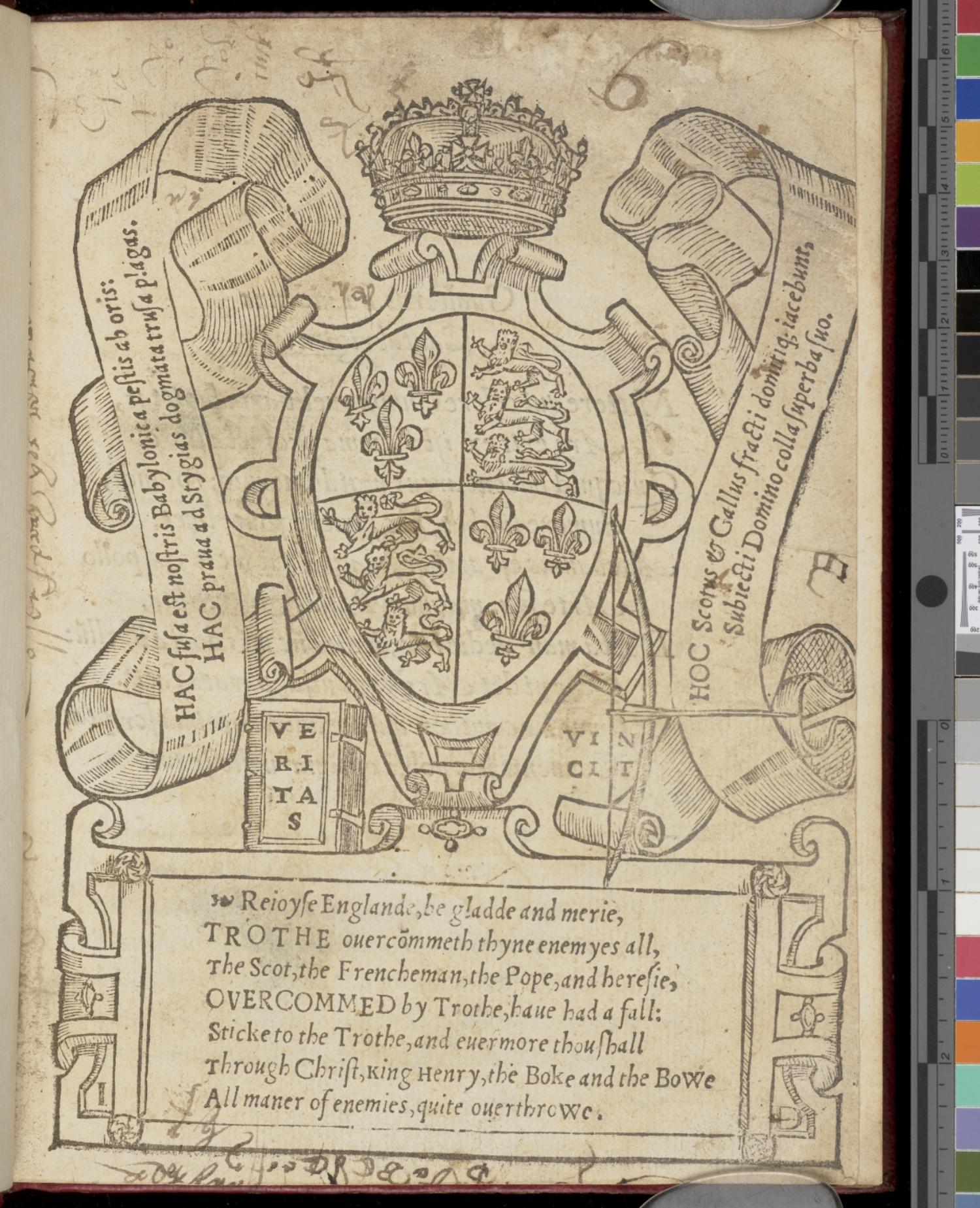
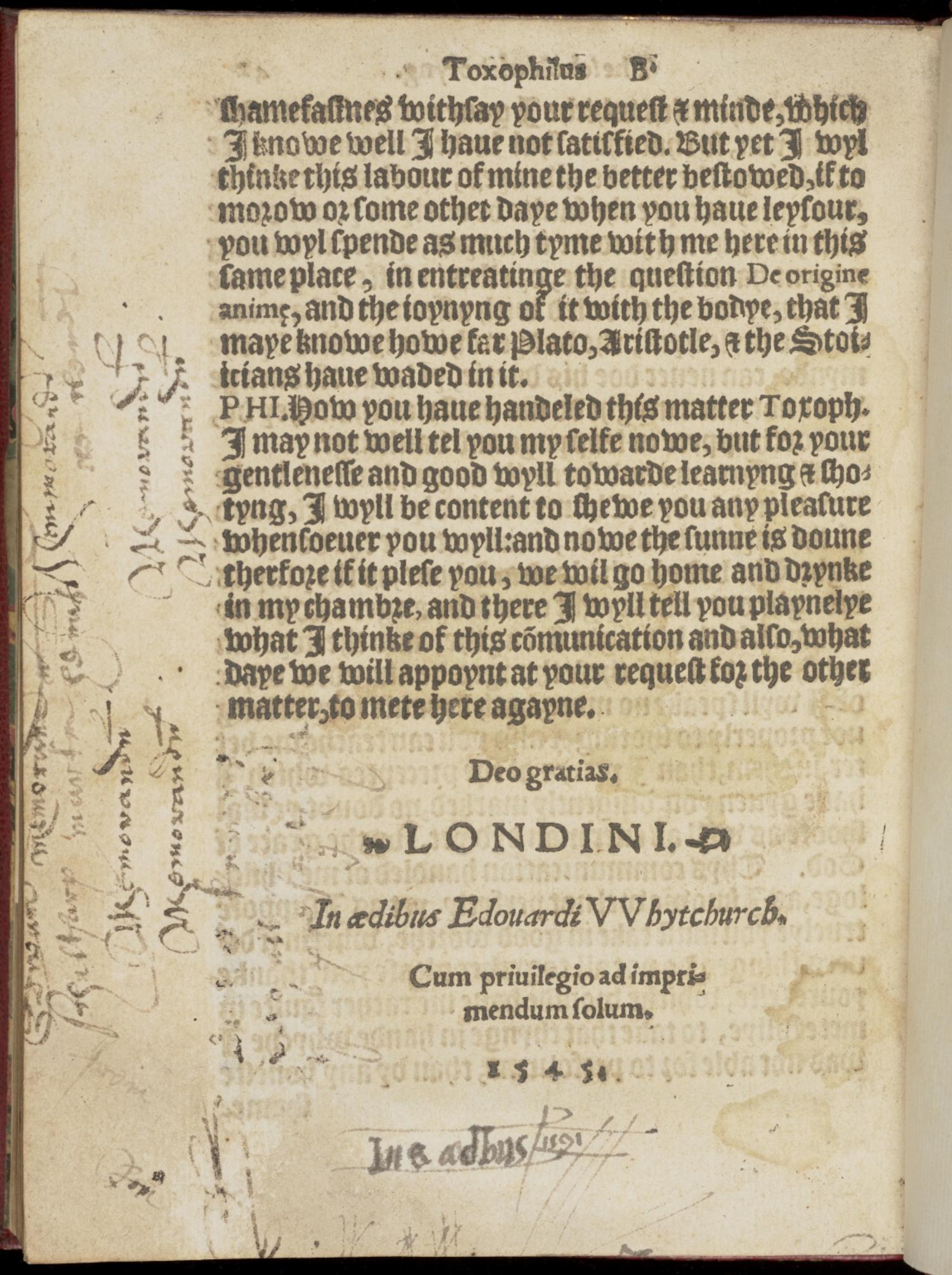
John Cheke, Roger Ascham, and the Greek Leo VI Manuscript: Cambridge Custody, Royal Translation, and the Cooke-Neville Network
Topic: John Cheke, Roger Ascham, and the Greek Leo VI Manuscript
Source-Fact Audit — 7 August 2026 (Round 4)
- Ascham's account says that Cheke translated Leo VI for Henry VIII and allowed Ascham to read it; the wording and work identification should be quoted from the identified Ascham witness.
- Later Cambridge custody of a Greek manuscript is a separate provenance stage and does not by itself identify that object with every manuscript mentioned in earlier testimony.
- Pigafetta's annotation or consultation belongs to another dated event and must not be merged with Cheke's and Ascham's activities without object-level proof.
- No present source proves that Henry Neville saw, owned, or read the manuscript.
- The packet therefore maps a manuscript and scholarly network while leaving object identity, continuity of custody, and Neville access unresolved.
Source-Control Position
The manuscript history behind Filippo Pigafetta's 1586 Billingbear book can now be reconstructed more closely. Roger Ascham's Toxophilus (1545) is a contemporary primary witness: Ascham says John Cheke had translated Leo VI from Greek into Latin for Henry VIII in the preceding year, and that Cheke repeatedly allowed him to read the work in his chamber. Ascham then paraphrases extensive military-archery passages that he says he learned by heart because the book was rare.
Charles Sayle's Annals of Cambridge University Library (1916) now supplies the firmer institutional sequence from the university Grace Books. It records that Roger Ascham borrowed Polyaenus in 1540 to transcribe; John Cheke borrowed commentaries on Homer and Hesiod in 1541 for sixteen months; and, most importantly, Cheke himself borrowed Leo de aciebus instruendis in 1543 under a five-pound bond, with return due before Christmas 1544. Alex Laar's 2024 Oxford thesis, citing J. C. T. Oates, treats Polyaenus and Leo as one composite volume and suggests that Ascham passed it to Cheke. Sayle's dated entries show that Cheke's Leo loan was formally recorded in its own right. The Grace Book entries should control unless inspection of the originals changes their reading.
This history also clarifies a tension in Pigafetta's 1586 annotation. Pigafetta says an Englishman had translated Leo from a good Greek book della libreria del Re d'Inghilterra. Ascham confirms that the translation was made for Henry VIII, while the Grace Book record places the source book in Cambridge University Library and charges Cheke with returning it. The safest account preserves both statements instead of silently turning Cambridge custody into royal ownership.
The discovery matters beyond the identity of a lost manuscript. It documents an unusually concrete chain:
Cambridge University Library Leo -> Cheke's bonded loan (1543) -> Latin translation for Henry VIII (1544) -> Ascham reads it in Cheke's chamber and publishes an English military paraphrase (1545) -> Basel print (1554) -> Pigafetta's multi-witness Italian edition (1586) -> surviving Billingbear/Audley End copy.
The same chain touches the Neville family environment through Thomas Hoby and through William Cecil's two marriages: Cecil first married Cheke's sister Mary and later Mildred Cooke, sister of Katherine Cooke Killigrew and maternal aunt of Anne Killigrew Neville. These family links document routes of acquaintance and intellectual transmission. They do not establish that Henry Neville handled Cheke's manuscript or owned Ascham's book.
Quoted Source Passages
Ascham's Contemporary Testimony, 1545
Cheke translated the book for Henry VIII
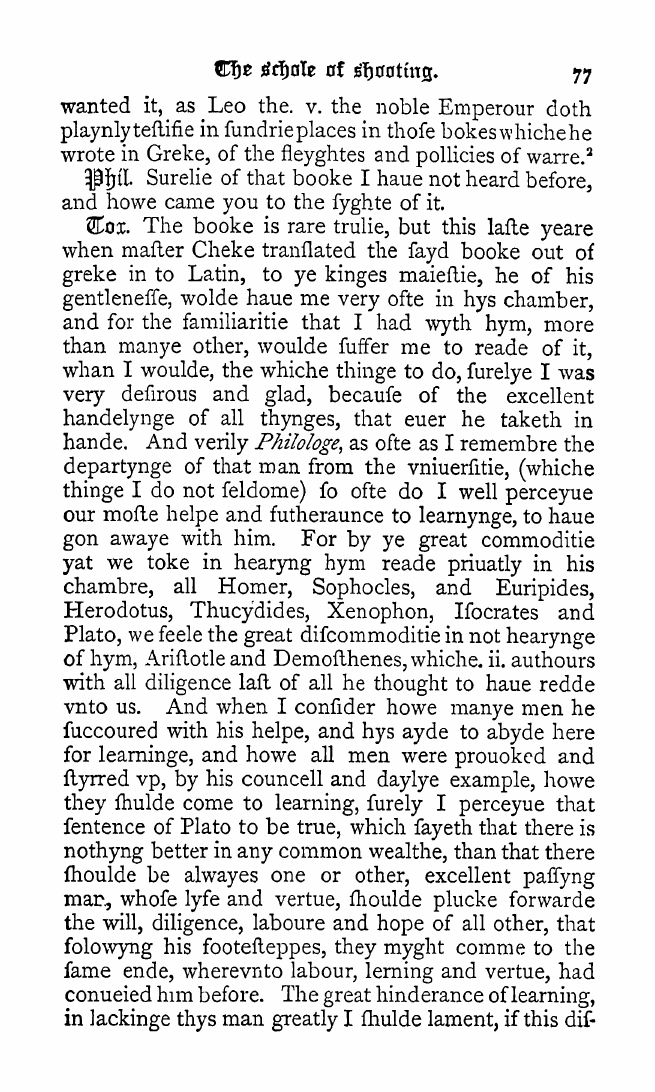
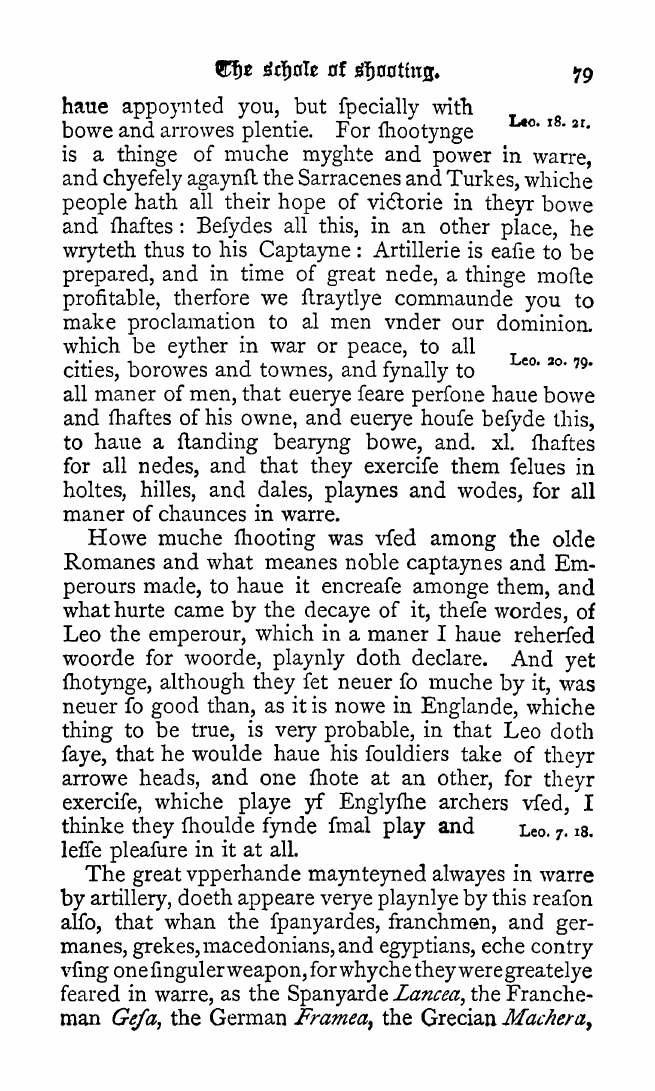
On printed page 77 of Toxophilus, the speaker asks how Toxophilus saw the rare Greek work. Ascham answers through the dialogue:
The booke is rare trulie, but this laste yeare when master Cheke translated the sayd booke out of greke in to Latin, to ye kinges maiestie, he of his gentlenesse, wolde haue me very ofte in hys chamber, and for the familiaritie that I had wyth hym, more than manye other, woulde suffer me to reade of it, whan I woulde ...
The wording fixes several points at once:
- Cheke's translation existed by 1544, a decade before the Basel edition;
- it was made
to ye kinges maiestie, Henry VIII; - Ascham read the work in Cheke's chamber rather than merely encountering the 1554 print;
- Ascham represented the book as rare and Cheke's access as privileged.
The passage also describes Cheke's chamber as a center of private Greek reading. Ascham recalls hearing Cheke read Homer, Sophocles, Euripides, Herodotus, Thucydides, Xenophon, Isocrates, and Plato. Leo therefore belongs to a wider Cambridge practice of reading, translation, and personal lending rather than an isolated printed-book episode.
Ascham converted the manuscript into English military counsel
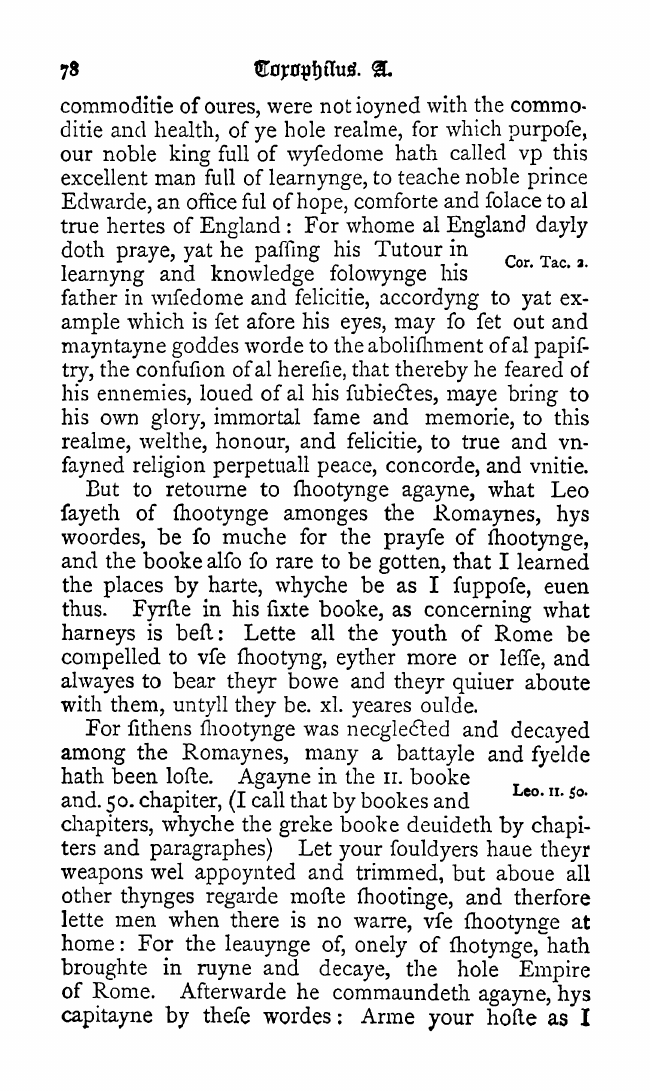
On pages 78-79 Ascham says the passages were so valuable, and the book so difficult to obtain, that he memorized them:
what Leo sayeth of shootynge amonges the Romanes, hys woordes, be so muche for the prayse of shootynge, and the booke also so rare to be gotten, that I learned the places by harte
He then renders Leo's program of compulsory archery:
Lette all the youth of Rome be compelled to vse shootyng, eyther more or lesse, and alwayes to bear theyr bowe and theyr quiuer aboute with them, untyll they be .xl. yeares oulde.
Ascham continues with the claim that neglect of shooting had helped ruin Rome and with special attention to fighting Saracens and Turks. The culmination is a program for household readiness:
Artillerie is easie to be prepared, and in time of great nede, a thinge moste profitable ... that euerye seare persone haue bowe and shaftes of his owne, and euerye house beside this, to haue a standing bearing bowe, and .xl. shaftes for all nedes
He closes by saying that he has rendered Leo nearly verbatim:
these wordes, of Leo the emperour, which in a maner I haue reherfed woorde for woorde, playnly doth declare.
The important result is not only that Ascham knew Cheke's translation. The manuscript had an immediate English vernacular afterlife before the Latin print appeared: it supplied arguments about national readiness, household armament, training, and the consequences of neglected military practice.
2. The Greek Manuscript: What Can Now Be Said
2.1 Sayle's Grace Book sequence
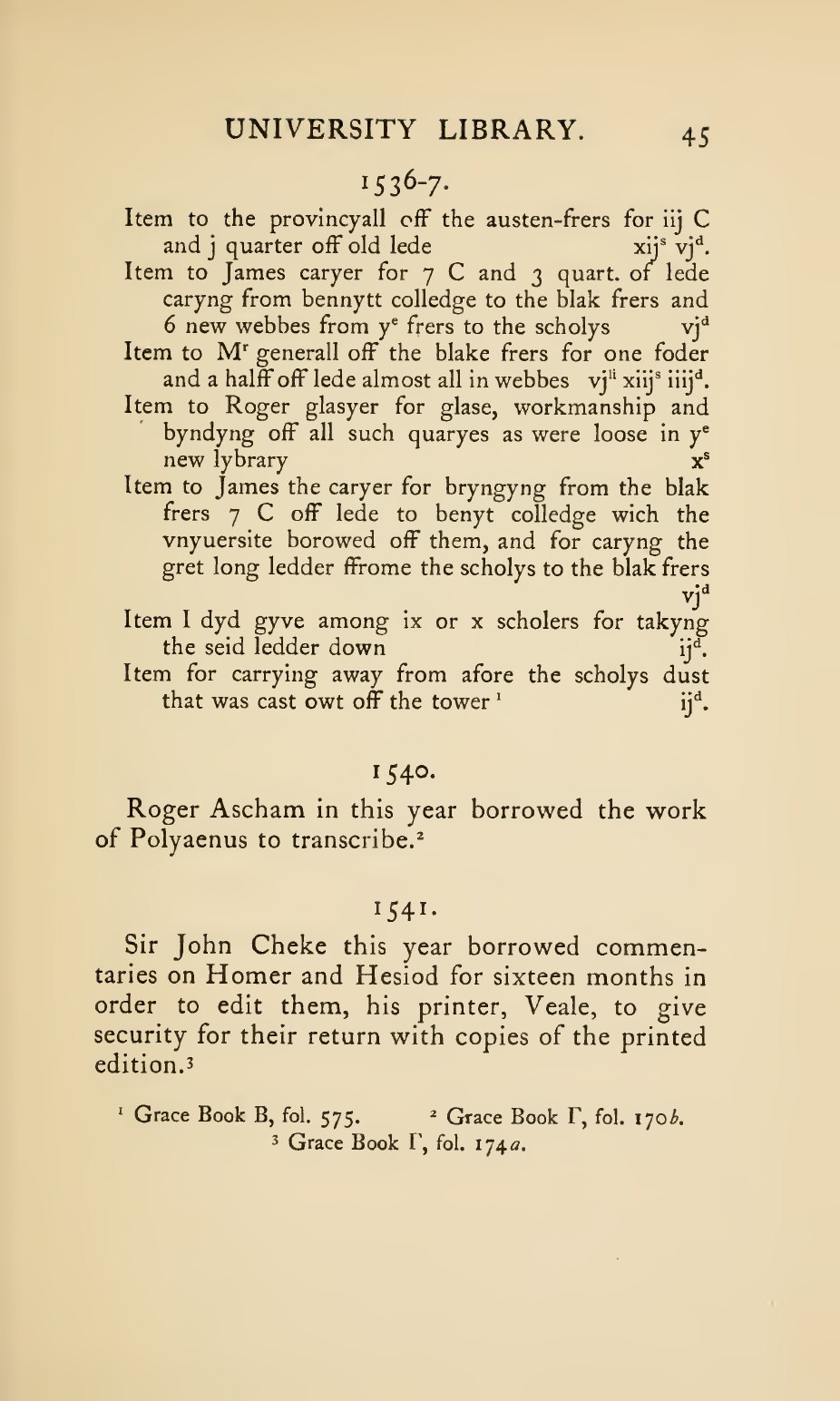
Charles Sayle's 1916 institutional annals transcribe the loan sequence with exact dates and record locators. For 1540:
Roger Ascham in this year borrowed the work of Polyaenus to transcribe.
For 1541:
Sir John Cheke this year borrowed commentaries on Homer and Hesiod for sixteen months in order to edit them, his printer, Veale, to give security for their return with copies of the printed edition.
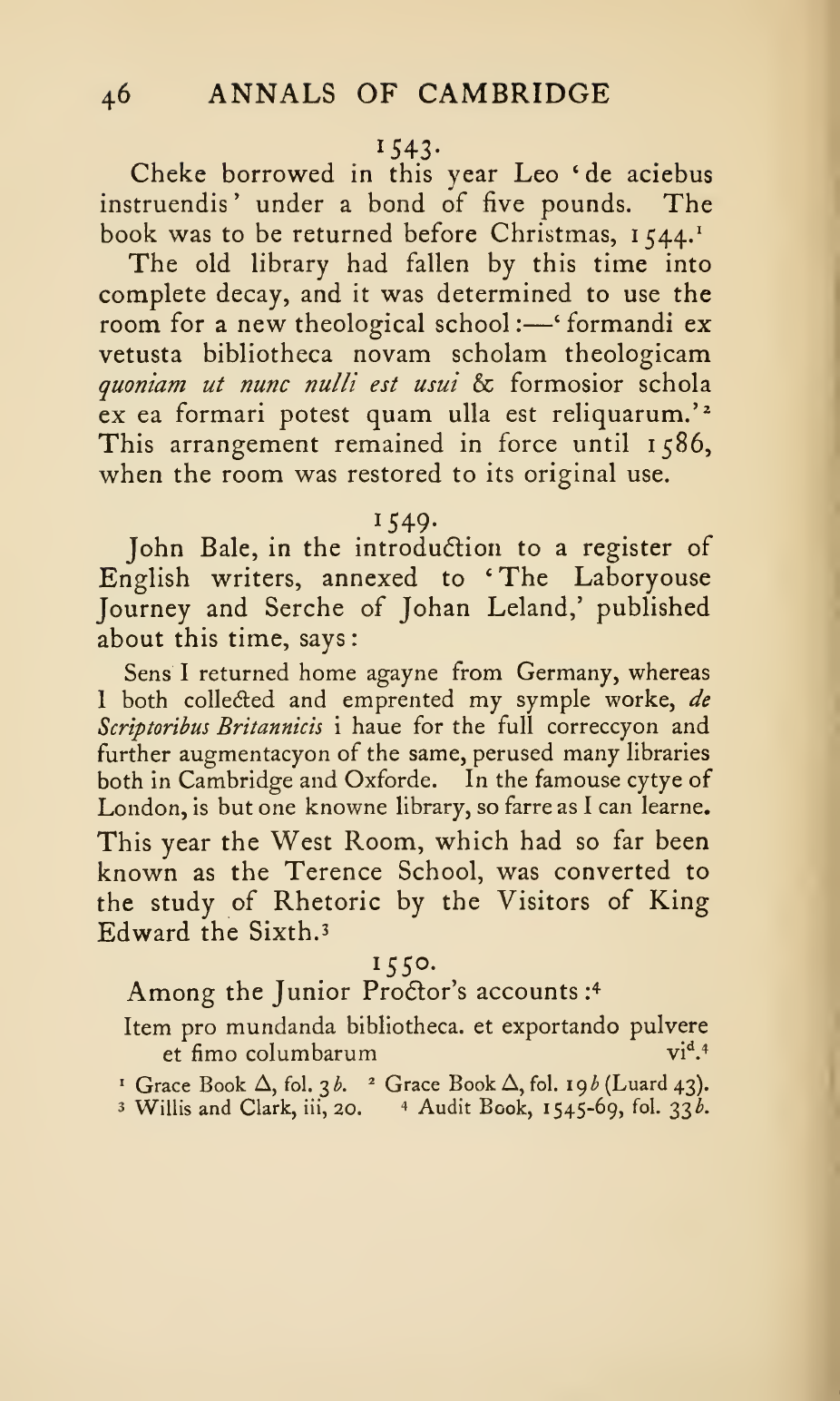
Then, on printed page 46, the decisive entry:
Cheke borrowed in this year Leo 'de aciebus instruendis' under a bond of five pounds. The book was to be returned before Christmas, 1544.
Sayle cites Grace Book Gamma, folios 170b and 174a, for the 1540 and 1541 entries, and Grace Book Delta, folio 3b, for the 1543 Leo loan. The 1543 date and Christmas 1544 deadline fit Ascham's published statement that Cheke had translated the book this laste yeare and let him read it in his chamber.
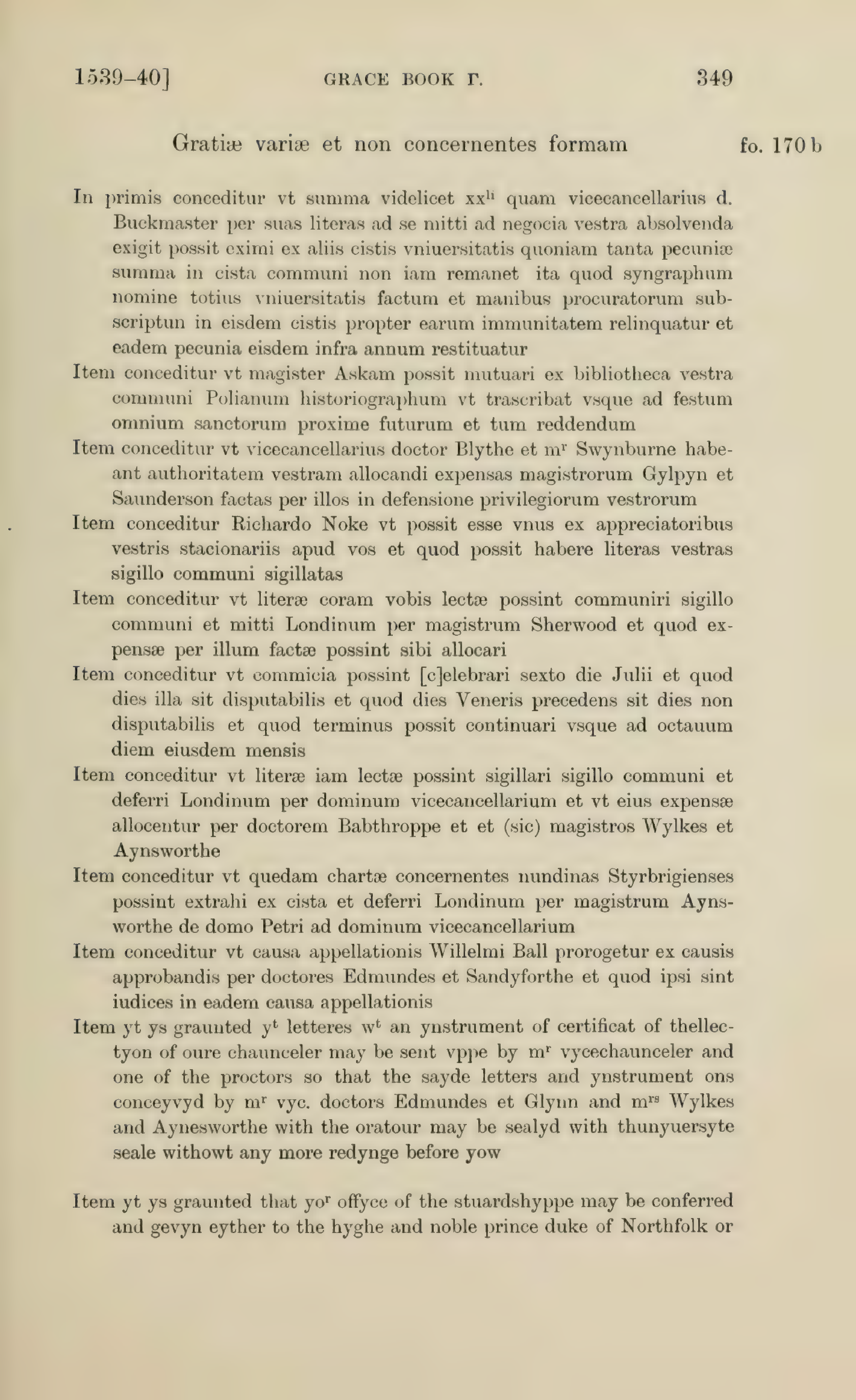
The published Grace Book editions have now been acquired and page-checked independently. Grace Book Gamma, printed p. 349, transcribes the Ascham permission:
Item conceditur vt magister Askam possit mutuari ex bibliotheca vestra communi Polianum historiographum vt trascribat vsque ad festum omnium sanctorum proxime futurum et tum reddendum.
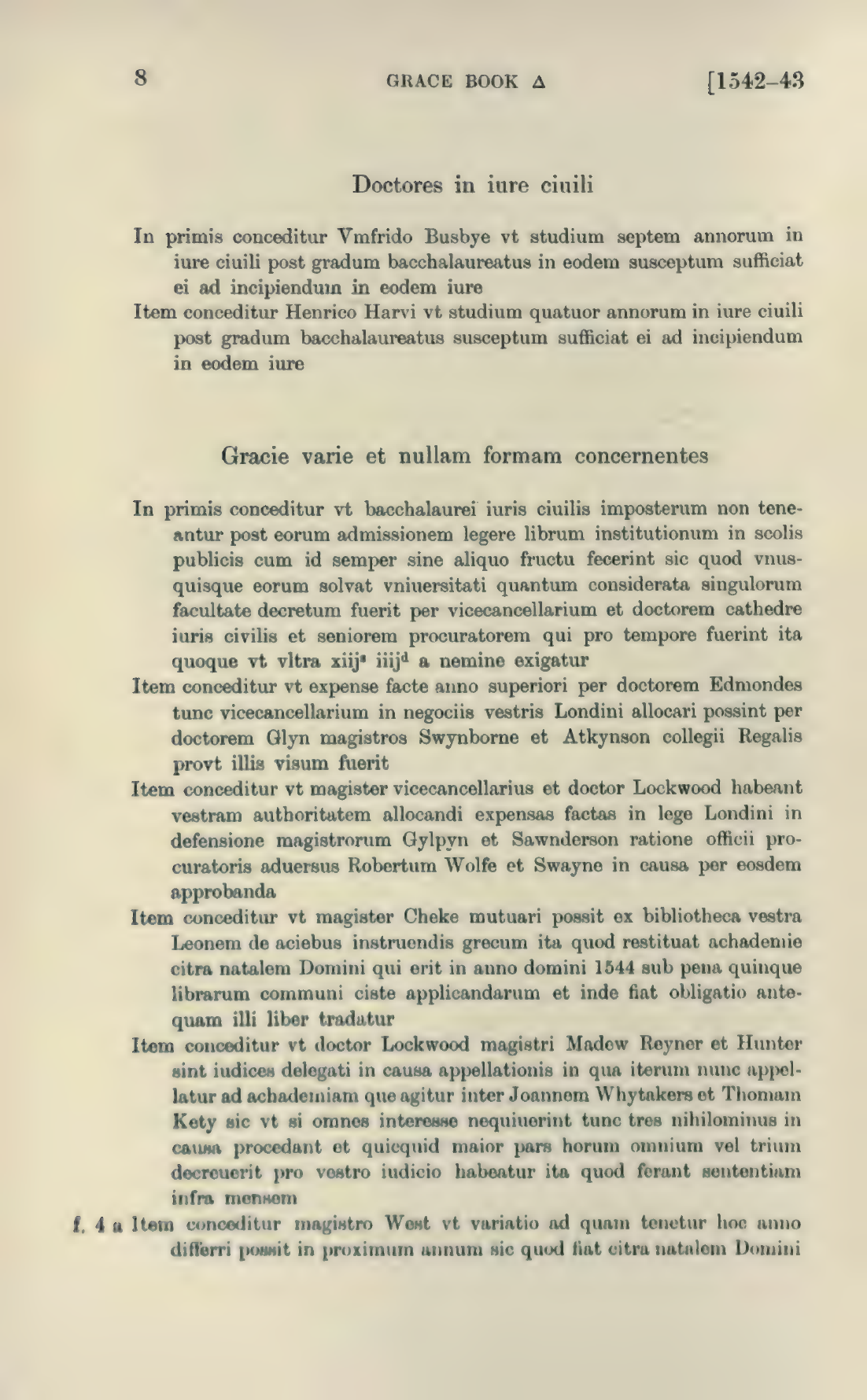
Ascham could borrow Polyaenus from the common library to transcribe it until the coming feast of All Saints, when it was to be returned. Grace Book Delta, printed p. 8, separately transcribes Cheke's Leo authorization:
Item conceditur vt magister Cheke mutuari possit ex bibliotheca vestra Leonem de aciebus instruendis grecum ita quod restituat achademie citra natalem Domini qui erit in anno domini 1544 sub pena quinque librarum communi ciste applicandarum et inde fiat obligatio antequam illi liber tradatur.
Cheke was permitted to borrow the Greek Leo from the university library, return it before Christmas 1544, and execute an obligation under a five-pound penalty before the book was delivered. These edited records confirm the separate permissions and make Cheke's institutional access direct. They still do not settle whether the Polyaenus and Leo texts were parts of one physical codex borrowed on different occasions.
2.2 Laar's reconstruction from Oates
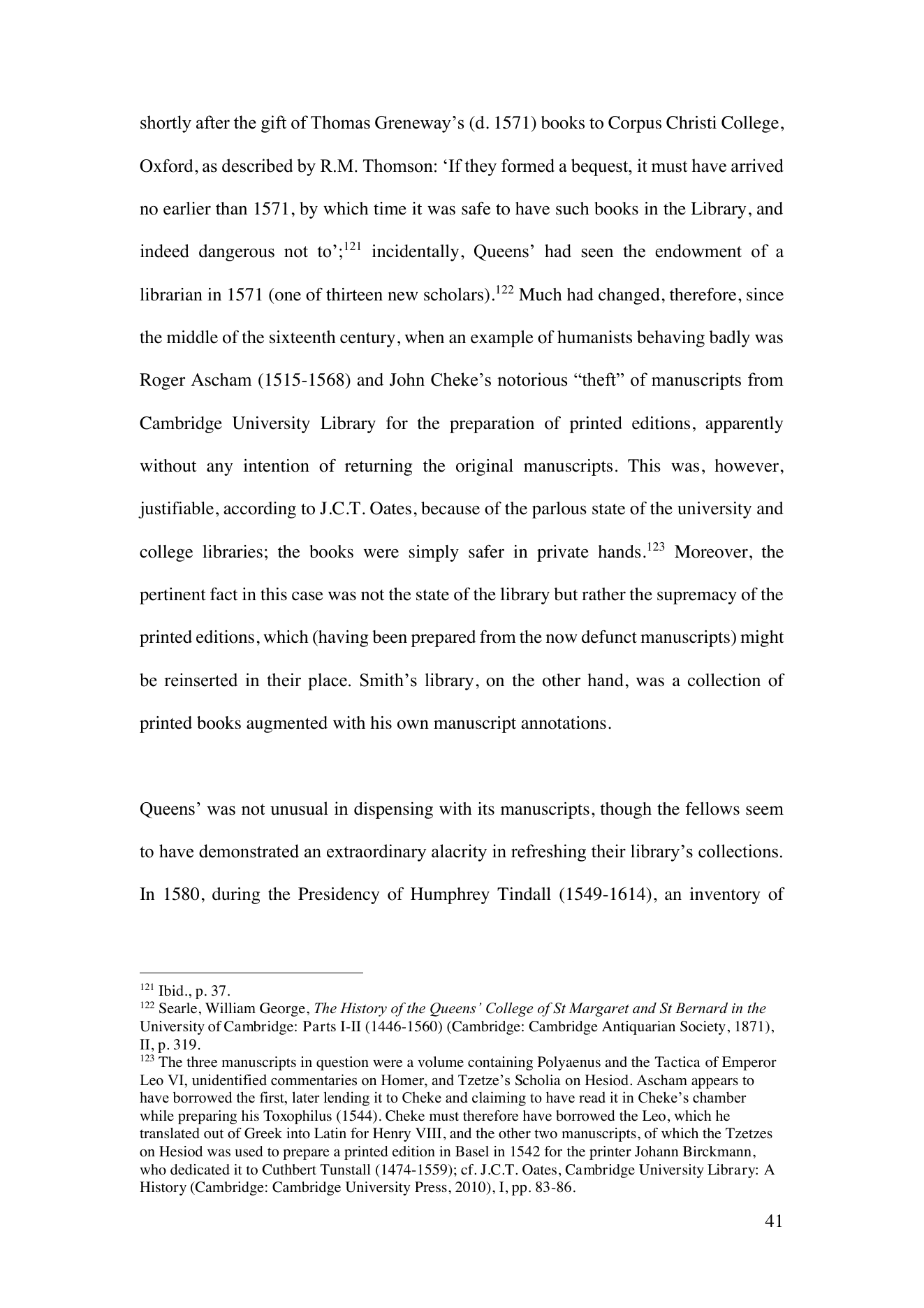
Alex Laar writes that Ascham and Cheke's notorious manuscript removal was from Cambridge University Library, apparently for preparing printed editions and without an intention to return the originals. His footnote 123 gives the relevant reconstruction:
The three manuscripts in question were a volume containing Polyaenus and the Tactica of Emperor Leo VI, unidentified commentaries on Homer, and Tzetze's Scholia on Hesiod. Ascham appears to have borrowed the first, later lending it to Cheke and claiming to have read it in Cheke's chamber while preparing his Toxophilus (1544). Cheke must therefore have borrowed the Leo, which he translated out of Greek into Latin for Henry VIII ...
Laar cites J. C. T. Oates, Cambridge University Library: A History, volume I, pages 83-86. He describes the manuscripts as now defunct, so this reference presently provides a reconstruction rather than a route to an extant shelfmark.
Sayle's earlier account makes one part of that reconstruction unnecessary: there is direct institutional evidence that Cheke borrowed Leo in 1543. Whether the Polyaenus and Leo texts occupied one physical composite volume remains open. Sayle lists them under distinct loan events, whereas Laar calls them one volume. The Grace Book folios and Oates's full discussion should be inspected before deciding whether these descriptions conflict or merely describe different occasions involving the same codex.
2.3 The 1542 Hesiod edition supplies a contemporary publication record
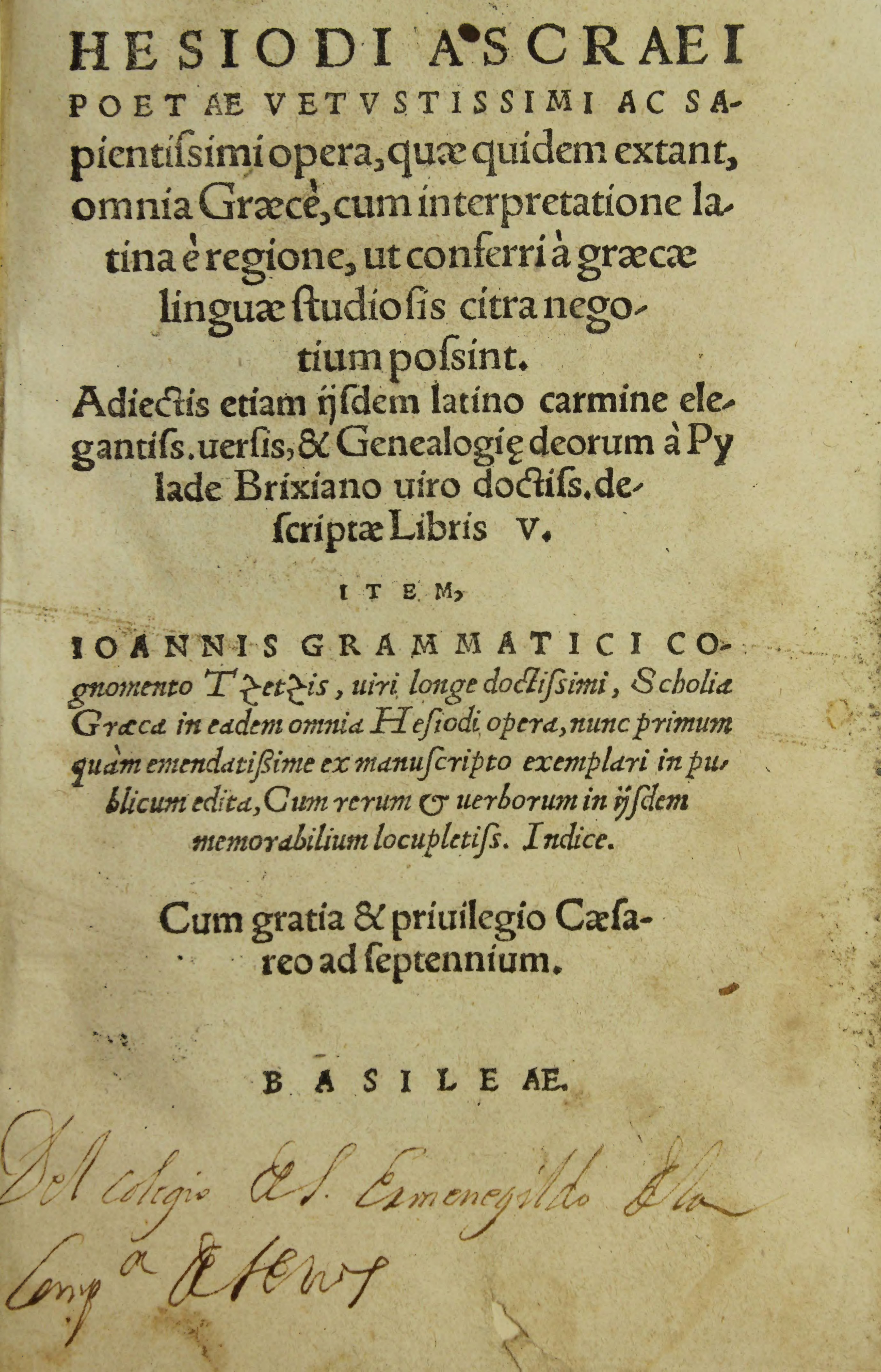
A complete public scan of the 1542 Basel Hesiod has now been located in the University of Seville copy, shelfmark A Res.30/4/05, preserved by Internet Archive as ARes30405. The title page describes the Tzetzes scholia as:
Scholia Graeca in eadem omnia Hesiodi opera, nunc primum quam emendatissime ex manuscripto exemplari in publicum edita
That is, the Greek scholia on all the surviving works of Hesiod were now published for the first time, as accurately as possible, from a manuscript exemplar. This is the printed work anticipated by the 1541 university permission for Cheke to borrow the Homer and Hesiod commentaries ad eos edendos, for the purpose of publishing them.
Johann Birckmann's dedicatory letter to Cuthbert Tunstall is dated at Cologne on 1 June 1542. It praises Tunstall for searching libraries during his embassies and for dedicating rare books to academies rather than keeping them for private use. Birckmann then makes the Cambridge and Cheke roles explicit:
Hinc tuis opibus Cantabrigiensis schola ornatior reddita ... itaque quoque thesaurum istum, qui doctissimas & in primis necessarias Ioannis Tzetzis grammatici in Hesiodi poemata, quae hodie extare cognovimus, omnia, explicationes continet, cunctis communem esse voluit. Quod sane ut commodius fieret, vir ornatissimus Ioannes Chekus, medicinae & literarum Graecarum istic professor longe eruditissimus ... negotium edendi libri mihi dedit.
In translation: Cambridge was enriched by Tunstall's resources; he wished this treasure containing Tzetzes' learned explanations of all the surviving Hesiodic poems to be common to everyone; and, to accomplish that purpose, John Cheke, professor there of medicine and Greek letters, entrusted Birckmann with the business of publishing the book.
The next page describes printing as multiplication of Tunstall's unique source:
cum unicum tuum archetypum infinita prope exemplaria, quibus studiosi homines non minus iuventur quam delectentur, dedisse conspexeris
Birckmann tells Tunstall that he may now see his unicum ... archetypum, his unique archetype or exemplar, given over into almost countless copies for the aid and pleasure of learned readers. He then asks Tunstall to share his other very rare codices so that they too might come into the light: reliquos quoque codices, quos rarissimos habes, nobis, ut in lucem veniant, impartias.
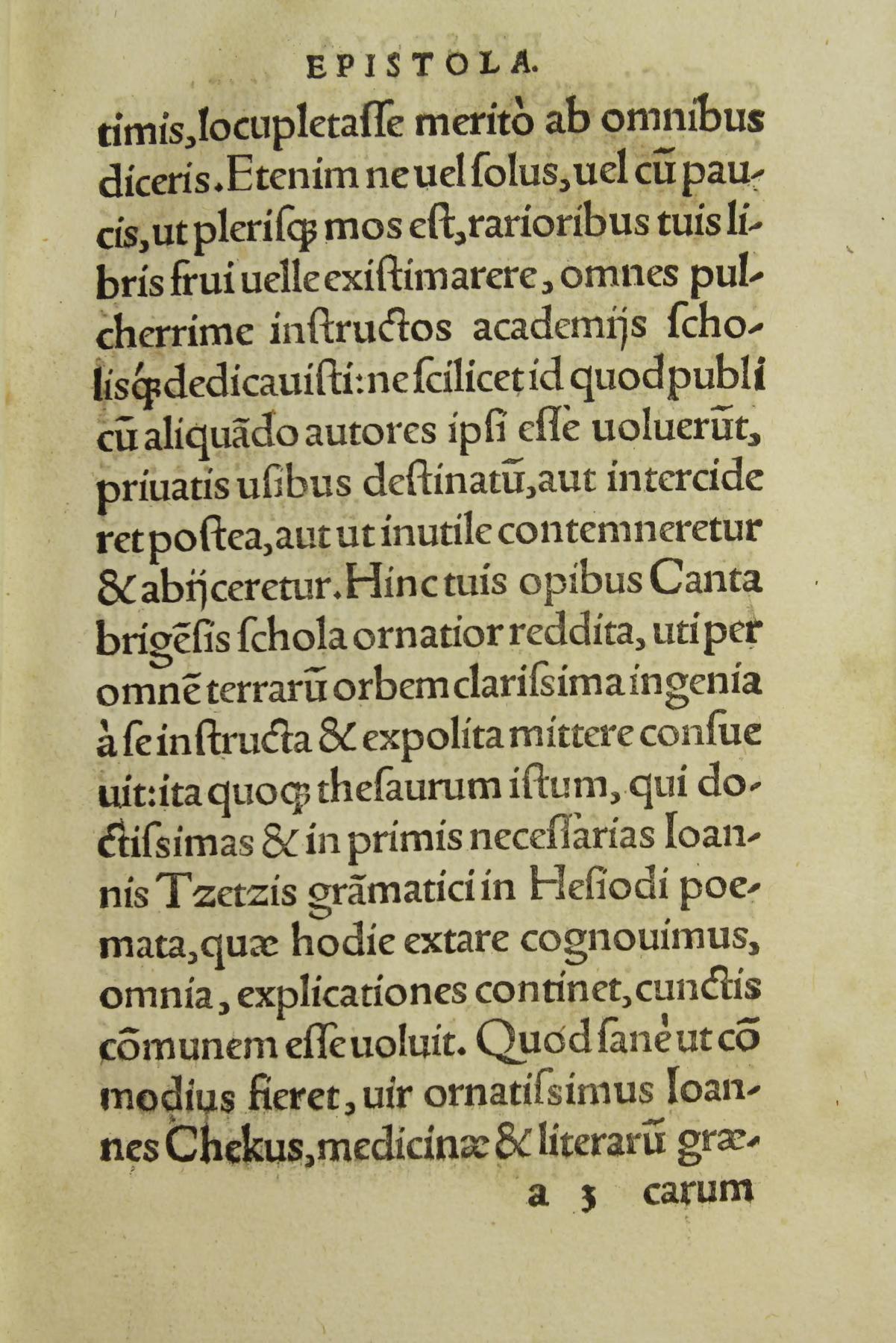
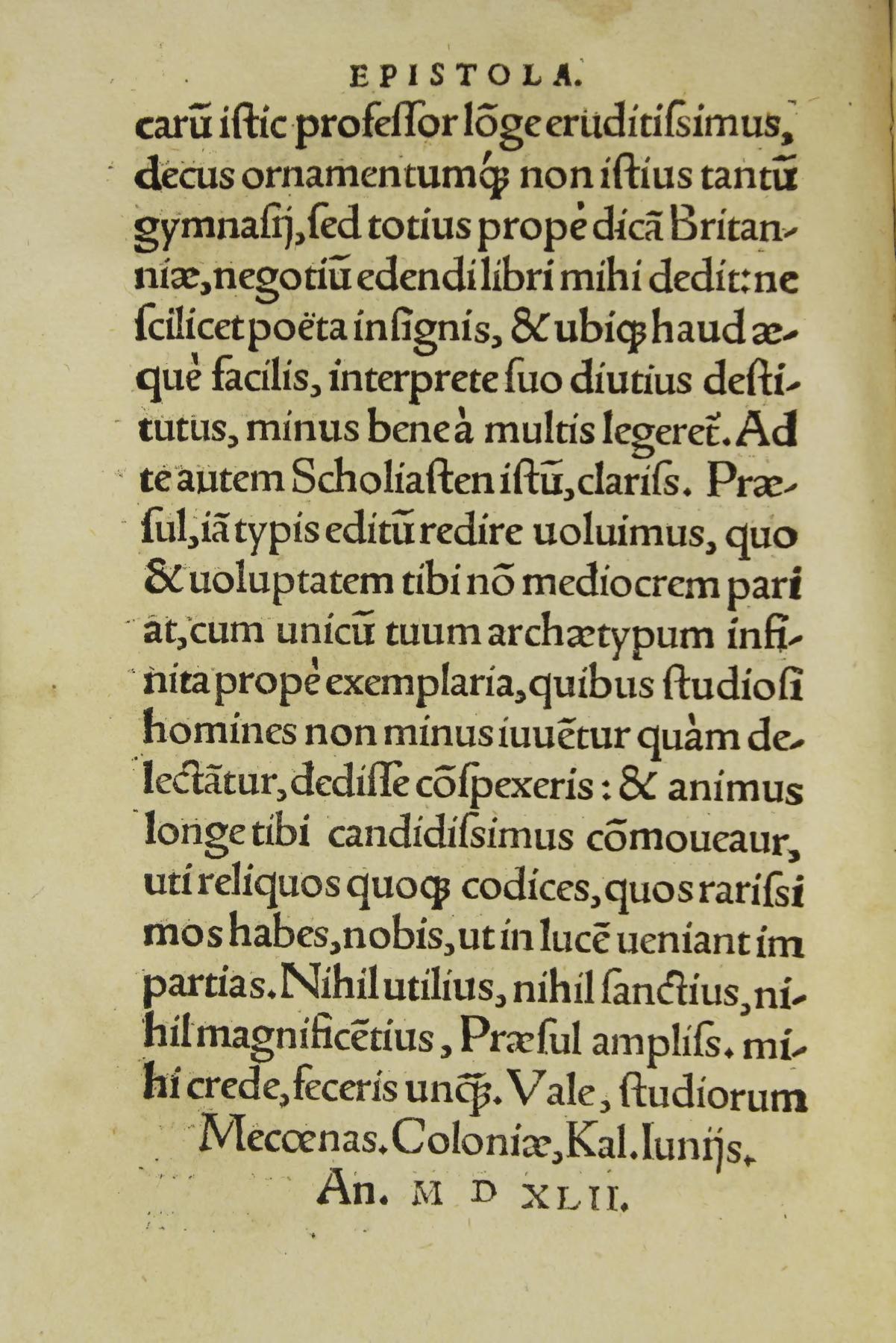
This primary source proves Cheke's active role as publication organizer, not merely as a Cambridge borrower. It also identifies the source exemplar as Tunstall's gift or resource and describes its public purpose. The letter does not, by itself, say that Cheke carried the physical codex to Basel, that it was not returned, or that it is identical with a surviving Trinity manuscript. Those points require the university loan record and later manuscript scholarship.
2.4 Cambridge MS Ee.6.35 is a different Tunstall-Tzetzes manuscript
Cambridge's fully digitized MS Ee.6.35 initially looked like a possible contradiction to reports that the Tzetzes manuscript was not returned. Its catalogue record resolves the problem. Ee.6.35 contains the Chiliades, poems, and letters of John Tzetzes, not Tzetzes' scholia on Hesiod. Cambridge dates it to the late fifteenth or early sixteenth century from its script and a paper watermark paralleled in examples dated 1489-1514.
The manuscript itself preserves Tunstall's donation note on folio 3r:
Cuthebertus Londoniensis episcopus studiosis dono dedit
Cuthbert, Bishop of London, gave [it] as a gift to scholars. This identifies the donor and dates the gift to Tunstall's London episcopate, which began in 1522 and ended with his translation to Durham in 1530.
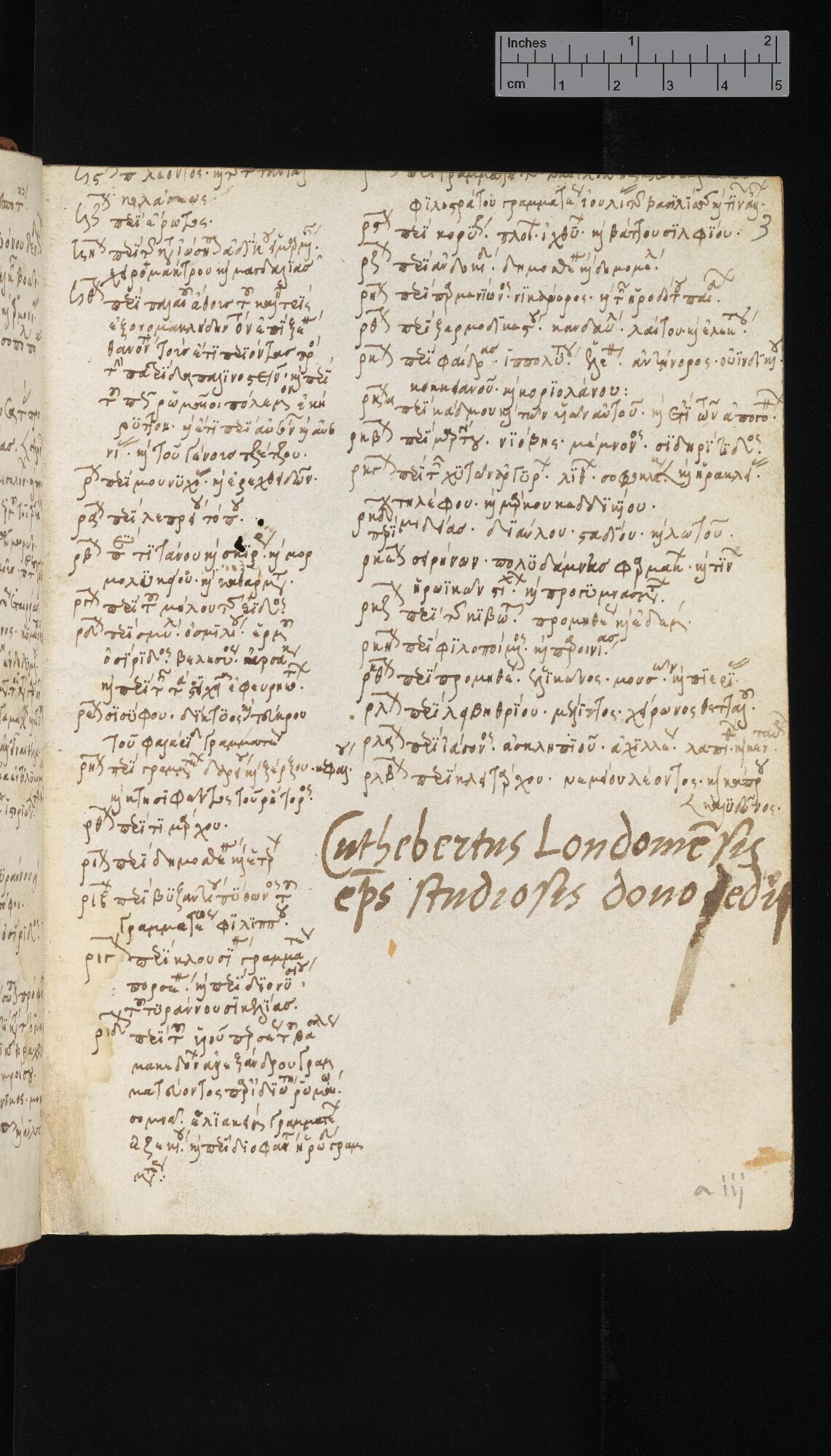
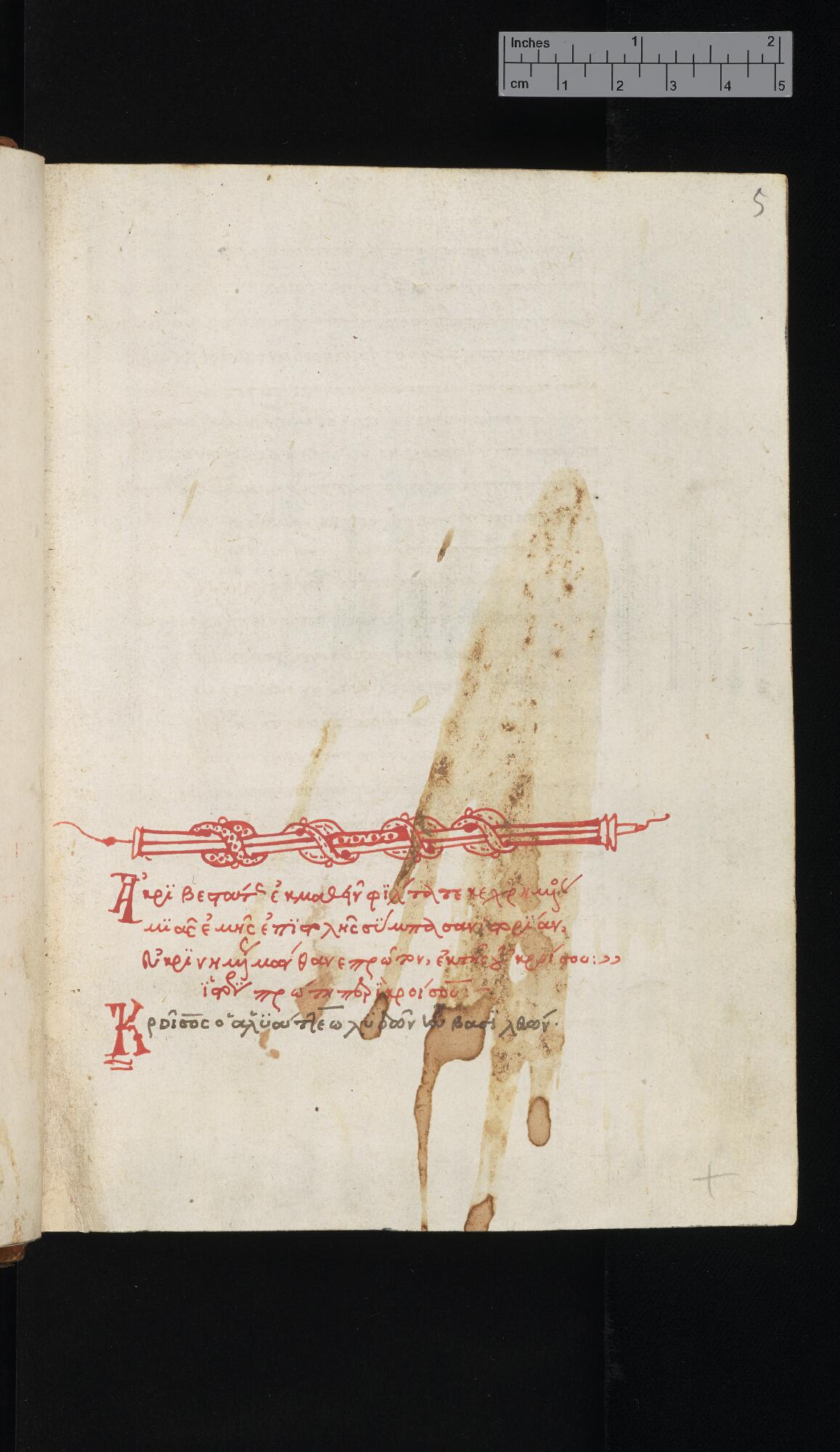
The Cambridge record's bibliography points to the 1546 Basel edition of Lycophron that also printed Tzetzes' Variarum historiarum or Chiliades. That creates a second concrete research avenue: determine whether Ee.6.35 supplied that later Basel printing. What is already clear is that its survival does not show that the 1542 Hesiod-scholia source was returned. The works are different.
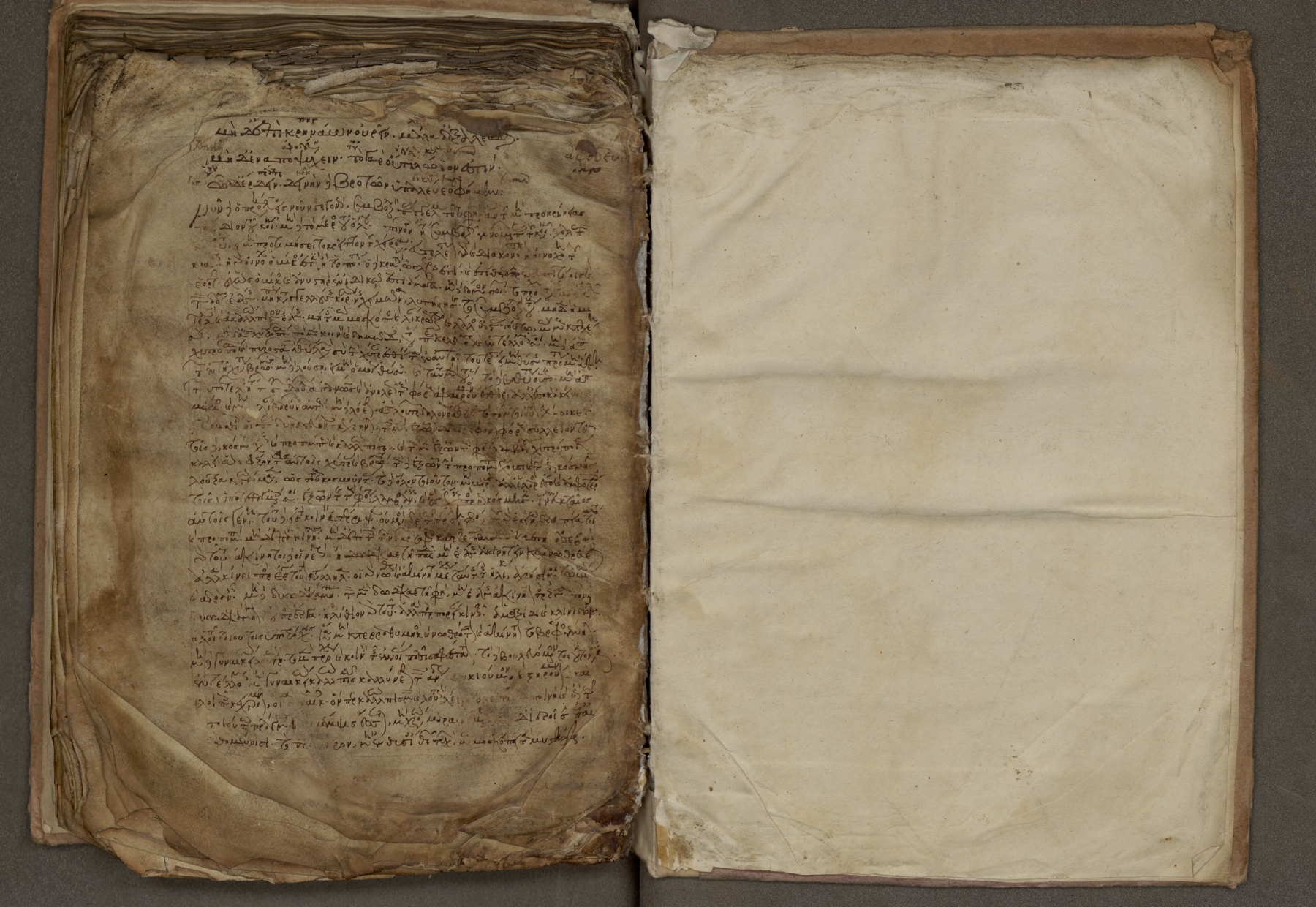
2.5 Trinity College MS O.9.27 is a serious candidate, not yet an identification
The recent Bernard Quaritch catalogue, citing M. R. James and Andrew Taylor, says that the manuscript used for the 1542 edition was not returned and that James thought it might now be at Trinity College, Cambridge. The obvious publicly catalogued Trinity candidate is MS O.9.27. Trinity describes it as a thirteenth- or fourteenth-century parchment manuscript of Hesiod's Works and Days with the commentary of John Tzetzes. Its Greek heading identifies Ioannes the grammarian Tzetzes' explanation of the book of Hesiod's Works and Days, and the manuscript alternates Hesiod's text with commentary and interlinear glosses.
The provenance is intriguing. Folio 1 bears the note Liber D. Grimani Car[din]alis S. Marci, identifying an earlier association with Cardinal Domenico Grimani, who died in 1523. The codex later entered Roger Gale's collection and was given to Trinity in 1738. Those dates leave chronological room for a route from Grimani to Tunstall, then out of Cambridge through the 1542 printing project, and eventually into Gale's hands—but no document found in this pass establishes any of those intermediate transfers.
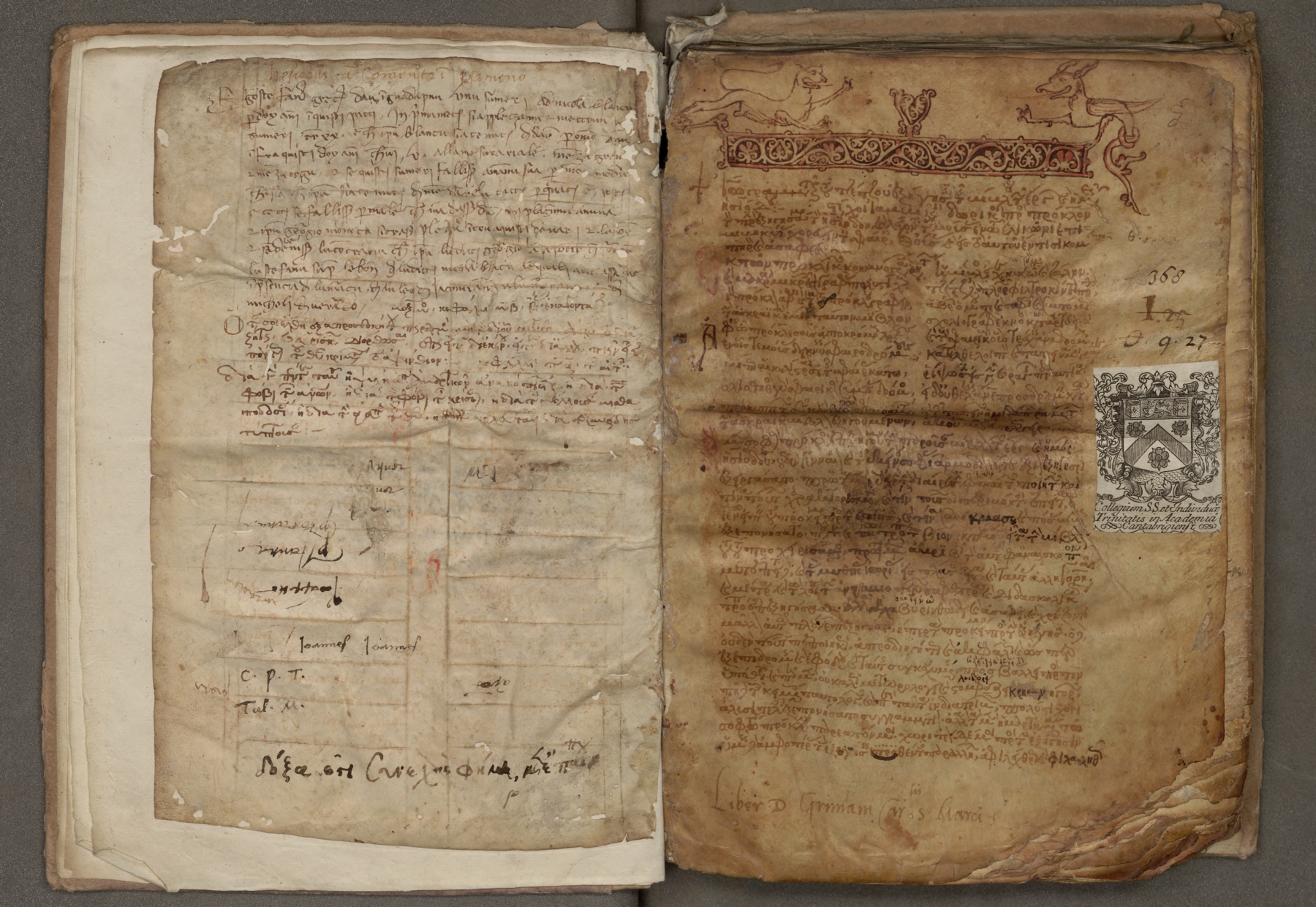
There is also a material conflict to resolve. Trinity dates O.9.27 to the thirteenth-fourteenth century, whereas the Quaritch description calls the Cambridge source a late-fifteenth-century manuscript. O.9.27 does carry a fifteenth-century Italian title, hesiodus cum comento in pergameno, but that title is not the date of the codex itself. Until James's and Taylor's full arguments are inspected and the 1542 print is collated against O.9.27, the shelfmark should be presented as a strong candidate rather than as Cheke's recovered manuscript.
The digitized texts reveal a second, equally important diagnostic problem. The 1542 part-title says the edition contains Tzetzes' explanations of Works and Days, the Shield of Heracles, and the Theogony. The present O.9.27 contains only Works and Days and ends abruptly at line 760 on its final written folio. Its opening does align structurally with the 1542 print: both begin with the heading identifying Tzetzes' explanation of Works and Days and the iambic verses addressed to Proclus. That common opening makes detailed collation possible, but it does not distinguish this witness from other copies of the same commentary.
If O.9.27 was the unicum ... archetypum behind the whole 1542 edition, one of two further things must be documented: either the codex once contained the missing end of Works and Days plus the Shield and Theogony commentaries and lost them after printing, or the printers supplemented it from another source despite Birckmann's singular wording. The photograph of the current final folio shows a physically abrupt ending against the back flyleaf, so later loss is possible; the timing and extent of that loss remain unknown.
2.6 Why Queens' College must not be substituted
Laar's thesis concerns Sir Thomas Smith's books at Queens' College, and the sentences immediately before and after the Cheke-Ascham passage discuss Queens' library. A search snippet can therefore make the manuscript episode look like a Queens' College removal. The text itself is unambiguous: the manuscripts came from Cambridge University Library.
William George Searle's History of the Queens' College, part II, page 319, has also been checked. It concerns the 1571 endowment of a librarian and college statutes. Laar cites Searle in footnote 122 for that librarianship point; the separate manuscript reconstruction is footnote 123 and cites Oates. Searle page 319 is not evidence for custody of the Leo manuscript.
2.7 British Library Royal MS 16 C XIV is a later witness
The official British Library catalogue describes Royal MS 16 C XIV, folios 2r-114v, as a Greek Apparatus Bellicus in seventy-nine chapters, dated 1584, with later marginal interventions associated with Isaac Casaubon and Patrick Young. Its subject and royal-library location make it superficially attractive, but its 1584 date excludes it as the Greek manuscript Cheke used in 1544. It belongs to the later reception history of Leo's military text, not to the source chain of Cheke's translation.
3. What Pigafetta's 1586 Annotation Adds
Pigafetta's annotation says:
Fu questo trattato da un'Inglese volto in Latino già forse 35. anni, il quale diede in assai buon libro Greco della libreria del Re d'Inghilterra: ma nondimeno io in qualche parte l'ho trovato migliore nelle librerie del Signor Gio. Vincenzo Pinello, & del Sig. Giacopo Contarino.
The 1554 Basel title page identifies Pigafetta's unnamed English translator as John Cheke. Ascham supplies the missing contemporary context: the translation had actually been made around 1544 for Henry VIII and circulated in manuscript before print. Sayle's Grace Book transcription supplies the institutional source route and the exact 1543 loan.
Pigafetta's edition was not a mechanical translation of Cheke's Latin. He says he found better readings in the Greek books of Gian Vincenzo Pinelli and Giacomo Contarini, compared the witnesses, attempted to purge errors, and used learned judgment and his own knowledge of ancient warfare. The Billingbear Leo is therefore the late product of at least three scholarly environments: Cambridge manuscript lending, Henrician royal translation, and Italian humanist collation.
4. The Network Reaches the Neville Family in Several Ways
4.1 Cheke, Cecil, and two marriages
William Cecil studied under Cheke and married Cheke's sister Mary in 1541. After Mary's death, Cecil married Mildred Cooke. Mildred was the sister of Katherine Cooke Killigrew, whose daughter Anne Killigrew married Henry Neville.
This creates a precise family sequence:
John Cheke -> sister Mary Cheke -> husband William Cecil -> second wife Mildred Cooke -> sister Katherine Cooke Killigrew -> daughter Anne Killigrew Neville -> husband Henry Neville.
This does not make Henry Neville Cheke's descendant or prove transmission of a particular text. It does show that Cheke's family and the Cooke family were joined in the same Cecil household history, while Anne Killigrew Neville was Mildred's niece and Robert Cecil's first cousin.
4.2 Cheke, Hoby, and surviving Billingbear books
Thomas Hoby was a pupil of Cheke and married Elizabeth Cooke, another of Mildred and Katherine's sisters. Books bearing Hoby's ownership marks survived in the Billingbear/Audley End collection. Hoby's family chronicle also records Henry Neville's mother, Elizabeth Gresham Neville, and grandmother, Frances Gresham, as godmothers to Hoby's daughter Elizabeth at Bisham in 1562.
The Hoby route is therefore more than a bare educational genealogy: Hoby connects Cheke's learning to the Cooke sisters, the Gresham-Neville family, and identifiable books preserved through Billingbear. No present source says that Hoby transmitted the Leo text itself.
4.3 Elder Sir Henry Neville and the Edwardian promotion circle
John Cheke, William Cecil, and the elder Sir Henry Neville also appear within the same Edwardian world of court service and promotion. Sources disagree on the exact date assigned to the elder Neville's knighthood, so this should be used as institutional context rather than a single-day encounter claim. It nonetheless places the ambassador's father within the court generation in which Cheke's scholarly service to Edward VI became political office.
4.4 Pinelli creates a separate continental route
Dudith's 1581 letter asked Henry Savile to go with amabilissimo Nevello nostro into Gian Vincenzo Pinelli's friendship and emphasized Pinelli's outstanding library and manuscripts. Pigafetta later named Pinelli's Greek Leo as one of the witnesses used to improve his edition. This is a separate, direct research route: the same Pinelli library commended to Nevell and Savile in 1581 supplied one of Pigafetta's textual witnesses before the 1586 Billingbear edition.
It remains unknown whether Neville saw that particular manuscript. The documentary conjunction is still unusually specific and makes the Ambrosiana Pinelli papers a priority.
5. Billingbear Catalogue Result
The Billingbear catalogue and the combined Billingbear/Audley End data have been searched for Ascham, Toxophilus, and spelling variants. No identifiable entry for Ascham or Toxophilus appears under those author/title terms. This is a catalogue result, not proof that the work was absent under every possible abbreviated or anonymous description.
What is present is the two-book Filippo Pigafetta cluster:
- Guidobaldo del Monte, Le Mechaniche, translated by Pigafetta (Venice, 1581);
- Leo VI, Trattato brieve, translated and collated by Pigafetta (Venice, 1586).
Both survive as Audley End objects. Their physical inspection could determine whether the same reader, bookseller, binder, or family accession connected them.
6. A Better Research Program
- Inspect Grace Book Gamma, folios 170b and 174a, and Grace Book Delta, folio 3b, against the checked printed editions.
- Obtain Oates volume I, pages 83-86, and trace every catalogue, loan, and later-provenance source behind his reconstruction. Internet Archive item
cambridgeunivers0000oatehas been located, but page 83 is locked behind the lending workflow. - Inspect Andrew Taylor, pp. 105-111, and M. R. James, pp. 395-410. James's article is JSTOR stable item
41154585; public access presently exposes citation data but not the article text. - Collate the complete 1542 Basel Tzetzes text against Trinity MS O.9.27, beginning with distinctive readings in the preface and the commentary to Works and Days. This can test the proposed shelfmark even if the ownership chain remains incomplete.
- Trace Cardinal Domenico Grimani's Greek books and Cuthbert Tunstall's continental acquisitions for a transfer matching O.9.27 before 1530.
- Determine whether Cambridge MS Ee.6.35 supplied the Tzetzes Chiliades printed at Basel in 1546 and whether Cheke or the Birckmann-Oporinus network organized that publication.
- Determine whether Polyaenus and Leo were one composite physical volume or separate works recorded in distinct loans.
- Identify all extant Greek witnesses of Leo VI that also contain Polyaenus; compare their structure with Cheke's Latin divisions and Ascham's description.
- Collate Ascham's English paraphrases against Cheke's Latin and Pigafetta's Italian to determine which readings or divisions Ascham had before him.
- Search Cheke, Ascham, Cecil, Hoby, and Cooke correspondence for manuscript loans, royal presentation copies, or the Basel printing history.
- Search the Ambrosiana Pinelli papers for Pigafetta's collation, the Pinelli Leo witness, Savile, and Neville.
- Request complete photography of Audley End objects
81035047and81035082, including bindings, pastedowns, endleaves, inscriptions, shelfmarks, and every annotation. - Investigate whether Royal MS 16 C XIV entered the royal library through a channel connected with Pigafetta, Pinelli, Contarini, Casaubon, or Patrick Young, while keeping its 1584 date separate from Cheke's source.
- Treat Ascham's Toxophilus as evidence of early English reception: trace its Leo-derived archery passages in later military manuals, sermons, proclamations, and political writing.
7. Citations and Local Witnesses
- Roger Ascham, Toxophilus (London: Edward Whitchurch, 1545), printed pp. 77-79. Local readable facsimile RogerAschamToxophilus1545 and RogerAschamToxophilus1545 djvu; Archive.org item RogerAschamToxophilus1545. The downloaded item is a later facsimile, not the physical 1545 copy.
- Actual 1545 witness, University of Manchester Library, Special Collections
841, digital exhibition and images. - Folger catalogue, STC 837, *Toxophilus* (1545), record 160463.
- EEBO-TCP
A22011, locally checked through the EarlyPrint full-text index for themaster Chekepassage. - The Origins of Early Modern Literature, DHI, Ascham 837 source guide.
- Charles Sayle, Annals of Cambridge University Library, 1278-1900 (Cambridge, 1916), pp. 45-47, especially p. 46 for Cheke's 1543 Leo loan; Archive.org scan, local sayle annals cul 1916 and sayle annals cul 1916 djvu. Sayle cites Grace Book Gamma, fols. 170b and 174a, and Grace Book Delta, fol. 3b.
- W. G. Searle, ed., Grace Book Gamma: Containing the Records of the University of Cambridge for the Years 1501-1542 (Cambridge, 1908), printed pp. 349 and 359; Archive.org item, local gracebookfcontai00univ.
- John Venn, ed., Grace Book Delta: Containing the Records of the University of Cambridge for the Years 1542-1589 (Cambridge, 1910), printed p. 8; Google Books record, local gracebookdeltaco00univuoft.
- Cambridge University Library, "Reformation and Restoration", distinguishing Ascham's 1539-40 loan from Cheke's three loans of 1540-43 and noting that none returned to the university library.
- James Hannam, Teaching Natural Philosophy and Mathematics at Oxford and Cambridge 1500-1570 (Cambridge PhD thesis, 2008), p. 148, independently summarizing Oates p. 83 as four unreturned manuscripts; local cambridge thesis book loss oates p83.
- Alex Laar, Exploring Humanist Networks of Knowledge and Reading in Queens' College Old Library, Cambridge (Oxford DPhil thesis, 2024), p. 41 n. 123, Oxford University Research Archive record; local laar exploring humanist networks 2024.
- J. C. T. Oates, Cambridge University Library: A History, vol. I, pp. 83-86, cited by Laar; pages not yet independently inspected.
- J. C. T. Oates, Cambridge University Library: A History, vol. I (Cambridge, 1986), Internet Archive lending copy `cambridgeunivers0000oate`. Metadata and BookReader access state were checked; the cited interior pages require a logged-in loan.
- Hesiod and John Tzetzes, Opera ... Item, Ioannis Grammatici cognomento Tzetzis ... scholia Graeca (Basel, 1542), University of Seville
A Res.30/4/05, Internet Archive item `ARes30405`, local hesiod tzetzes 1542 ARes30405 and hesiod tzetzes 1542 ARes30405 ocr. The title and Birckmann preface were checked against page images. - Cambridge University Library, MS Ee.6.35, *Chiliades and other works of Ioannes Tzetzes*, local cudl MS Ee 6 35 manifest. The record identifies the contents, 1489-1514 watermark parallels, Tunstall donation note, and 1546 Basel edition route.
- Trinity College Cambridge, MS O.9.27, Hesiod, *Works and Days* with Tzetzes commentary, local trinity O 9 27 manifest. The record gives the thirteenth-fourteenth-century date, Grimani note, Gale provenance, contents, and complete images.
- Bernard Quaritch Ltd, Greek Books & Manuscripts, Catalogue 1463 (2026), item 27, pp. 62-65, complete PDF, local quaritch 1463 greek books 2026. This modern sale catalogue routes the claim about the possible Trinity survival to Taylor and M. R. James; it is not a substitute for those works.
- M. R. James,
Collections of Manuscripts at Cambridge: Their History, Sources and Contents, Transactions of the Cambridge Bibliographical Society 7.4 (1980), 395-410, JSTOR stable item 41154585. Citation data checked; article text not publicly exposed in the current session. - Andrew W. Taylor,
John Cheke's Greek Scholarship in Translation, in The Cambridge Connection in Tudor England (Leiden: Brill, 2021), 103-132, especially 105-111, official Brill chapter record. Full chapter remains to be inspected. - William George Searle, The History of the Queens' College, part II (1871), p. 319; local searle history queens college 1871. This supports the 1571 librarianship context, not Leo-manuscript custody.
- British Library, Royal MS 16 C XIV catalogue record.
- Leo VI, De bellico apparatu liber, trans. John Cheke (Basel, 1554), Folger catalogue record 75733.
- Leo VI, Trattato brieve, trans. Filippo Pigafetta (Venice, 1586), Folger catalogue record 75732.
- William Cecil's marriages: Dictionary of National Biography, William Cecil. The same family bridge is cross-controlled in the Katherine Cooke packet.
- Katherine Cooke family dossier: katherine cooke killigrew.
- Hoby network dossier: sir thomas hoby audley end and the nevilles.
- Pigafetta/Billingbear dossier: filippo pigafetta mechaniche billingbear 1581.
Notes on Access and Image Witnesses
- The three interior Toxophilus pages are from a later facsimile of the 1545 edition and have been checked as page images; quotations were not taken from OCR alone.
- The Manchester images are from an actual 1545 copy, shelfmark Special Collections
841, delivered by the institution's IIIF service. - Sayle's printed pages and the 1908/1910 Grace Book editions are controlled against page images. The manuscript Grace Book folios themselves have not yet been imaged or inspected in this pass.
- The Laar page is rendered from the official Oxford thesis PDF. It is a modern scholarly reconstruction, not an image of the Greek manuscript.
- No image or extant shelfmark for Cheke's Leo source has been established in this pass. Cambridge's official history says one of Cheke's three unreturned manuscripts later reached Queen Christina's collection and the Vatican, but it does not identify which one on the public page; that statement should not be assigned to Leo without further collation.
- A complete image witness has now been established for the separate 1542 Tzetzes-Hesiod printing project. Birckmann's letter directly names Cheke as the person who entrusted him with publishing the book and calls the source Tunstall's unique archetype.
- Cambridge MS Ee.6.35 has been fully identified and imaged. It is Tzetzes' Chiliades and related works, not the Hesiod commentary, so it must not be used as proof that the 1542 source returned.
- Trinity MS O.9.27 is completely digitized and matches the required author-work combination, but no checked source yet equates that shelfmark with Cheke's exemplar. The manuscript's thirteenth-fourteenth-century date also conflicts with the late-fifteenth-century description in the 2026 Quaritch catalogue.
- Royal MS 16 C XIV has no public digital images in the current British Library catalogue record and, in any event, is dated forty years after Cheke's translation.