Gesta Danorum and Henry Neville
Topic: Gesta Danorum and Henry Neville
0A. Structured Quoted Source Passages
Use these entries under SOURCE QUOTATION STANDARD.
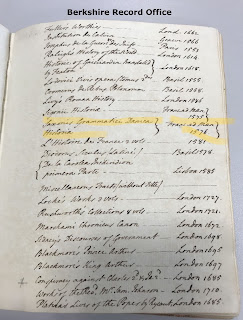
1. Billingbear Transcription Records The Saxo Entry
- Source: Updated Billingbear transcription, Billingbear Book List Transcription:125.
- Quotation:
"Saxonis Grammatici Danica"
"Historia ... 1576"
- What it proves: The Billingbear list transcription records a Saxo Grammaticus / Danica Historia item dated
1576. - Limits: This proves list presence in the Billingbear material; it does not by itself prove Henry Neville's personal acquisition, annotation, or use.
2. Kisery Gives The Wider Hamlet/Amlethus Source-Tradition Frame
- Source: Downloaded JSTOR OCR of Andras Kisery, "
I Lack Advancement," KISRY ILACKADVANCEMENT 2014:36. - Quotation:
"Orationi in materia civile, e criminale"
"two speeches from the Danish histories of Saxo Grammaticus"
"attributed to Amleto"
- What it proves: Saxo/Amlethus material circulated in a political-rhetorical source tradition relevant to Hamlet discussions.
- Limits: Kisery is source-tradition scholarship, not Neville-side ownership evidence.
3. Kisery Also Supplies A Melton/Hamlet Political-Rhetoric Control
- Source: Same local Kisery text, KISRY ILACKADVANCEMENT 2014:165.
- Quotation:
"The Sixe-folde politician"
"by indirections they can finde directions out"
- What it proves: The Hamlet political-agent lane extends beyond Saxo alone into early Jacobean counsel/political-rhetoric print culture.
- Limits: This supports source-context framing; it does not identify Neville as the reader or transmitter.
4. Current Book-Safe Claim
- Source: The Gesta packet's own controlled-status update cross-linked to the Billingbear transcription and Kisery controls, gesta danorum and henry neville:8.
- Quotation:
"the Billingbear material records a
1576Saxo / Danica Historia item"
- What it proves: The controlled claim is list evidence plus source-tradition relevance.
- Limits: Do not promote this to a personal-use or authorship claim without further evidence.
JSTOR / Web Source Notes
- Batch pass: AI TOPICS JSTOR WEB HARDENING PASS 2026 06 26.
- Kisery's article now has a JSTOR stable control: Andras Kisery, "'I Lack Advancement': Public Rhetoric, Private Prudence, and the Political Agent in Hamlet, 1561-1609," ELH 81, no. 1 (Spring 2014): 29-60, stable
24475586. - Local OCR and the user-downloaded JSTOR PDF rechecked the Saxo/Nannini/Amleto lane and the "by indirections" political-rhetoric anchor. Use Kisery as source-tradition context only; it does not prove Henry Neville personally used the Billingbear Saxo item.
Status-Control Position
- Current controlled claim: the Billingbear material records a
1576Saxo / Danica Historia item in the broader Hamlet source tradition. - Do not say the list proves Henry Neville personally acquired, read, annotated, owned in his lifetime, or transmitted this book.
Revised Transcription Control
- The updated Billingbear transcription is now the controlling local text layer for this entry. See BILLINGBEAR UPDATED TRANSCRIPTION INTEGRATION 2026 06 06.
- This strengthens the list-presence claim, but it does not change the ownership/use guardrail above.
Web / Catalogue Search Notes
- Broad Archive.org searching for
"Gesta Danorum" "Saxo" "1576"did not produce a clean 1576 primary witness in this pass. - A useful external bibliography route surfaced through OpenEdition's "Under the Signo of Saxo" page. It distinguishes:
- Oporinus/Basel
1534: Saxonis Grammatici, Danorum historiae libri XVI; the page gives an Archive.org route for a Rome Biblioteca Nazionale Centrale copy. - Lonicerus/Frankfurt
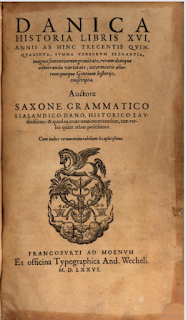
1576: Danica historia libris XVI conscripta auctore Saxone Grammatico; the page points to a Stockholm Royal Library digital route. - This is a catalogue/source-route improvement only. It does not prove which edition, if any, connects to Neville.
Next source-control step: build a witness table for the Saxo/Gesta lane with edition, place, editor, digital route, possible Neville-side witness, and Hamlet-source relevance. Do not cite the Gesta lane in book prose until the exact source-book witness is pinned.
1. Verified Sourced Facts
- The preserved Billingbear wiki text lists:
“Saxo (Grammaticus) -- Danica historia -- Frankfurt am Main -- 1576 -- (USTC 626686)”
- The updated Billingbear transcription gives the direct local catalog line at
IMG 8163:
“Saxonis Grammatici Danica ... Historia ... Franc. ad Mon} 1576.”
- Direct PNG inspection by Codex on
2026-04-21confirms that the Saxo /Danica Historia/ Frankfurt1576line is visibly present inIMG 8163and matches the updated transcription in substance.
- The Saxo /
1576item is now supported by the preserved wiki-text layer, the updated transcription keyed to a specific PNG image, and direct inspection of that page image.
- Andras Kisery shows that Hamlet's political-source tradition is broader than a simple Saxo-to-Shakespeare chain. He traces Saxo/Amlethus material through Remigio Nannini's 1561 Orationi in materia civile, e criminale, which includes two speeches attributed to
Amleto.
- Kisery also connects the political-counsel world of Hamlet to John Melton's 1609 Sixe-folde politician, including the phrase “by indirections they can finde directions out,” which he links to Polonius's instruction “By indirections find directions out.”
- This strengthens the packet's source-chapter value: Billingbear's
1576Saxo item remains the Neville-side source-book fact, while Kisery helps map the wider political-rhetorical circulation of Hamlet/Amlethus material.
2. Ken Feinstein Twitter and Blog Information
- A Ken Feinstein blog post on the Billingbear book list states:
“He possessed a
1576edition of Saxonis Grammatici's Danica Historia (also called Gesta Danorum), the ultimate source for Hamlet.”
Current evidence note: use the Billingbear material records, not he possessed, unless the ownership/use claim is separately sourced.
- A Ken Feinstein tweet dated
8 July 2023states:
“Gli Hecatommithi AND Gesta Danorum are on the list.”
- A Ken Feinstein tweet dated
1 Jan. 2021states:
“The Billingbear Book List is the most important document ever discovered relating to the SAQ. It shows how Henry Neville owned the sources for Hamlet, Othello, Measure for Measure, All's Well that Ends Well, etc.”
Current evidence note: preserve this as tweet rhetoric only. The packet supports list presence and source-tradition relevance.
3. Quoted Source Text
Henry Neville's Library of Shakespeare Sources
- “He possessed a
1576edition of Saxonis Grammatici's Danica Historia (also called Gesta Danorum), the ultimate source for Hamlet.”
Revised Billingbear transcription
IMG 8163: “Saxonis Grammatici Danica ... Historia ... Franc. ad Mon} 1576.”
Direct PNG inspection
IMG 8163: theSaxonis Grammatici Danica ... Historia ... Franc. ad Mon ... 1576line is visible on the page image. The image orientation and page curvature make minor punctuation/bracket details unsafe to over-normalize, but the key title and date are clear enough for topic use.
Hamlet political-source scholarship
- “Orationi in materia civile, e criminale”
- “two speeches from the Danish histories of Saxo Grammaticus”
- “both speeches translated by Nannini are attributed to Amleto”
- “by indirections they can finde directions out”
Ken Feinstein tweets
- “Gli Hecatommithi AND Gesta Danorum are on the list.”
- “The Billingbear Book List is the most important document ever discovered relating to the SAQ. It shows how Henry Neville owned the sources for Hamlet, Othello, Measure for Measure, All's Well that Ends Well, etc.”
4. Citations
- wiki book list page5, preserved Billingbear wiki text listing
Saxo (Grammaticus) -- Danica historia -- Frankfurt am Main -- 1576. - Billingbear Book List Transcription,
IMG 8163. Updated local transcription: Billingbear Book List Transcription. Page image: IMG 8163. Integration note: BILLINGBEAR UPDATED TRANSCRIPTION INTEGRATION 2026 06 06. - Feinstein, Ken. “Henry Neville's Library of Shakespeare Sources.” kenfeinstein.blogspot.com, 31 Aug. 2019, https://kenfeinstein.blogspot.com/2019/08/henry-nevilles-library-of-shakespeare.html. Local preservation: blog neville library sources 2019 08 31.
- Feinstein, Ken. “When I went to the Berkshire Record Office I didn’t know what would be on the Billingbear Book List. Gli Hecatommithi AND Gesta Danorum are on the list.” X, 8 July 2023, https://twitter.com/user/status/1677482136260214785. Local archive: twitter Manuscripts and Books.
- Feinstein, Ken. “Shakespeare Authorship Day 6: The Billingbear Book List is the most important document ever discovered relating to the SAQ. It shows how Henry Neville owned the sources for Hamlet, Othello, Measure for Measure, All's Well that Ends Well, etc.” X, 1 Jan. 2021, https://twitter.com/user/status/1344910344292978688. Local archive: twitter Books Read.
- Kisery, Andras. “‘I Lack Advancement’: Public Rhetoric, Private Prudence, and the Political Agent in Hamlet, 1561-1609.” ELH, vol. 81, no. 1, Spring 2014, pp. 29-60. JSTOR stable
24475586, https://www.jstor.org/stable/24475586. Staged PDF: Kisery I Lack Advancement Hamlet 2014. Downloaded JSTOR PDF: KISRY ILACKADVANCEMENT 2014. Extracted text: KISRY ILACKADVANCEMENT 2014.
5. Evidence Images
6. Notes on Access
- This packet is now stronger because the Saxo /
Danica historialine is preserved in the local Billingbear wiki-text layer, the updated Billingbear transcription keyed toIMG 8163, and direct PNG inspection. - The source-significance claim here should remain narrow: the local research corpus preserves a
1576Saxo /Danica Historiaitem in the Billingbear material, and that book belongs to the broaderHamletsource tradition. - This packet does not by itself prove that Henry Neville personally acquired, annotated, or read that exact copy.
- Kisery should not be used as proof of Neville access. Its value is source-map context: it shows that Hamlet/Amlethus material circulated through political-rhetorical compilations and counsel literature, which matters for the book's sources chapter.
- JSTOR PDF control: the downloaded Kisery PDF confirms the existing source-tradition use and adds no direct Neville-use evidence.
- This packet should later be cross-linked to a dedicated
play hamletpacket once that play packet is built.
2026-07-14 Deep Research: opening the exact 1576 edition
The Billingbear line can now be connected to a complete page-image witness of the same Frankfurt edition: Saxo Grammaticus, Danica Historia, Frankfurt am Main, ex officina typographica Andreae Wecheli, 1576. The University of Tartu record and scan are public at Danica Historia (1576). A local OCR-access copy is Saxo Danica Historia 1576 UT OCR.
The directly inspected sequence on printed pages 44-47 contains three structural elements central to Hamlet:
- Horwendillus marries Gerutha and fathers Amlethus; Fengo, envious of his brother, kills him and takes his wife (pp. 44-45).
- Amlethus, seeing the danger, adopts
stoliditatis simulatione—a simulation of stupidity—so that prudent conduct will not make his uncle suspicious; Saxo says this conceals his intelligence and preserves his safety (p. 45). - On the voyage to Britain, Amlethus discovers wooden letters ordering his death, scrapes away their contents, substitutes new characters, transfers the sentence to his companions, and adds a request that the British king give him his daughter (p. 47).
These are visible in the rendered source captures saxo 050, saxo 051, and saxo 053.
The Folger Hamlet preserves the corresponding architecture. Hamlet tells Horatio and Marcellus that he may:
How strange or odd some'er I bear myself
(As I perchance hereafter shall think meet
To put an antic disposition on)
Folger local chunk, 1.5, lines 288-290.
He later describes opening the diplomatic packet:
Fingered their packet, and in fine withdrew
To mine own room again, making so bold
(My fears forgetting manners) to unfold
Their grand commission; where I found, Horatio,
A royal knavery--an exact command,
and his response:
Devised a new commission, wrote it fair--
I once did hold it, as our statists do,
A baseness to write fair, and labored much
How to forget that learning; but, sir, now
It did me yeoman's service.
Folger local chunk, 5.2, lines 33-37 and 58-62. The English ambassador later reports that Rosencrantz and Guildenstern are dead (lines 633-637).
The Billingbear item is not simply “a Saxo.” It is a pre-Hamlet edition in which the Amleth material is readily locatable in Book III and is embedded in a volume whose preface praises history for displaying the preservation and mutation of kingdoms. The scan proves availability of the narrative in the exact listed edition family. It does not prove that Henry Neville read these pages, that his copy was annotated, or that Shakespeare used Saxo directly rather than through Belleforest or another route.
The next step is a three-column collation of this 1576 Latin, Belleforest's French adaptation, and the Folger play at the three pressure points above. The decisive question is which intermediary supplies the play's exact additions: ghost, theater test, university setting, and the rhetorical treatment of the rewritten commission.